
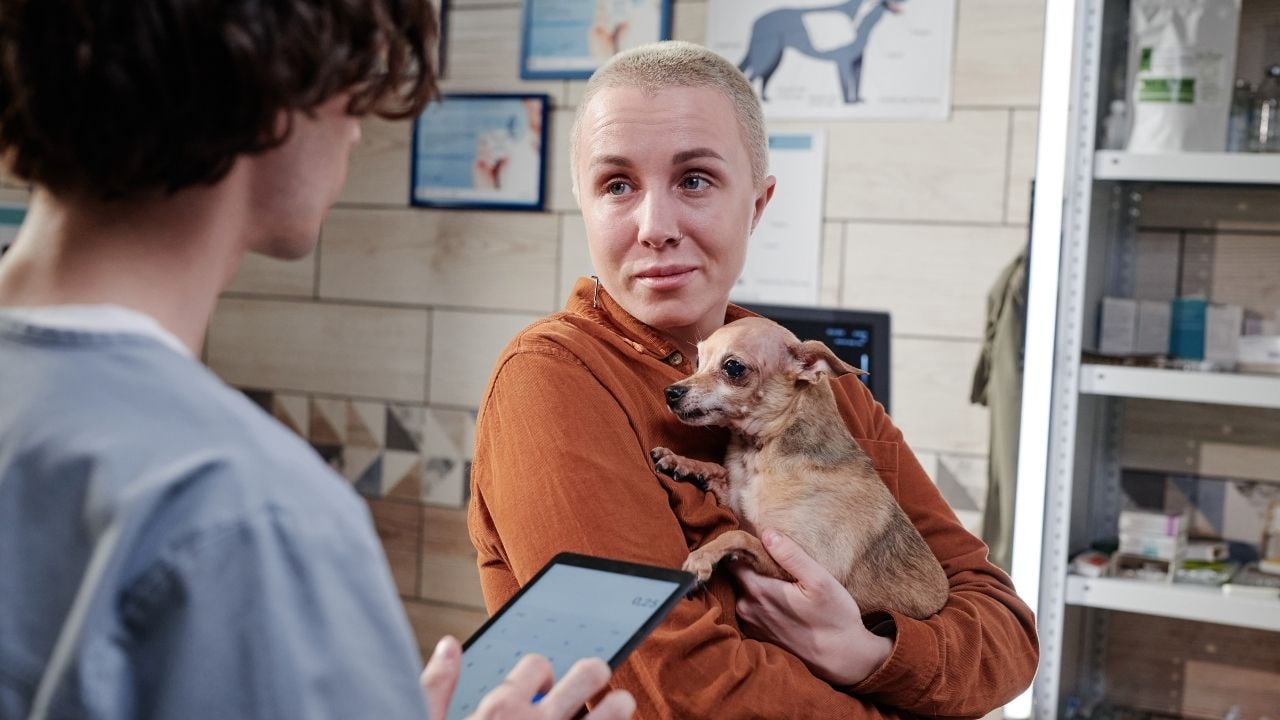
7 Things Veterinarians Wish Alabama Pet Owners Would Stop Doing

Alabama sits among the top 10 states for heartworm cases, according to the American Heartworm Society’s latest national survey.
A handful of preventable bad habits sit behind that number.
These are the things veterinarians wish Alabama pet owners would stop doing.
1. Skipping the Annual Wellness Exam
Alabama’s veterinary access runs thinner than many owners realize: Seventeen counties have no vet, no animal shelter, and no animal clinic at all, according to Best Friends Animal Society.
There’s no clinic to book a wellness exam with in any of them.
Elsewhere, the shortage still shows.
In Coffee, Dale, and Pike counties, a mobile clinic makes the rounds just twice a week to cover vaccines and basic checkups other counties handle daily.
Many Alabama pet owners wait for a limp, a cough, or a lump before they call, skipping the yearly exam built to catch problems first.
Vets see it first.
The American Animal Hospital Association (AAHA) says conditions such as kidney disease and joint arthritis start with signs too subtle to catch at home.
A little more water in the bowl, or a little less spring in a jump, is easy to miss without a vet’s trained eye.
That yearly exam is built to catch problems months before a symptom ever shows up on its own.
A pet examined at the first sign of trouble nearly always has more treatment options and a better outcome than a pet that only shows up once it’s obviously sick.
2. Skipping Prevention in Winter
Texas tops the same national survey that puts Alabama in the top 10.
Alabama veterinarians spend the year explaining why heartworm and flea prevention can’t stop just because the weather turns cool, yet many owners still let it slide once temperatures drop.
A separate survey by Banfield Pet Hospital found that 41% of dog owners believe heartworm is only a risk part of the year.
Just over half skip year-round prevention.
About one in five give it only in spring and summer.
A missed month still counts.
Auburn University’s veterinary college has called tick season a year-round problem now, not just a summer one.
3. Overdoing Table Scraps
How many Alabama pet owners turn down a strip of bacon at the table?
Not many.
Vets notice the difference on the scale.
Auburn University’s veterinary clinic now lists nutritional counseling as routine primary care, not a specialty add-on, which says something about how often weight comes up at an ordinary appointment.
The Association for Pet Obesity Prevention’s most recent survey, cited by the American Animal Hospital Association, found that about 59% of dogs and 61% of cats nationally now carry extra weight.
Close to a third of cats and about a fifth of dogs are heavy enough to count as clinically obese.
Extra weight doesn’t happen from one bad day.
It happens one saved scrap at a time: A little gravy on the kibble, a heel of bread, a handful of fries slipped under the table.
Small bites add up.
Veterinarians don’t ask owners to stop showing love, just to measure the bowl and skip the scraps that don’t belong in it.
4. Skipping At-Home Dental Care
Many Alabama dogs and cats already show early signs of periodontal disease by age 3, according to the American Veterinary Medical Association (AVMA).
That’s the AVMA’s own guidance, not a guess.
Alabama has exactly one board-certified veterinary dentist, Dr. Bert Gaddis of Pelham, who takes referrals from general practice vets across the entire state.
Many cases never reach him.
Alabama vets still bring up teeth more than almost anything else at a routine checkup.
It’s rarely because an owner asked first.
Nobody loves brushing a dog’s teeth.
Daily brushing works best.
A few times a week still helps too.
Either habit can cut down how often a pet needs a professional cleaning.
Few owners ever start.
Vets recommend a yearly dental check alongside the wellness exam, even for pets that never chew on anything they shouldn’t.
Psst! How much do you know about pets and vets beyond the basics? Take our quiz and see how many you can get right.
Quiz
Pet and Vet Trivia
Answer these questions on pets, vets, and a little history. We bet you can’t get them all right. Prove us wrong?
Which president’s family received a pet raccoon named Rebecca in 1926 that was originally meant to be a Thanksgiving dinner?
5. Wrong-Species Flea Medicine
Alabama's flea season can start as early as March and run past October.
Fleas thrive between 65 and 80 degrees with heavy humidity, conditions the state hits for more than half the year, according to Birmingham Animal Hospital.
That long a stretch means households reach for flea treatment far more often than states with a hard winter.
Alabama households with both a dog and a cat sometimes reach for whichever flea treatment is already open in the cabinet.
That mix-up can be fatal for the cat.
Dog-formulated spot-on products can carry 45% to 60% permethrin, while cat-safe versions carry less than a tenth of one percent.
Cats can't process that concentration, and even a small amount can trigger tremors, seizures, or death.
The danger doesn't require a direct dose either.
A cat that grooms a dog freshly treated with the wrong product can absorb enough to get sick, according to the Feline Veterinary Medical Association.
Read the label first.
Vets say the safest habit is simple: Check that the package says "cat" or "feline" before anything goes near a cat's fur, no matter how it's labeled for the dog.
What to Check Before Treating a Cat
Alabama vets say flea and tick product labels don't always spell out the danger in plain terms.
The active ingredient does.
Permethrin, sometimes listed as a synthetic pyrethroid, is the word that matters.
It belongs on dog packaging only, never a cat's.
A cat exposed to it needs a veterinarian right away, not a wait-and-see approach at home.
6. Delaying Spay or Neuter
Only five low-cost spay and neuter clinics serve the entire state of Alabama, according to Best Friends Animal Society, far fewer per capita than other states in the Southeast.
Waiting gets easier to justify from there.
Alabama pet owners put off spay and neuter appointments more often than veterinarians would like, waiting for a someday that never quite arrives.
A statewide program funded through Alabama's specialty license plates has covered more than 42,000 of those surgeries for low-income households since 2009, according to the Alabama Veterinary Medical Foundation.
Putting it off costs more than time.
The American Society for the Prevention of Cruelty to Animals (ASPCA) notes that spaying prevents uterine infections and cuts the risk of mammary tumors, which are malignant in about 50% of dogs that develop them.
In cats, that malignancy rate rises to about 90%.
Neutering carries its own protection, heading off testicular cancer.
Waiting erases nothing.
Every extra month without the surgery is a month those protections don't apply.
7. Letting Rabies Shots Lapse
Alabama veterinarians treat a lapsed rabies shot as a health risk first, not just paperwork.
A pet that bites or gets bitten while overdue still faces a quarantine, not a warning.
The law backs that up.
Alabama law requires every dog, cat, and ferret to be vaccinated against rabies starting at three months old.
Owners still let that schedule slide.
The Alabama Department of Public Health (ADPH) confirmed a rabid dog in Covington County and a rabid kitten in Russell County earlier this year.
A confirmed case in a pet is rare precisely because the vaccine works so well when it's kept current.
Alabama's own Rabies Bite Manual doesn't let a lapsed shot off easy either.
The Alabama Department of Public Health evaluates an overdue pet case by case, and any dog, cat, or ferret that bites someone still faces a mandatory 10-day quarantine, regardless of its vaccination history.
9 Small-Town Diners in Alabama Worth the Drive

Scottsboro has served the same hot dog topping since long before today's diners opened, and it's a recipe you can't order anywhere else in Alabama.
That's the kind of find waiting at small-town counters across the state, the diners tucked behind gas stations and courthouse squares that many drivers speed right past.
9 Small-Town Diners in Alabama Worth the Drive
8 Things Alabamians Once Memorized That Their Phones Remember for Them Now

Quick test: Can anyone recite a kid's phone number without looking at a screen?
A national survey found 82% of parents can't anymore, and Alabama households have handed off dozens of other everyday memory jobs to their phones too.
8 Things Alabamians Once Memorized That Their Phones Remember for Them Now
