

9 Assumptions About Connecticut That Residents Are Tired of Correcting

The Census Bureau’s latest estimate puts Greenwich’s median household income past $200,000 a year.
Bridgeport, Connecticut’s largest city, sits under $60,000.
That’s the same state.
These are the assumptions about Connecticut that residents are tired of correcting.
1. The New York City Commute
Is Connecticut just a commuter suburb of New York City? Not according to the labor data.
Southwestern Connecticut sent about 47,000 commuters into New York City for work, according to a 2023 Regional Plan Association analysis of census and labor data.
That’s roughly 1% of the city’s entire job base.
Connecticut’s own labor force runs past 1.9 million people.
Most of it stays home.
About 8,000 New Yorkers reverse-commute into southwestern Connecticut for work, roughly a sixth of the traffic running the other way.
Insurance offices in Hartford, hospitals in New Haven, and shipyards near Groton keep far more residents on the job than any train platform does.
2. The Old-Money Reputation
Connecticut carries a reputation for old money and green lawns, and the state earns some of it.
Greenwich’s median household income is $206,130, per the Census Bureau’s latest five-year estimate.
Bridgeport’s is $58,685.
That’s not a rounding error.
Connecticut’s statewide median sits at $95,781, closer to Bridgeport’s number than Greenwich’s.
Its per capita income is $55,915.
That statewide average blends Greenwich’s fortunes with Bridgeport’s paycheck-to-paycheck reality into one number.
The wealth concentrates in lower Fairfield County, and many of the state’s largest cities look nothing like the postcard.
3. The Drive to Long Island
Connecticut’s coastline runs close enough to Long Island that first-time visitors assume a quick drive gets them there.
Ask a shoreline resident for a shortcut, and the answer always starts with a ferry schedule, not a route number.
No bridge and no tunnel connects the two.
The Connecticut Department of Transportation confirms only two ferries cross Long Island Sound: The Bridgeport-Port Jefferson ferry and the Cross Sound Ferry between New London and Orient Point.
Nothing else crosses that gap.
Both routes carry cars, not just foot passengers, so even drivers buy a ticket and wait on a boat.
Drivers who assume otherwise end up circling back toward I-95, not island-bound.
4. The Split Yankees Territory
Connecticut doesn’t split neatly into Yankees territory, no matter what out-of-staters assume.
Sports Illustrated writer Steve Rushin nicknamed the split between fans the Munson-Nixon Line, and a 2014 New York Times analysis of Facebook data mapped it down to the zip code.
The split runs town to town, not county to county.
Manchester leans Red Sox.
Bloomfield edges Yankees by a point.
Hartford’s own minor league team, the Yard Goats, is a Colorado Rockies affiliate, tied to neither rival.
The rivalry never breaks clean at the Connecticut River, the way out-of-staters picture it.
5. Hartford, the State’s Biggest City
Connecticut’s capital is Hartford, and that’s exactly why so many out-of-staters assume it’s also the state’s biggest city.
It isn’t.
Census Bureau estimates from 2025 put Bridgeport’s population at 152,273.
Hartford’s is 121,981.
New Haven and Stamford both crowd past 120,000 too, close enough to blur the rankings further.
The capital badge and the population lead don’t belong to the same city here.
6. Counties Still Run the State
Old maps of Connecticut still list eight county names, and many newcomers assume those counties still run local government.
They don’t.
The Connecticut General Assembly eliminated county government through legislation passed in 1959 and 1961.
Since 1960, the old counties have existed only as lines on a map, with no elected officials and no budget of their own.
Towns run the show instead, each one handling its own police, schools, and roads directly.
What Replaced Connecticut’s Counties
The U.S. Census Bureau closed Connecticut’s county gap in 2022.
It approved nine planning regions as official county-equivalents, replacing the historic eight-county map for federal data.
Each region groups a cluster of towns under one regional council, made up of the mayors and first selectmen who run those towns.
Psst! How much do you know about Connecticut? Flip these cards and see how many you call correctly.
7. All Hedge Fund Money
Out-of-staters picked up Connecticut’s hedge-fund reputation from Greenwich’s back nine, and never let it go.
Manufacturing employs more people statewide, even counting every insurance desk in Hartford alongside Greenwich’s trading floors.
Connecticut’s factories carried 155,900 jobs as of June 2026, per the U.S. Bureau of Labor Statistics.
The entire financial activities sector, insurance included, counted 114,900.
That’s over 40,000 more people clocking in at a factory than at a bank, brokerage, or insurance desk combined.
Manufacturing beats finance statewide.
Electric Boat, Sikorsky, and Pratt & Whitney all build in Connecticut too, not just Greenwich’s trading floors.
8. Wall-to-Wall Suburbs
Connecticut packs a lot of residents into a small footprint, so newcomers picture strip malls from one border to the other.
Forests cover 57% to 60% of the state’s land, according to Connecticut’s own 2024 environmental report.
That’s most of the map.
Fairfield County’s shoreline towns get the postcard treatment, but much of the state north and west of I-84 is still woods and stone walls.
The northwest corner, around Litchfield County, stays wooded for miles in every direction.
9. New York’s Ownership of Every Corner
The federal government doesn’t file every corner of Connecticut under New York.
Windham County, in the state’s northeastern corner, still falls under the Worcester, Massachusetts metro area on the U.S. Bureau of Labor Statistics’ own regional map.
Hartford doesn’t own it either.
That corner leans toward Massachusetts and Rhode Island, not Wall Street or the Hamptons.
The Northeastern Connecticut Planning Region, the modern name for that old county, sits noticeably closer to Worcester and Providence than to Manhattan.
Many people from Putnam or Willimantic have never once needed Grand Central Terminal.
Worcester sits closer for a lot of their errands, and that’s exactly where they go instead.
9 Cracker Barrel Traditions That Have Disappeared
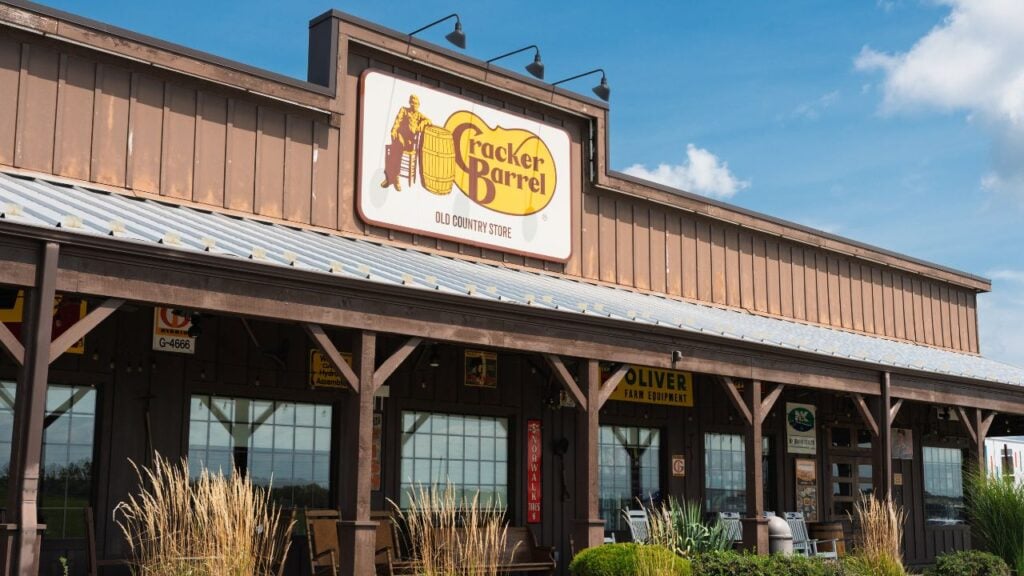
Cracker Barrel’s stock fell by $94 million in a single trading day in August 2025, right after the chain swapped its old logo for a slimmer one.
The company brought the old logo back within days, but that wasn’t the first change regulars had noticed disappearing over the years.
