

7 Home Projects That Cost Ohioans Far More Than Expected

More than two-thirds of Ohio’s homes went up before 1980, according to the state’s housing finance agency.
Naturally, many of those homes need upgrading.
But at what cost?
These are the home projects that cost Ohioans far more than expected.
Note: This is general information, not legal or financial advice. Permit fees, code requirements, and project costs vary by city, so confirm current details with your local building department.
1. Roof Replacement
Roof replacement in Columbus runs into a hidden problem more often than homeowners expect: Rotted decking under the old shingles.
Tear-off crews only find that rot once the old shingles come off, and by then it’s too late to plan around.
That part isn’t optional.
Replacing that plywood sheathing adds $2,600 to $9,000 on its own.
Roof replacement in Columbus otherwise averages $9,068, and that can push a straightforward-looking job past $15,000 before the crew hangs a single new shingle.
2. Sewer Line Replacement
Sewer line replacement in Columbus averages $3,862, according to cost data from the home-services site Angi.
That figure usually covers only the pipe and the labor to lay it.
Columbus adds separate charges.
A sewer permit runs $85, and the city bills a front-footage charge of $45 for every linear foot of pipe running along the street.
A standard 40-foot run adds another $1,800 in frontage fees alone.
Columbus bills that charge straight to the homeowner, separate from the contract, so many contractors never fold it into their original quote.
3. Basement Waterproofing
Basement waterproofing quotes for Ohio homeowners often start around $3,000 for an interior fix, a sump pump and a drainage system installed from inside the house.
That price holds up only if the water is coming through the floor, not the walls.
Many Columbus basements take on water through cracks in the foundation wall instead, and an interior fix doesn’t touch that.
That means digging.
Exterior waterproofing means excavating around the foundation to seal it from outside, and the average Columbus job for that method runs $7,000.
A homeowner who signs for the $3,000 interior fix can end up approving change order after change order once the crew traces the water outside.
The bill can more than double before the job is done.
4. Window Replacement
Window replacement costs Columbus homeowners about $6,127 on average, generally covering 10 to 12 windows with standard installation.
That number assumes the crew can scrape, sand and cut around the old frames without any special precautions.
More than two-thirds of Ohio homes were built before 1980, according to the state’s housing finance agency.
Any house from before 1978 falls under a federal rule many homeowners have never heard of.
The Environmental Protection Agency requires certified lead-safe work for window replacement on any pre-1978 home, regardless of size.
Nobody budgets for plastic sheeting.
One industry estimate puts the added lead-safe compliance cost at more than $130 per window, enough to push a 10-window job past $7,400.
A certified crew has to seal off the work area, cover the ground, and verify the cleanup before the job counts as finished.
None of that shows up in a standard per-window quote.
5. Heat Pump Installation
Heat pump installation in Columbus runs into one detail many quotes skip: Whether the home’s electrical panel can handle the extra load.
Installing a heat pump costs about $6,027 on average in Columbus, and many quotes cover only the unit and the crew’s time to hang it.
Many panels can’t.
Contractors often discover the shortfall only after they open the panel during the estimate.
By then, many homeowners have already picked a system.
A 100-amp panel typically needs to become a 200-amp panel to run a heat pump alongside everything else in the house.
That upgrade runs $1,800 to $4,000, a cost many homeowners never see coming until the panel comes off the wall.
Why the Electrical Panel Isn’t in Your Heat Pump Quote
A heat pump quote in Ohio rarely includes the electrical panel because the panel and the heat pump answer to different licensing rules.
Ohio’s Construction Industry Licensing Board licenses heating and cooling (HVAC) and electrical contractors, but only for commercial work, by the board’s description of its scope.
A residential heat pump job instead falls under local rules, and many Ohio cities handle electrical permitting and inspection through their building department.
An HVAC contractor bidding the heat pump often isn’t licensed for panel work, since electrical is treated as a separate trade under most local registration systems.
A separate electrician has to look at the panel and price it on its own.
That second estimate can land weeks after the homeowner already signed for the heat pump.
Ask before signing whether anyone has opened the panel yet.
6. Deck Building
Building a deck in Columbus costs about $6,762 on average, mostly for lumber, footings and the labor to put it together.
Footings have to clear the frost line, and Columbus code sets that depth at 32 inches under Columbus City Code § 4125.03.
That’s deeper than many homeowners assume, adding concrete and labor the first quote may not reflect.
A deck that clears a city’s standard footprint limits also needs engineered drawings, signed by an Ohio-registered design professional.
Columbus alone charges $375 just for the permit, under the city’s 2026 fee schedule.
That permit fee sits separate from anything the contractor quotes for materials and labor.
None of it is optional.
A Columbus structural engineer averages $334 for a project review, and a full set of stamped drawings for an oversized deck can run well past that.
That’s before a single post goes in the ground.
Builders rarely fold any of that into their first number for a new deck.
7. Attic Insulation
Attic insulation upgrades in Columbus average about $2,006, a straightforward job in many newer homes.
Older attics complicate the math.
Vermiculite, the loose, pebble-like insulation many attics got before 1990, mostly traces back to one Montana mine.
That mine supplied over 70% of the country’s vermiculite, sold under the Zonolite brand.
The vermiculite turned out to be contaminated with asbestos.
The Environmental Protection Agency’s advice is blunt: Don’t touch it.
Getting that vermiculite out before new insulation goes in means paying for asbestos abatement first.
Asbestos removal in Columbus averages $2,192, and a small attic in the 100- to 200-square-foot range can run $1,250 to $2,500 on top of whatever the insulation itself costs.
Psst! Want the quote-to-final-bill gap for all seven projects side by side? Tap a column to sort, or type in your project to jump straight to it.
Where Ohioans Report the Overruns
Ohio’s Attorney General fielded 29,595 consumer complaints in 2025, and home-improvement work was the runner-up category, trailing only motor vehicles.
Shoddy work and abandoned job sites drove many of those complaints.
A separate 2025 case against Columbus Deck Company ended with $204,662.80 ordered back to consumers.
Some ended in court.
Get a written, itemized quote before signing anything.
Ohio law also gives homeowners a right to cancel a contract signed away from a contractor’s regular place of business, within three business days.
One 2025 case against a single Ohio contractor, Magic Touch Exteriors, ended with $334,166.69 in damages awarded to its customers, one of several six-figure judgments in that year’s report.
Ohio’s cancellation window covers a contract signed at home, not one signed at a seller’s showroom.
6 Ohio Tax Credits Retirees Overlook Every Filing Season

Ask a retired couple in Dayton whether they claimed every credit on their Ohio return, and many just shrug.
Ohio skips taxing Social Security, so many retirees stop reading the state return right there and leave money sitting on the table.
6 Ohio Tax Credits Retirees Overlook Every Filing Season
9 Things That Change the Second You Cross From Ohio Into Kentucky
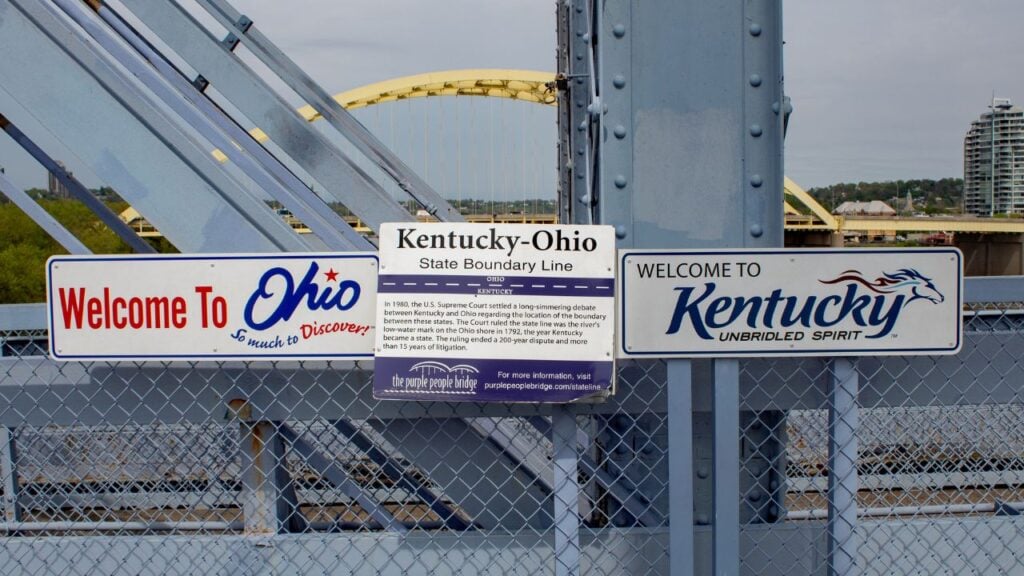
Drive across the Roebling Suspension Bridge from Cincinnati, and Covington, Kentucky waits on the other side, a bridge that opened in 1867 among the era’s longest suspension spans.
Nothing about the bridge looks different, but the tax on the receipt and the price at the pump change the second a driver crosses into Kentucky.
9 Things That Change the Second You Cross From Ohio Into Kentucky
