
8 Things Tourists Get Wrong About California Weather That Locals Stopped Correcting

San Francisco’s average summer high sits at 68 degrees, according to the National Weather Service.
Fresno regularly hits 96 degrees the same week.
Many tourists pack for California like the whole state shares one forecast.
These are the things tourists get wrong about California weather that locals stopped correcting.
1. Frozen Reservoir
Snow supplies a serious share of California’s water, not rain.
Out-of-state visitors picture beaches and desert and skip the mountains.
The Sierra Nevada piles up enough snow many winters that state water officials call the range California’s frozen reservoir.
In California, snow is infrastructure.
That frozen reservoir supplies about 30% of California’s water needs on average, melting into rivers and reservoirs through spring and summer.
Ski resorts like Mammoth Mountain and Palisades Tahoe build entire winters around that same snowpack, measured by hand every year at snow courses scattered across the range.
2. Marine Layer
California’s marine layer keeps its coast cooler than tourists expect, even in July.
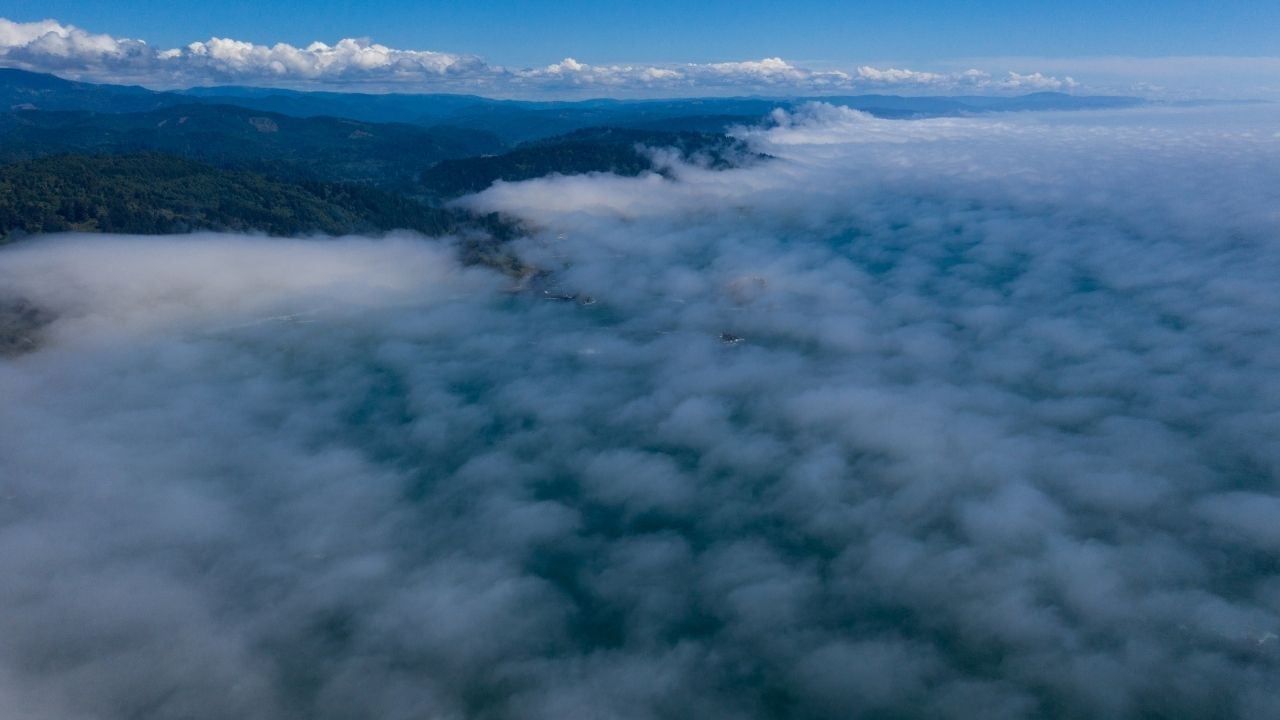
A thick band of cool, foggy air slides in off the Pacific many summer mornings and often lingers into the afternoon.
It isn’t the postcard.
That 68 degrees is a climate normal, not the readout from one cold summer.
Locals keep a sweatshirt in the car through August because of it.
How California’s Marine Layer Forms
California’s marine layer comes from two air masses meeting along the coast, one cool and dense, one warmer sitting above it.
That setup creates a temperature inversion, with the warmer air on top trapping the cool, foggy layer underneath instead of letting it rise and burn off.
Unlike an East Coast sea breeze that clears out every night, California’s marine layer can settle in for days or weeks at a time.
This lingering fog shows up often along the central and southern coast, according to the National Oceanic and Atmospheric Administration (NOAA).
3. Wet Season, Dry Season
Tourists who plan a summer trip to California often pack a rain jacket for a storm that almost never comes.
The state gets a lot of rain, just almost none of it in summer.
More than 80% of San Francisco’s yearly rain falls between November and March, per the National Weather Service.
Summer gets less than 5%.
When the rain does arrive, it often lands in heavy, days-long storms known as atmospheric rivers rather than the light, spread-out showers other regions get.
A July trip can go weeks without a single drop.
A December trip looks like a different state.
4. One State, Many Climates
Across California, a single afternoon can bring two different forecasts a hundred miles apart.
Fresno regularly hits 96 degrees on an August afternoon, per National Weather Service normals, numbers the coast rarely sees the same day.
No two regions match.
California’s yearly rainfall ranges from under 3 inches in Death Valley to more than 100 inches near Eureka, according to the National Oceanic and Atmospheric Administration (NOAA).
A single week-long trip up the coast and inland can call for shorts, a fleece, and a rain jacket, sometimes all in the same day.
5. Death Valley’s Two Records
Death Valley visitors who show up in shorts at sunset often need a jacket by midnight, an ordinary swing in this pocket of California.
Even a single summer day swings wildly there.
In July, the park’s average high is 116 degrees while the average low only drops to 88, according to the National Park Service’s weather page for the park.
Furnace Creek once hit 134 degrees on July 10, 1913, a mark that still stands as Earth’s hottest recorded air temperature, per that same National Park Service page.
That spot turns cold too.
Furnace Creek recorded a low of 15 degrees on January 8, 1913.
Winter nights across the valley floor still occasionally dip near freezing today.
The park’s high point, Telescope Peak, tops out at 11,049 feet.
Snow closes its access road some winters, proof the same park can swing from Furnace Creek’s heat to mountain snow within its boundary.
6. Cold Pacific Water
Off California’s coast, the Pacific stays cold long after summer starts.
Every summer, winds push the ocean’s warm surface layer away from the coast.
Cold water rises to replace it, a process called upwelling, according to the National Oceanic and Atmospheric Administration (NOAA).
It stays cold into September.
NOAA’s historical data for the buoy anchored about 18 miles off the San Francisco coast puts the August average near 57 degrees.
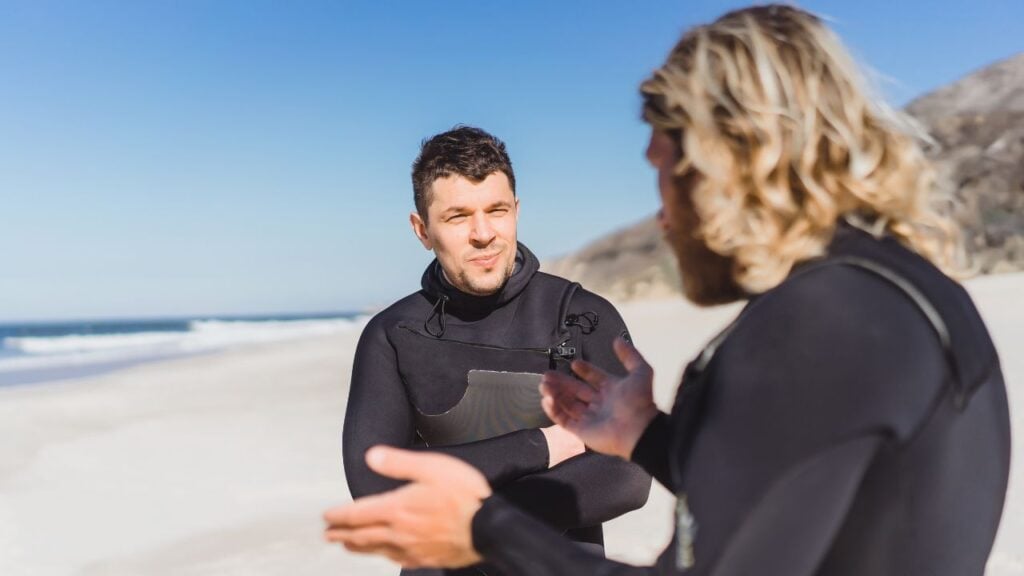
Surfers along the coast wear full wetsuits even in August because of it.
7. Redwood Coast
The Redwood Coast looks nothing like the California many tourists picture.
Eureka’s normal average high sits at just 59.2 degrees, per the National Weather Service’s annual climate report for the city.
Weather stations logged 191 foggy days there in 2024.
Eureka’s normal annual rainfall comes to 40.4 inches, logged by that same National Weather Service station.
Tourists driving Highway 101 north for the redwoods often pack for a beach vacation and buy a fleece at the first gas station.
Not exactly beach weather.
California’s weather keeps handing out numbers many people never expect.
Can you spot the lie?
8. Same City, Different Weather
San Francisco alone can carry two different forecasts within its city limits, a smaller-scale version of the swings the rest of California pulls off statewide.
The ocean side stays overcast and cool while the bay side clears and warms, often within the same summer day, per the National Weather Service.
This city holds two forecasts.
Wind-sheltered valleys on the city’s eastern side warm up fastest, while neighborhoods a few blocks from the beach can stay locked under fog until evening.
A tourist can leave a hotel near the bay in shorts and reach Ocean Beach an hour later needing a jacket.
Locals pack a layer and stop mentioning it.
9 Everyday Phrases That Drive Californians Up the Wall
California packs about 39.5 million people across a coastline, a desert, and mountains that see snow every winter.
Out-of-staters still show up expecting one big beach town.
Californians have a whole list of phrases that prove it.
9 Everyday Phrases That Drive Californians Up the Wall
8 California Lawn and Water Rules Homeowners Get Fined For
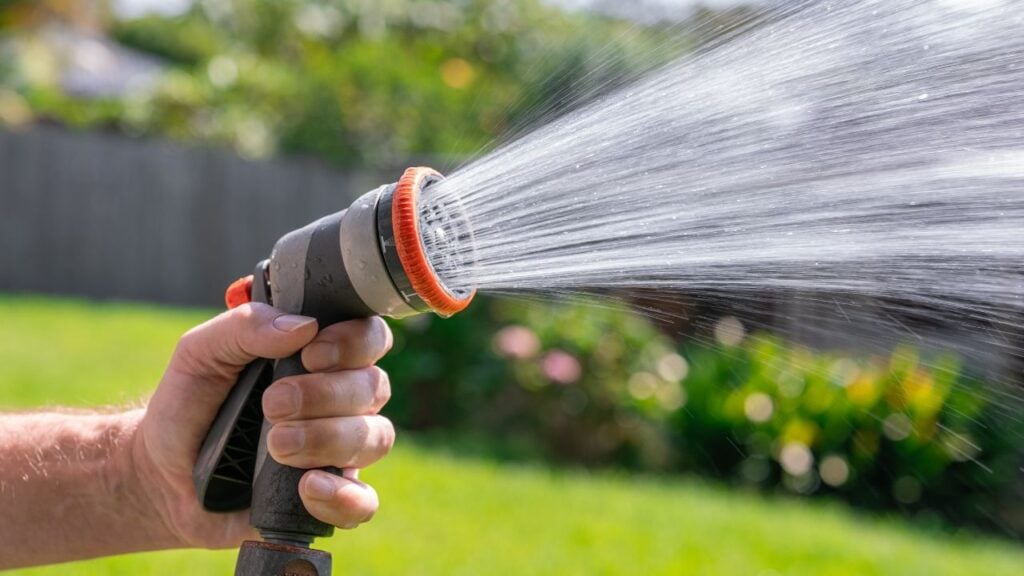
California’s water rules follow the same regional logic as its weather, right down to a Palm Springs sprinkler that can’t legally run within 48 hours of a storm.
Some homeowners find out about a rule only after the bill for breaking it shows up.
