
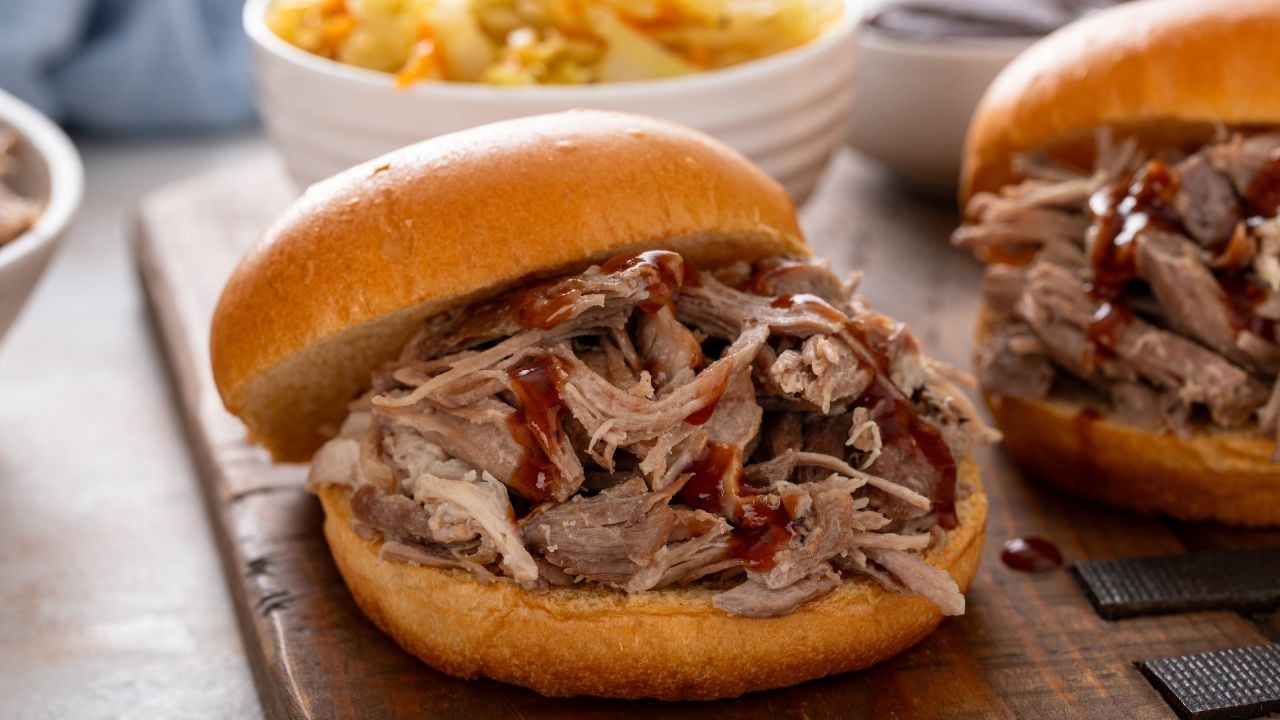
8 Things North Carolinians Say About Barbecue That Start a Fight in the Wrong Half of the State

Somebody’s cousin shows up to your Labor Day cookout with a tub of red slaw, and half the table eyes it like he brought it in from another state.
He didn’t drive far.
He came from a barbecue joint ninety minutes up the road.
These are the things North Carolinians say about barbecue that start a fight in the wrong half of the state.
1. Only the Whole Hog Counts
North Carolina barbecue means the whole hog to a pitmaster raised east of Raleigh, not a cut of the hog.
At Skylight Inn in Ayden, cooks put whole hogs on the pit skin-on, then chop them down to a mix of light meat, dark meat, and crackling.
Sam Jones is the Ayden-raised pitmaster behind Sam Jones BBQ and the grandson of the Skylight Inn’s founder.
He holds that nothing earns the name barbecue unless it’s a whole hog cooked over wood.
Nothing else counts.
Say that in the Piedmont, where entire barbecue businesses were built on a different cut, and don’t expect a warm reception.
2. The Shoulder Is Enough
North Carolina’s Piedmont takes the opposite stance: Barbecue is the shoulder, full stop, and it doesn’t need help from the rest of the hog.
The shoulder-only style traces to Lexington in the early 1900s, when vendors cooking part of a hog could set up a stand faster than anyone hauling a whole animal.
Faster meant more customers.
Warner Stamey learned the method from Jess Swicegood and Sid Weaver in Lexington, then carried it to Shelby and, later, Greensboro.
His family’s restaurant there still cooks fifteen-pound shoulders over hickory coals for eight to ten hours.
That’s a full workday spent on one cut.
Tell a Stamey’s regular the shoulder is missing something, and they’ll point out their family has been proving otherwise for close to a century.
3. Ketchup Doesn’t Belong Here
Vinegar, pepper, and salt make up the whole of eastern North Carolina’s sauce, with nothing that came from a tomato.
Historians tracing eastern-style barbecue trace the sauce to the early-to-mid 1800s, a thin vinegar mop that seasons the meat during the cook and again at the table.
Folklorist John Shelton Reed has spent decades studying the rivalry between North Carolina’s two sauces.
He says the pair have far more in common with each other than either sauce does with Kansas City’s or Memphis’s, both built around tomato.
That closeness is exactly what makes the argument between them feel personal.
A drop of ketchup, to an eastern purist, isn’t a variation.
It’s a different food.
4. It’s Dip, Never Sauce
North Carolina’s Lexington barbecue crowd corrects out-of-staters on this one before the plate even arrives.
Eastern North Carolina calls its condiment sauce, but the vinegar-and-ketchup version on a Lexington table is dip, never sauce.
Word choice matters.
Unlike the eastern mop that bastes the meat throughout the cook, Lexington’s dip goes on near the end, more of a finishing condiment than a cooking liquid.
That’s exactly why it earned a separate name from the eastern sauce.
Call it sauce at a Lexington counter, and somebody behind it will gently set you straight.
Psst! Eastern and Lexington barbecue don’t agree on much, so here’s every difference lined up side by side. Tap a column to sort, or search for any trait you’re curious about.
5. The Slaw Has to Be Red
Piedmont barbecue counters in North Carolina treat slaw as an extension of the dip, not a separate mayonnaise-based side.
Lexington-style red slaw swaps mayonnaise for the vinegar-and-ketchup dip, so the cabbage comes out tangy and faintly sweet instead of creamy.
It’s the standard topping on a Lexington-style sandwich, piled right on the pork before the bun closes.
Sandwich and slaw come together on the plate.
Order a barbecue sandwich east of the state and ask for red slaw, and the person behind the counter may not know what you’re talking about.
White, mayonnaise-based slaw is what rides on top of a sandwich in that part of the state instead.
6. Everybody Claims the Capital
North Carolina has two towns willing to fight over the same nickname: Barbecue Capital of the World.
Atlas Obscura’s account of the Ayden landmark says a National Geographic feature once declared Skylight Inn the barbecue capital of the world.
The family took the title seriously enough to build a scaled replica of the U.S. Capitol dome onto the roof.
It’s still up there.
Lexington makes the same claim right back, pointing tourists toward a dozen shoulder-style restaurants, each serving up to 500 or more plates a day.
Neither town is backing down, and neither one considers the other’s claim remotely valid.
7. Eastern Barbecue Came First
North Carolinians on the coastal plain will remind you, unprompted, that eastern-style barbecue is the older style.
Written references to a whole hog barbecued in North Carolina go back to the 1700s.
It’s nearly three centuries old.
The vinegar-pepper sauce itself has stayed close to the same recipe since the early 1800s.
Lexington’s barbecue trade traces to a restaurant that opened in 1919, a fact written into the state legislature’s bill honoring the town’s barbecue festival.
That makes the timeline part of the public record, not just local pride.
A century-old business is nothing to scoff at.
It’s just younger than the tradition it grew out of, and eastern North Carolina never lets that point go unmade.
8. Lawmakers Almost Picked a Side
North Carolinians in the east once said Lexington’s barbecue had no business becoming the state’s only official style, and they said so on the record in Raleigh.
House Bill 21 and a matching Senate bill sought to name the Lexington Barbecue Festival the state’s official barbecue festival in 2005.
Half the state pushed back.
Eastern lawmakers argued the festival designation read like a state stamp on Lexington’s style alone, since the bill named Lexington’s heritage without a similar nod to the east.
The fight grew loud enough that legislators backed off the statewide version.
A 2007 compromise shrank the designation instead: State law now calls it the official food festival of the Piedmont Triad region only, not of North Carolina as a whole.
Psst! How much do you know about North Carolina barbecue beyond the sauce fight? Take our quiz and see if you can ace it.
Quiz
The Barbecue Trail Challenge
Answer these questions on North Carolina barbecue history, pitmasters, and the Historic Barbecue Trail. We bet you can’t get them all right. Prove us wrong?
Pete Jones opened the Skylight Inn in Ayden. What year did he open it?
The State Built a Trail Around It
North Carolina's barbecue rivalry got official enough that a nonprofit turned it into a road trip.
The North Carolina Barbecue Society's Historic Barbecue Trail connects restaurants across both halves of the state.
The stops run from Ayden's whole-hog counters to Lexington's shoulder joints and mountain spots with a sweeter dip.
The Society doesn't let just anyone on the list.
Fifteen years is the minimum.
A restaurant has to cook over wood or charcoal, make its sauce from scratch, and have kept its pits running that long before it qualifies.
The Society caps each town at two spots on the trail, so a single hometown favorite can't crowd out the rest of the state's argument.
Finishing the whole list means crossing the entire state, from the coastal plain to the Blue Ridge foothills, without skipping a single region's style.
The Society updates the roster as old pits close and new ones qualify, so the list of restaurants a driver can check off changes from year to year.
9 North Carolina Mountain Sayings That Leave Flatlanders Completely Lost

North Carolina's mountain counties argue over barbecue too, but they've also got a whole vocabulary the rest of the state never learned.
A plan to go "sanging" this weekend has nothing to do with music, and neither does half of what people say at a Blue Ridge cookout.
9 North Carolina Mountain Sayings That Leave Flatlanders Completely Lost
12 Crazy Facts About Earth North Carolinians Never Learned in School

North Carolina classrooms cover plate tectonics and stop there, long before the planet gets nearly as strange as a barbecue debate.
Some of what got left out is stranger than anything simmering in a vinegar sauce.
12 Crazy Facts About Earth North Carolinians Never Learned in School
