
6 Small Renovations That Help Virginia Residents Stay Independent Longer

One in five Virginians will be 65 or older by 2030, according to the University of Virginia’s Cooper Center for Public Service.
More than one in four older adults falls every year nationwide.
Plenty of them would rather stay in the house they’re in, and the fixes that can make that realistic are smaller than many people assume.
These are the small renovations that help Virginia residents stay independent longer.
Note: This is general information, not financial advice. Grant amounts and eligibility rules are subject to change, so confirm the current details with Virginia Housing.
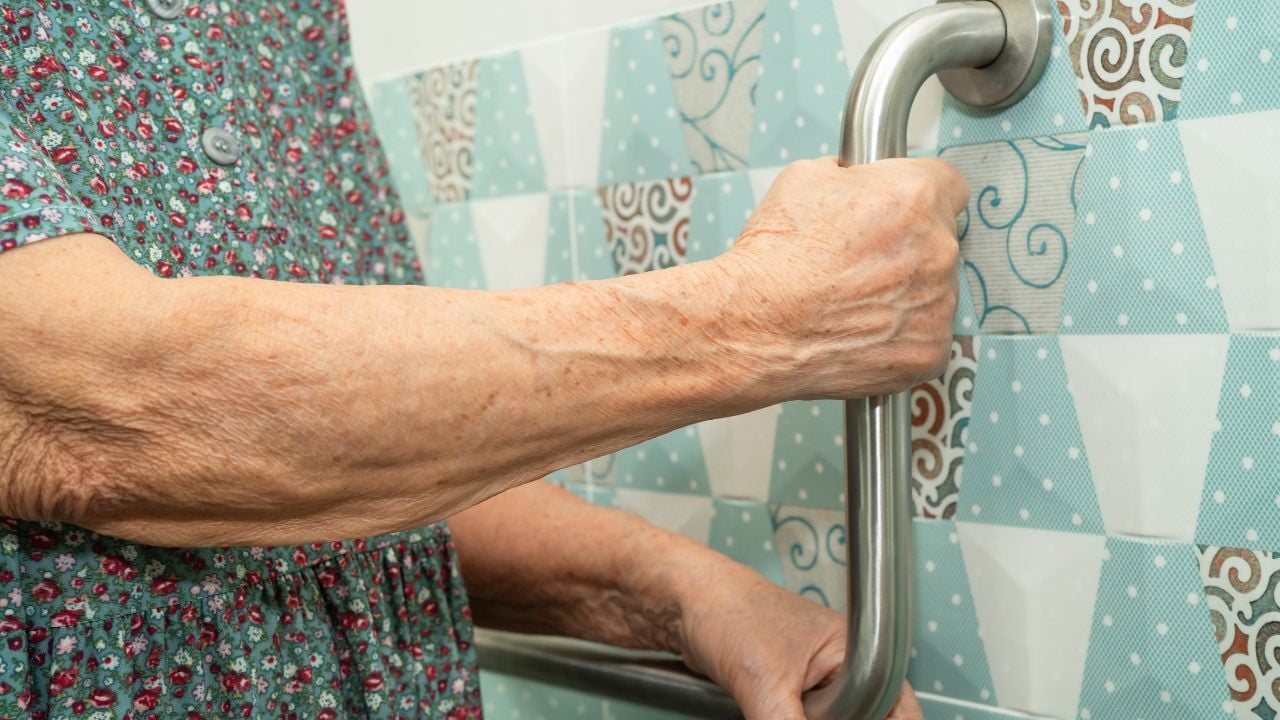
1. Adding Bathroom Grab Bars
Bathroom grab bars are an inexpensive fix.
They also have to meet a federal engineering standard, not just look sturdy.
Federal accessibility standards require a grab bar and its mounting to withstand 250 pounds of force at any point along the bar.
That’s not a towel bar rated for a robe.
It’s hardware anchored into a wall stud or blocking, built to catch full body weight mid-fall.
Grab bars matter more every year in Virginia: The University of Virginia’s Cooper Center for Public Service projects one in five residents will be 65 or older by 2030.
Nationwide, more than 1 in 4 older adults falls each year.
A lot of that risk concentrates in the bathroom: A wet floor, a tub edge, a toilet with nothing nearby to grab.
Installation typically costs $100 to $350 per bar, and many bathrooms only need two or three.
Cheap insurance.
2. Installing a Fold-Down Shower Seat
A fold-down shower seat gives someone a place to sit while they wash instead of balancing on wet tile the whole time.
Standing through a full shower gets harder with a bad hip, a bad knee, or just a long day.
Not a big ask.
A wall-mounted bench folds flat against the wall between showers, so it never crowds a small bathroom.
Installation runs $100 to $500.
A contractor anchors the bracket into a wall stud, the same anchoring a grab bar needs.
Virginia’s humid summers leave bathroom tile slicker than usual, so a seat cuts down on how much time anyone spends standing on wet footing in the first place.
3. Widening Doorways and Hallways
Many older homes have interior doorways built years before today’s accessibility standards existed.
They’re narrow enough to catch a walker’s frame or a wheelchair’s wheel on both sides at once.
Federal accessibility guidelines call for at least 36 inches of continuous clear width for a wheelchair to pass through reliably.
A hallway or bathroom door narrower than that turns a short walk into a shoulder-first squeeze.
Not ideal.
Widening a doorway usually means moving the door frame and sometimes shifting a light switch or an outlet a few inches.
It typically runs $50 to $200 per linear foot.
A single bathroom doorway is often the whole project, not the whole hallway.
Psst! How ready is your home for aging in place? Run through this checklist and see where you stand.
4. Installing a Stair Handrail
A secure stair handrail gives a hand something solid to hold onto from the top step to the bottom one.
Many older homes have a rail that wobbles at the newel post, stops short of the bottom step, or was never installed at all.
The National Institute on Aging includes secure stair handrails in its room-by-room fall-prevention guidance, the same guidance that covers bathroom and hallway hazards.
Not a hard fix.
A carpenter can re-anchor a loose rail into the wall studs or add one where a staircase has never had support, usually without pulling a permit.
Installing a handrail typically costs $40 to $60 per linear foot, and a standard staircase run adds up to well under $1,000 total.
Cheap, compared to what a fall costs.
5. Adding a Ramp or Stair Lift
A ramp or stair lift turns a flight of entry steps from a daily obstacle into a non-issue.
Entry steps are a common reason someone ends up needing help just to get in and out of their house.
Ramps solve it for a walker or a wheelchair.
Stair lifts solve it when the steps are too steep or too narrow for a ramp to make sense.
Cost varies with the fix.
A 12-foot entry ramp typically runs $1,200 to $2,500.
Installed, a straight stair lift typically runs $2,000 to $9,000, averaging around $7,050.
Virginia Housing, the state’s housing finance agency, funds exactly this kind of project.
Its accessibility grant covers ramps, chair lifts, and other modifications up to $10,000.
Homeowners don’t pay it back.
Free money, if the numbers fit.
Who Qualifies for Virginia Housing’s Grant
Virginia Housing runs the accessibility grant through three separate tracks, and eligibility depends on which one fits.
Disabled veterans and service members qualify under the Granting Freedom track, with income at or below 80% of the area median.
Homeowners qualify under the Owner-Occupied track, capped at 60% of the area median income.
Renters qualify under that same 60% income cap, through a separate Rental Unit Accessibility Modification track.
An approved local agent has to submit the application, not the applicant directly.
Grants run through annual funding allocations, so confirm current availability with an approved local agent before counting on one covering a project.
6. Swapping in Lever Handles
Lever handles replace the twist-and-grip motion of a round doorknob with a simple push.
Federal accessibility rules bar hardware that requires tight grasping, pinching, or twisting of the wrist, or more than 5 pounds of force to operate.
Round doorknobs fail that test for anyone with arthritis, a healing wrist, or an armful of grocery bags.
A lever doesn’t.
An elbow works, and so does a closed fist holding a bag of groceries.
Faucet handles follow the same logic, and swapping a bathroom or kitchen faucet to a single lever usually costs less than replacing the whole fixture.
A locksmith or handyman can swap many interior door handles in an afternoon, with no permit required.
Psst! How much do you know about home safety and growing older in place? Take our quiz and see how many you can get right.
Quiz
Aging in Place IQ
Answer these questions on home safety and fall prevention, and see how many you can get right.
Nationwide, about how many older adults are treated in an emergency room for a fall every year?
Fall-Detection Tech Worth a Look
A medical alert device with fall detection adds a layer none of the renovations above can offer: A call for help when nobody's around to see the fall happen.
The device pairs an accelerometer with a barometer to sense a fall's motion and the sudden change in air pressure around it.
Once triggered, it calls a monitoring center.
Many systems can also alert a family member directly.
The National Council on Aging found response times as fast as 48 seconds among the top systems it tested.
Monthly cost runs about $25 to $60, with fall detection typically adding $5 to $15 more.
Worth the monthly fee.
Many wearers choose a pendant over a wristband, since a pendant tracks a fall's motion more accurately than a device worn on the wrist.
A base station typically reaches 600 to 1,400 feet from the unit, enough to keep a connection working near the mailbox or the far end of the yard.
9 Virginia Well Water Rules Rural Homeowners Get Wrong
More than 1.6 million Virginians pull their water from a private well.
The rules around testing, permits, and upkeep trip up many rural homeowners who assume city water rules apply.
9 Virginia Well Water Rules Rural Homeowners Get Wrong
9 Virginia Traditions That Only Make Sense If You Grew Up There

Virginia holds 38 of the nation's 41 independent cities, places that answer to no county government at all.
Explaining that setup to someone from another state usually earns a blank stare, right along with a few other habits only a native understands.
9 Virginia Traditions That Only Make Sense If You Grew Up There
