
5 Ways Free Shipping Gets South Carolinians to Spend More

Harvard Business School researchers tracked online shoppers over several years and found they spent about 9.4% more once a free-shipping minimum was in play.
Few people feel that happening in the moment.
These are the ways free shipping gets South Carolinians to spend more.
1. Countdown Bars That Keep You Shopping
Free shipping rarely just happens anymore.
Many checkout pages track it instead, counting down exactly how many dollars stand between a shopper and a $0 shipping charge.
Retailers building it that way are leaning on a well-documented psychological effect.
Researchers built a coffee shop study around paper loyalty cards, the kind punched once per purchase toward a free drink.
One group started from zero and took a median of 15 days to fill a 10-stamp card.
A second group got the same card with two stamps already punched, so the finish line sat closer from day one.
They filled it in a median of 10 days.
People move faster once a reward feels close, not once they’ve earned it.
The pattern held in both groups.
A free-shipping tracker on a checkout page works the same way: A shopper watching it fill in sees exactly how close the reward sits with each item added.
Not close enough yet?
Many shoppers add something else instead of walking away.
2. Cheap Add-Ons That Close the Gap
Free shipping’s second effect shows up in the receipts themselves.
Harvard Business School researchers ran a multi-year study of online shoppers and found they spent about 9.4% more once a free-shipping minimum was in play.
Shoppers add one cheap extra item, just pricey enough to clear the line, then stop.
Small, low-cost items show the sharpest spikes at that exact dollar line, the researchers found.
The line itself sits wherever a retailer wants it.
Target’s free-shipping cutoff is $35 for shoppers without a paid membership.
Chewy sets its line at $49.
Old Navy’s Rewards members clear free shipping at $50, or pay $7 short of it.
Palmetto Moon, the “Southern Lifestyle” apparel chain founded in Charleston in 2002, ships every order from a distribution center in North Charleston and sets its free-shipping line at $75.
None of those is random.
A shopper five dollars short almost never just pays the shipping fee instead.
3. Free vs. Cheap
A coupon never quite manages what free shipping does: It changes how an item feels, not just what it costs.
Researchers at the Massachusetts Institute of Technology (MIT) ran a famous chocolate test.
They priced a plain Hershey’s Kiss against a fancier Lindt truffle, the kind many people rate as the better deal at almost any price.
At 1 cent for the Kiss and 15 cents for the truffle, shoppers favored the truffle by a wide margin.
Drop both prices by that same 1 cent, so the Kiss is free and the truffle is 14 cents.
The whole pattern flips.
Among shoppers who bought either candy, the free Kiss’s share of purchases jumped from 27% to 69%, the exact same one-cent gap as before.
The money didn’t change.
Free triggers a rush of good feeling that a discount never quite matches, and researchers confirmed it by measuring people’s reactions with simple face ratings.
That same rush is what a free-shipping banner is chasing.
A shopper who would skip a two-dollar discount will happily buy more to make an eight-dollar shipping fee vanish.
Psst! How much do you know about the history behind free shipping? Take our quiz and see how many you can get right.
Quiz
Shipping History IQ
Answer these questions on shipping history and retail psychology. We bet you can’t get them all right. Prove us wrong?
In 1937, a grocery store owner in Oklahoma City invented something to keep shoppers from stopping once their arms filled up. What was it?
4. Shipping Fees That Almost Kill the Sale
Shoppers walk away right at checkout more often when free shipping isn't offered.
The Baymard Institute, a research group that studies online checkout behavior, found that about 4 in 10 shoppers abandon a full cart once extra costs like shipping show up.
That's a lot of carts.
A shipping fee that shows up late in checkout reads like a broken promise, and many shoppers leave instead of paying it.
Free shipping does more than rescue that sale.
Harvard Business School researchers found that shoppers react about a tenth as much to a shipping-fee increase as they do to the same increase in a product's price.
A shopper who'd resist a store raising an item's price by seven dollars will hardly notice spending that same seven dollars to erase a shipping fee.
The cart that clears checkout ends up bigger than a straight price increase would ever have allowed.
5. Software That Picks Your Next Item
Free shipping's checkout math used to run on a single line.
Now it runs on software too.
Retail platforms sell tools built to calculate a shopper's exact remaining gap to the free-shipping line and suggest an item to close it, right there in the cart.
One shipping-bar app on the market advertises a built-in upsell that pairs the countdown with product recommendations, aiming to raise average order value.
A shopper $6 short of free shipping might see one exact item recommended to close that gap, priced at just under $6.
Not an accident.
The software ran that math before the shopper ever saw the page.
The tool runs the same math a shopper would do by hand, just faster, with a product already picked out.
Free shipping stopped being a passive rule a while back.
For many checkout pages, it's an active sales tool now.
The Math Behind the Countdown
A free-shipping countdown only pays off if the extra spending stays smaller than the fee it replaces.
Shoppers rarely check that math in the moment.
The math waits.
A shopper watching a progress bar tick toward zero is thinking about the fee, not about whether the added item was worth buying at all.
The savings are easy to see, but the added cost hides in plain sight.
What Chasing Old Navy's $50 Line Costs
Old Navy charges $7 to ship an order under $50 for Rewards members.
A $38 order sits $12 short of that free-shipping line.
Add $12 of merchandise to clear it, and the $7 fee disappears.
The shopper still spent $5 more than the fee ever would have cost.
Target's Shifting $35 Line
Target's free-shipping line hasn't always sat at $35.
The retailer raised it from $25 in 2017, landing on the same number as Walmart, which dropped its two-day shipping threshold to $35 that same year.
A ten-dollar jump doesn't sound like much on one order.
It never does.
Multiply it across millions of orders a year, and the number adds up fast.
Target itself said only a small share of Target.com orders fell under that $35 line even before the increase, so many shoppers barely felt the change.
A Target REDcard sidesteps the whole line: Cardholders get free shipping with no minimum at all, plus 5% off every purchase.
7 Charges on Every South Carolina Power Bill That Have Nothing to Do With Electricity
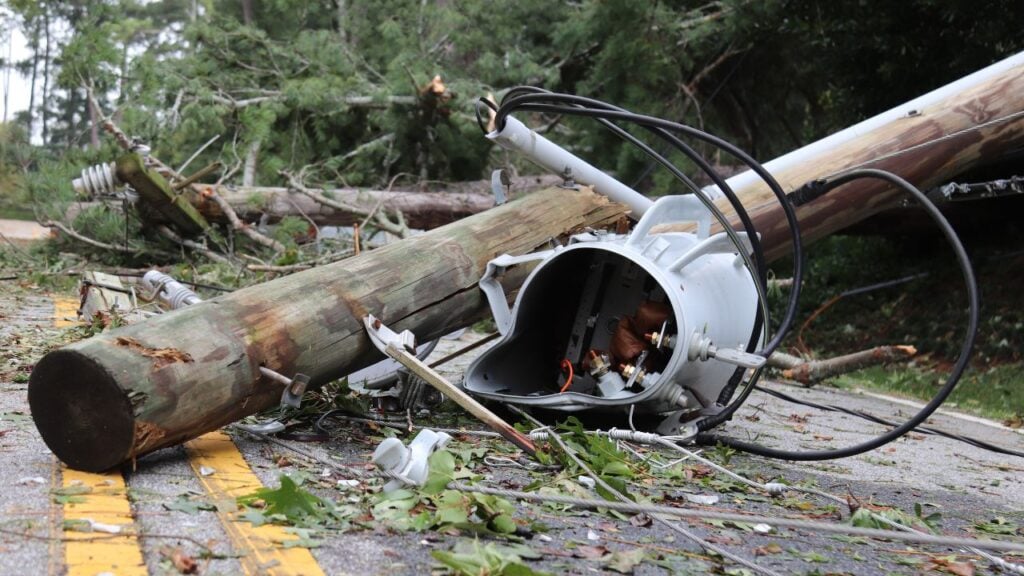
Duke Energy Carolinas customers started paying $4.58 more each month in January 2026, a charge that has nothing to do with how much power anyone used.
It covers bonds sold after Hurricane Helene, and it's just one of several lines on a South Carolina power bill that never touch a kilowatt.
7 Charges on Every South Carolina Power Bill That Have Nothing to Do With Electricity
7 South Carolina Beach Towns That Empty Out the Week After Labor Day
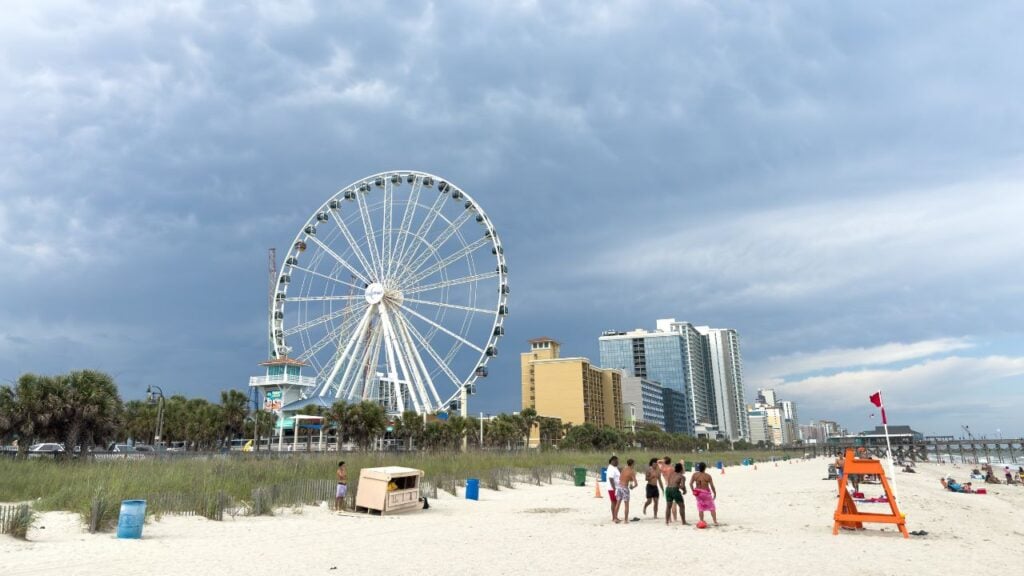
Census data up and down the Grand Strand and the Lowcountry show entire blocks of houses sitting empty much of the year.
Those houses were built for one-week renters, not full-time residents, and the week after Labor Day is when that shows the most.
7 South Carolina Beach Towns That Empty Out the Week After Labor Day
