
8 Things South Carolinians Say About the Coast That Give Away Where They’re From

South Carolina made the shag its official state dance in 1984, a six-count step that came off the sand near Ocean Drive in the late 1930s.
Coastal South Carolinians say a handful of things without thinking about it.
And they notice who doesn’t.
These are the things South Carolinians say about the coast that give away where they’re from.
1. The Grand Strand
The Grand Strand carries weight for many South Carolinians from the Myrtle Beach area.
They say it like a proper noun, capital letters implied.
The name covers the unbroken 60-mile beach arc running from the North Carolina line down through Georgetown.
It shows up on real estate listings and the local tourism board’s branding.
The branding stuck.
Saying the Grand Strand without blinking is a dead giveaway.
It places you in the coastal half of the Pee Dee region, not the Lowcountry farther south.
Charleston and Beaufort residents reach for a different name.
2. “Chucktown”
Ask a South Carolinian from Charleston what they call home, and many will shorten it to one word: Chucktown.
It comes from affection, not shorthand for anything negative.
The nickname turns up on T-shirts, band names, and local sports branding across the Charleston peninsula and the towns around it.
Locals wear it proudly.
A South Carolinian who drops “Chucktown” into casual conversation, no explanation needed, is almost always from the Charleston area.
The Grand Strand and the Pee Dee farther inland reach for other names instead.
3. “Oh-Ree”
South Carolinians who grew up near Myrtle Beach know how to say Horry County, and out-of-staters almost never do on the first try.
The county carries a silent H, so the name comes out closer to “Oh-ree,” two syllables, long O.
Locals correct newcomers fast.
Pronouncing the H is the actual mistake, not dropping it.
A coastal South Carolinian who knows that without being told is almost certainly from Horry County or close by.
4. “Pluff Mud”
Every tidal creek along South Carolina’s coast from Charleston down to Beaufort turns to pluff mud at low tide.
Lowcountry South Carolinians know that dark, sulfur smell by heart.
The mud floods in on every high tide, then settles into a thick gray-black muck.
Locals track it across boat docks without a second thought.
The smell never fades.
The Grand Strand and the Pee Dee’s inland stretch skip the marsh altogether.
The coast there runs sandy beach instead, none of that sulfur smell included.
A South Carolinian from either place usually has no reason to know the word at all.
South Carolina’s Coast Has Two Official Halves
South Carolina’s state map splits the coast into two separate regions, not just two ways of talking about it.
The Lowcountry covers 11 counties running from Charleston and Beaufort up through Berkeley.
Horry County and the Grand Strand fall under the separate Pee Dee region to the north instead.
A South Carolinian who just says the coast could mean either half.
The word they reach for next is usually the giveaway.
5. “Frogmore Stew”
South Carolina’s Frogmore Stew takes its name from a small fishing community on St. Helena Island.
Many South Carolinians around Beaufort still call their one-pot shrimp boil by that name.
Nobody there blinks.
Sausage, corn, potatoes, and shrimp go into the same pot all across the Lowcountry.
The name itself stays tied to that one fishing village.
Head north toward Charleston, and the names start blending together.
People call the same pot Lowcountry Boil, Beaufort Stew, or Frogmore Stew depending on who’s cooking, not on a hard line between cities.
Which name a South Carolinian reaches for first still leans toward one end of the coast, even without a clean border between them.
6. The Shag
Every summer, many South Carolinians from the Grand Strand still turn out to dance the shag, a smooth six-count move that became South Carolina’s official state dance in 1984.
The dance traces back to the late 1930s along the beach near Ocean Drive in North Myrtle Beach.
The state’s tourism agency credits young Black lifeguards, waitresses, and beachgoers with shaping the earliest steps to the music of the era.
A fuller history, laid out in the South Carolina Encyclopedia, adds an edge the postcard version leaves out.
The dance’s named Hall-of-Famers were white teens who studied Black dancers at segregated Jim Crow-era clubs like the Big Apple and Charlie’s Place.
They adapted what they saw into the shag.
Beach music carried it there.
Bring up “shagging” with no dance floor anywhere in sight, and a Grand Strand native won’t blink.
They’ll know immediately you mean the dance.
A South Carolinian who didn’t grow up near Ocean Drive might just look confused.
7. “Chall-ston”
Many South Carolinians from the Charleston peninsula drop the R when they say the city’s name.
Linguists trace this r-lessness to the prestige, r-less dialect that Lowcountry plantation-era elites brought over from London, according to the South Carolina Encyclopedia.
The same source credits enslaved Africans, whose native languages also dropped the final R and who far outnumbered European colonists along the coast, with reinforcing that sound in Lowcountry speech.
That history is why “Charleston” comes out closer to “Chall-ston.”
It’s a class marker as much as a place marker.
It’s both at once.
That dropped R fades out heading up the coast into the Pee Dee and the Grand Strand.
The state’s accent up there turns more classically Southern instead, vowels stretched rather than consonants dropped.
Psst! How much do you know about South Carolina’s coast? Take our quiz and see how many you can get right.
Quiz
South Carolina Coast IQ
Answer these questions on South Carolina’s coast, from Charleston Harbor to the Grand Strand. We bet you can’t get them all right. Prove us wrong?
Which Grand Strand fishing village is known as the Seafood Capital of South Carolina?
8. "Arrogantly Shabby"
"Arrogantly shabby" is how many South Carolinians from Pawleys Island describe their stretch of coast, and they mean it as a compliment.
The label started as a joke about the island's plain, weather-worn beach houses, built to survive a hurricane rather than impress anyone.
Locals adopted it as a point of pride over the decades.
It caught on.
That's the opposite of Myrtle Beach.
Pawleys Island has kept hotels, restaurants, and shops off the island itself since 1986, a rule that leaves the place looking the way it always has.
A South Carolinian who says arrogantly shabby without cracking a smile is almost always from Georgetown County's sleepier end of the coast, not the neon strip in Horry County.
9 Etiquette Mistakes That Mark You as New to South Carolina
South Carolina added roughly 80,000 new residents in a single year, more than any other state took in.
That's a lot of people learning the state's unwritten rules on the fly, and some of the mistakes are easy to spot from across a parking lot.
9 Etiquette Mistakes That Mark You as New to South Carolina
9 South Carolina Roadside Stands Locals Stop At and Tourists Drive Past
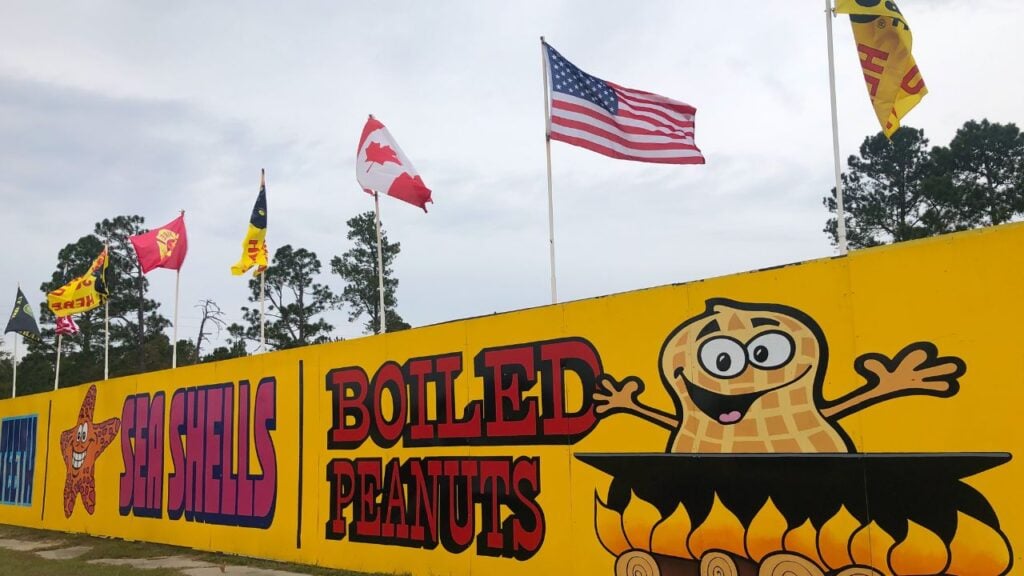
A minivan crosses onto Business 17 near Murrells Inlet with the map app locked on a Myrtle Beach hotel and the windows down.
Fifteen miles of seafood restaurants and neon go by in a blur, and nobody in that minivan slows down for the folding table selling boiled peanuts on the shoulder.
9 South Carolina Roadside Stands Locals Stop At and Tourists Drive Past
