
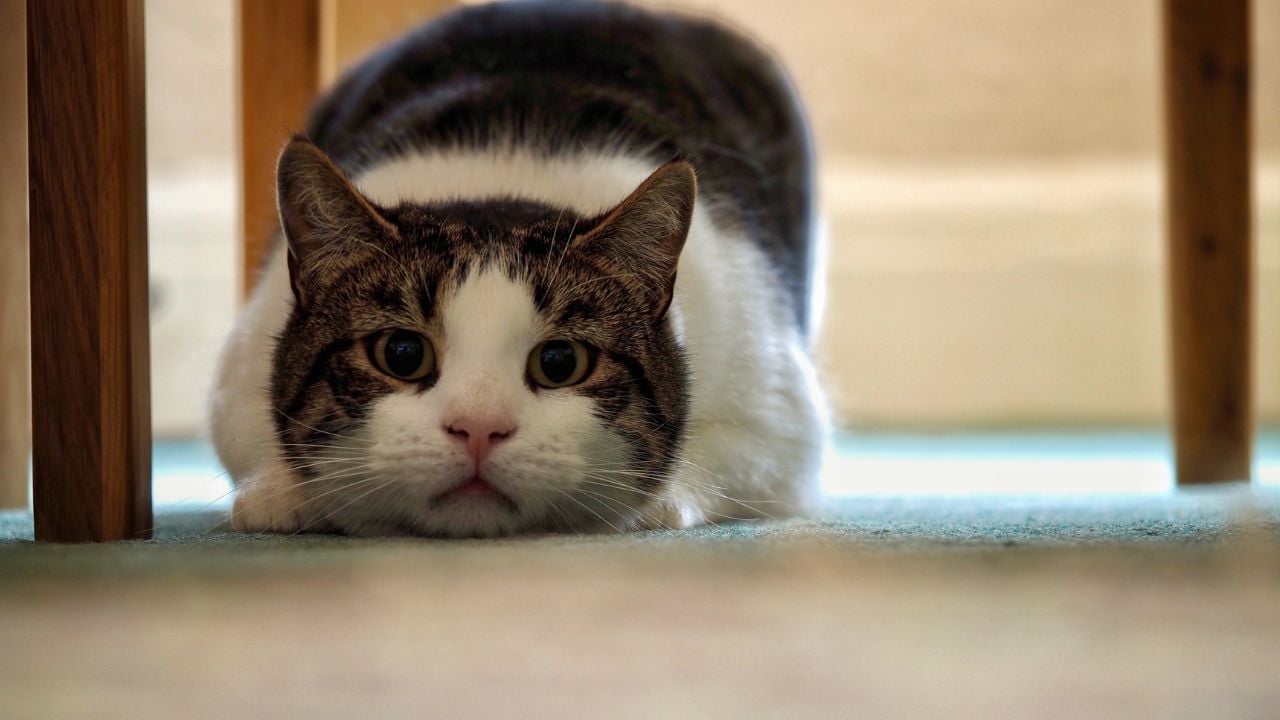
7 Household Habits Alabamians Have That Can Make Their Pets More Anxious

Alabama asphalt can reach 135 degrees when the air outside is only in the mid-80s, according to the American Animal Hospital Association.
A dog feels that through its paws before anyone notices.
These are the household habits Alabamians have that can make their pets more anxious.
1. Not Setting up a Calm-Down Spot Before Storms
Many Alabama dog owners never pick a safe spot for their dog to ride out a storm until thunder is already cracking outside.
The dog is left with no way to make the noise stop once that happens.
A startled dog paces, pants, or wedges under the bed until the storm passes.
Nobody’s there to help.
Veterinary guidance links unmanaged storm phobia to pacing, trembling, drooling, and in bad cases a loss of bladder control from fear alone, not a training slip.
A safe, enclosed spot picked out before the sky turns green calms a dog that a locked, empty house never will.
Alabama’s severe-thunderstorm season peaks each spring, with tropical systems off the Gulf often bringing a version of the same noise back each fall.
That’s when skipping the calm-down setup finally catches up with a dog.
2. Scolding a Pet After Finding the Mess
Scolding a pet long after finding a trail of red Alabama clay tracked across the carpet produces exactly the anxious reaction owners are trying to avoid.
The correction lands as noise, not information because the moment it could have taught anything already passed.
Researchers at a Portuguese university found dogs corrected with yelling or leash jerks showed higher cortisol levels and more crouching and yelping than dogs trained with rewards.
Ouch.
The American Veterinary Society of Animal Behavior says the same aversive approach breeds long-term anxiety-related behavior, including avoidance and fear-based aggression, not better manners.
A pet caught mid-mistake can be redirected.
A pet scolded an hour later just learns that its owner is unpredictable.
The Stress Signals Vets Watch for in Pets
A stressed pet rarely starts with a growl or a bark.
Veterinary behaviorists list the subtler signals first.
A stiff, tense body, a paw lifted off the ground, and eyes showing white around the edges are early signals.
Ears pinned flat, occasional lip licking, and yawning when nothing about the moment is tiring round out the list.
Two or three of those showing up together, especially right after one of the habits on this list, is the moment to change something before it gets worse.
3. Turning Game Day Into a Wall of Noise
A dog in the next room hears a touchdown celebration before anyone in the house does.
Dogs hear on a much wider range than people do, so a sudden eruption of cheering registers as a sudden threat, not entertainment.
The American Kennel Club points to unpredictability as the trigger behind that fear.
A dog can be relaxed one moment and startled upright the next, and the room’s mood shifts faster than the dog can process it.
Nobody in Alabama needs reminding that football season fills a lot of living rooms with noise many Saturdays from September into January.
This dog wasn’t invited.
A crate, a back bedroom, or a fan running during kickoff gives an anxious dog somewhere to opt out of the noise instead of living inside it.
4. Skipping the Walk Once the Heat Index Spikes
Alabama’s dogs face asphalt that can reach 135 degrees when the air itself is only in the mid-80s, according to the American Animal Hospital Association.
That’s hot enough to burn a dog’s paw pads in minutes.
Skipping the walk on a day like that’s the responsible call.
The trouble starts when the walk disappears and nothing takes its place because a dog with no outlet for that energy turns restless indoors instead.
Veterinary guidance links understimulated, bored dogs to the same pacing and destructive chewing that shows up in an anxious pet.
That overlap is why owners often mistake boredom for anxiety.
Heat isn’t the only problem.
A five-minute game of fetch down a hallway, a treat hunt hidden around the living room, or a slow walk after the sun drops keeps a dog’s mind busy.
None of it comes with the paw-pad risk.
Psst! How much do you know about dog and cat behavior? Take our quiz and see how many you can get right.
Quiz
Dog & Cat Behavior IQ
Answer these questions on dog and cat behavior. We bet you can’t get them all right. Prove us wrong?
When dogs wag their tails more to one side than the other, researchers found the direction reveals something. Which side leans toward a positive reaction, like seeing a familiar person?
5. Different Rules Depending on Who's Home
A household's rules don't always stay the same from person to person, and a dog notices immediately.
A dog allowed on the couch when one family member is home, then scolded off it by another, never learns which rule applies.
That kind of mixed message shows up often during an Iron Bowl weekend, when the house fills up and the rules change without anyone saying so.
Dr. Pamela J. Perry, a veterinary behaviorist at Cornell's Animal Behavior Clinic, has found that predictability, not strictness, keeps a dog calm.
The same action gets the same response every time, no matter who's holding the leash.
Mixed signals do the opposite.
A cat reacts the same way to shifting rules about counters, doors, or which room is off-limits.
The cat grows warier of the whole house rather than of any single person in it.
Getting every family member on the same page, even about something as small as begging at the table, takes away a layer of daily guesswork.
6. Switching up Alone-Time Hours Without Warning
A household's routine becomes part of a dog's sense of normal.
A sudden change to it's hard on them.
A dog used to a family member being home much of the day struggles when that changes overnight.
The American Society for the Prevention of Cruelty to Animals (ASPCA) tracks the common triggers for separation anxiety.
An abrupt shift in how long a dog is left alone is one of the triggers on that list, alongside a move to a new house.
September brings that exact shift to a lot of Alabama households, once summer's loose schedule gives way to school pickup lines and after-school practices.
The dog got no syllabus.
A gradual transition helps more than a hard jump.
Adding an extra half hour of alone time at a stretch, instead of jumping straight to a full day, gives a dog time to adjust to the new normal.
7. One Litter Box, Too Many Cats
A cat sharing a single litter box with two or three other cats in the house is negotiating for a resource every single day.
Veterinary guidelines from the American Animal Hospital Association and the American Association of Feline Practitioners set a clear standard.
The rule calls for one litter box per cat, plus one extra, so a two-cat home needs three boxes, not two.
Short on boxes, cats often avoid all of them.
A cat that starts house-soiling usually isn't being defiant.
It's stressed.
Multi-cat Alabama households are common enough that the math is worth checking twice.
Three cats means at least four boxes, spaced out around the house, not stacked in the same laundry room corner.
8 Things Alabamians Keep in the Freezer That Baffle Everyone Else
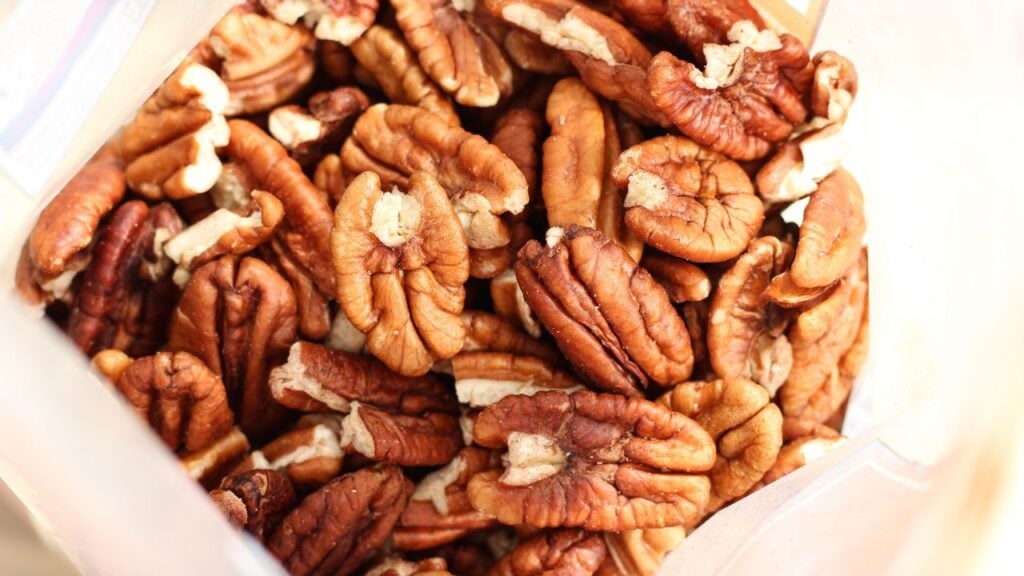
Dothan calls itself the boiled peanut capital of the world, and the claim has stuck since 1929.
Boiled peanuts spoil within about a week even in the fridge, so freezers do work the fridge alone can't, and they're only the start of what's tucked inside.
8 Things Alabamians Keep in the Freezer That Baffle Everyone Else
7 Alabama Utility Assistance Programs Retirees Don't Know They Qualify For

Close to one in five Alabamians is 65 or older, according to the U.S. Census Bureau, and that's a lot of households living on a fixed income.
Many of those retirees assume a paid-off house or a modest pension rules out help with a power or gas bill, and that assumption gets expensive.
7 Alabama Utility Assistance Programs Retirees Don't Know They Qualify For
