
6 Things a Texas City Can Fine You for That an HOA Can’t Touch

A Texas city can fine a resident up to $500 for an ordinary ordinance violation, and up to $4,000 for illegal dumping, under the Local Government Code.
An HOA has nothing close to that reach.
The two rulebooks cover different ground, and homeowners tend to blame the wrong one.
These are the things a Texas city can fine you for that an HOA can’t touch.
Note: This is general information, not legal advice. City ordinances vary by community and are subject to change. Association rules vary too, so check your governing documents.
1. High Grass and Weeds
Fort Worth caps a lawn at 12 inches of grass and weeds, on a vacant lot or a lived-in one.
Go over that, and the city mails one certified notice a year.
That’s ten days to mow.
Miss the window, and Fort Worth sends its contracted crew to cut the lot, then bills the owner an average of $250.
Skip that bill, and the city can place a lien against the property until it’s paid.
2. Junked or Inoperable Cars
San Antonio treats a wrecked or dismantled vehicle sitting in plain view as a code violation, not a storage decision.
Under the city’s junked-vehicle rules, an owner has ten days to prove to an investigator that the car still runs.
A tarp thrown over it doesn’t count as proof.
The window closes fast.
Code Enforcement Services works these cases off resident complaints and its patrols.
A car that fails the check has to leave the property.
Keeping it there anyway is a misdemeanor.
The fine runs up to $200, the cap Texas Transportation Code sets for a junked vehicle kept as a public nuisance.
3. Parking on the Grass
Houston lets a resident’s front yard become a fineable offense, in the neighborhoods where the city has approved it.
Under the city’s yard parking ordinance, a vehicle parked on an unimproved surface in a designated area draws a fine of up to $150 a day.
Every day it sits there counts as a new violation.
No grace period.
A neighborhood only falls under the rule after residents petition for it and City Council signs off.
The same front-yard parking spot can stay legal on one Houston block and draw a daily fine three streets over.
4. Loud Exhaust and Revving
Austin handed its police department a decibel limit to enforce this year.
City Council made revving an engine past 85 decibels a Class C misdemeanor.
It carries a fine of up to $500, the same ceiling as an ordinary ordinance violation statewide.
Officers have to issue a warning before the first ticket.
One free pass.
Council members pushed the change after residents along Ranch Road 2222 kept reporting racing and deliberately loud modified exhausts.
The old noise code didn’t spell things out clearly enough for officers to write a ticket.
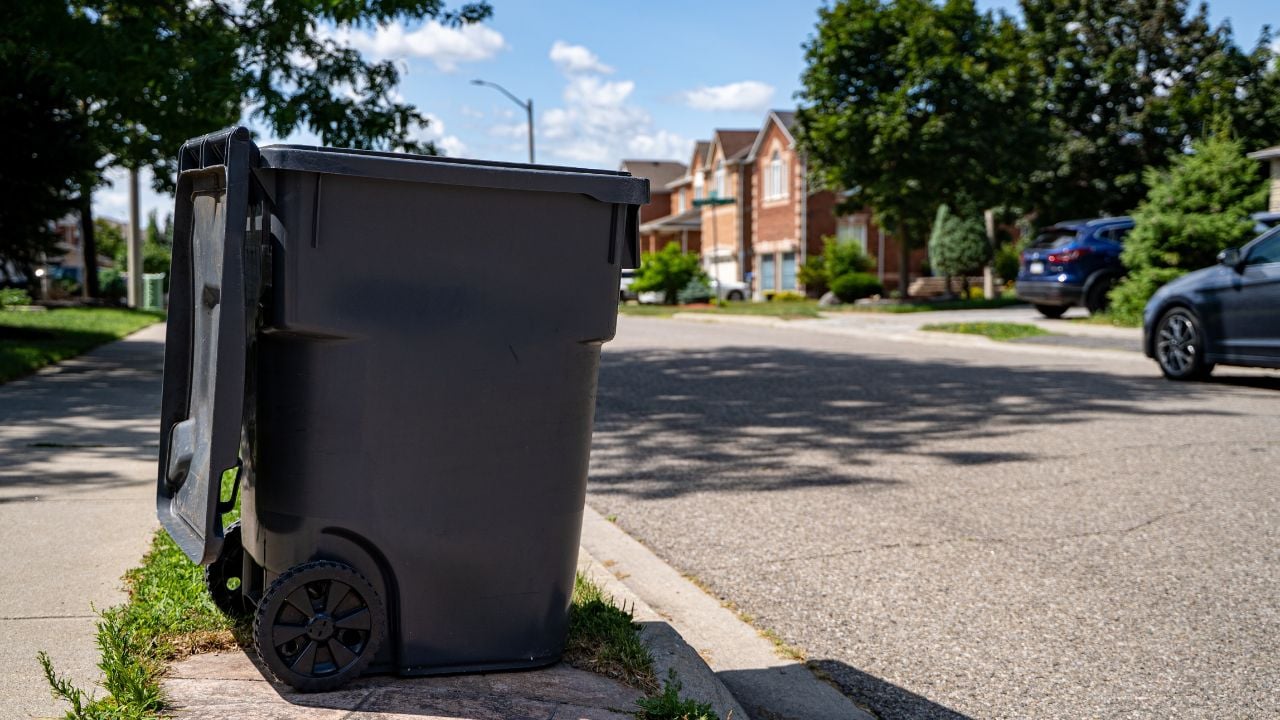
5. Trash and Debris Left Out
Fort Worth’s code compliance office warns that a yard full of trash and debris is a health and safety issue, not just an eyesore.
Left uncorrected, the city says it can mean a fine, legal action, or a cleanup bill charged back to the owner.
Three penalties in one.
That’s a different violation than an overgrown lawn.
Piled furniture, old appliances, and construction scraps fall under public-health and sanitation code.
State law lets a city fine that category up to $2,000, four times the standard cap.
6. Illegal Dumping
Houston doubled the stakes on this one.
The city raised its maximum fine for dumping refuse on someone else’s lot, an alley, or a right-of-way from $2,000 to $4,000.
Catching the person responsible is the hard part.
Proof is everything.
Enforcement leans on surveillance cameras and resident tips, since a mattress or a truckload of shingles dumped overnight rarely comes with a name attached.
Why a Home-Rule City Can’t Raise Its Ceiling
Local Government Code Section 54.001 applies to a municipality regardless of any contrary provision in a municipal charter.
That means a home-rule city like Houston or San Antonio can’t write a higher fine into its charter than state law allows.
Fire, zoning, and public-health violations can still run up to $2,000, above the standard $500 ceiling this article opened with.
Off-Limits for Every HOA
None of that authority carries over to a homeowners association.
Texas Property Code Chapter 202 puts a short list of things completely outside an HOA’s reach, no matter what the neighborhood’s covenants say.
Six that matter most.
1. Flying the Flag
A Texas HOA can’t stop a homeowner from flying the U.S. flag, the Texas flag, or an official or replica flag of a U.S. armed forces branch.
State law guarantees at least one flagpole per property, up to 20 feet tall, in the front yard or attached to the house.
The homeowner picks which.
The HOA still gets a say in the details, requiring permanent materials, a flag kept in good condition, and limits on size and lighting.
2. Solar Panels
An HOA in Texas can’t refuse a homeowner’s request to install solar panels outright.
It can steer the panels to one part of the roof, or require them to sit flush with the roof’s slope.
That placement can’t cut the system’s output by more than 10 percent compared with the spot the homeowner wanted.
Power loss has a ceiling.
The association can still limit the frame and mounting hardware to silver, bronze, or black tones so the array blends into the roofline.
3. Rain Barrels
Texas protects a homeowner’s right to install rain barrels or a rainwater harvesting system, and an HOA can’t ban the practice.
It can push the barrels out of the front yard and off the street-facing side of the house.
Out of sight works.
It can also require a color that matches the home, as long as an economical spot to install the system still exists somewhere on the lot.
4. Drought-Resistant Landscaping
Xeriscaping used to draw an easy warning letter from an HOA.
The state stepped in.
Texas law now protects drought-resistant landscaping and water-conserving turf from a flat ban, under the same section of the Property Code, along with efficient drip irrigation systems.
An HOA can still ask for a plan before the gravel and cacti go in, to check the design against the neighborhood’s look.
What it can’t do is unreasonably say no.
5. Religious Displays
A Texas HOA used to be able to confine a resident’s religious display to a small spot right at the front door.
The law caught up.
Senate Bill 581, effective in 2021, widened the protection to anywhere on the dwelling or the property and dropped the size limit the old rule allowed near the entry.
The association can still act if a display is attached to a fire hydrant, sits on land the association owns, or crosses a genuine safety or building-code line.
Psst! See how many of these you can call correctly. Texas HOA authority doesn’t always work the way homeowners assume.
6. Security Cameras and Fences
An HOA can’t tell a Texas homeowner they aren’t allowed a security camera, a motion detector, or a perimeter fence.
State law protects all three from a blanket ban.
Looks don’t factor in.
The association keeps some control on the edges, requiring the camera be installed only on the owner’s property, not a neighbor’s yard or a common area.
It can also set rules for the fence’s style and material.
Condos and mixed-use associations sit outside this particular protection, and a camera installed on a shared property line or in a common area is the detail an HOA notices first.
Mounting the camera on the owner’s house or lot, not a neighbor’s yard, keeps the installation compliant.
5 Texas Blue Laws That Catch Newcomers Off Guard

A newcomer grabs a six-pack at a Texas convenience store before a Sunday kickoff, and the register won’t ring it up for another two hours.
Texas still keeps a handful of these leftover rules on the books, and they trip up new arrivals in ways that have nothing to do with any HOA.
5 Texas Blue Laws That Catch Newcomers Off Guard
9 Small Cities Where Texas Retirees Can Enjoy Big-City Perks Without Big-City Prices

A handful of small Texas cities run hospital systems, airports, and full arts calendars without a major metro’s price tag attached.
These are the towns proving a retiree doesn’t have to trade comfort for a smaller mortgage payment.
9 Small Cities Where Texas Retirees Can Enjoy Big-City Perks Without Big-City Prices
