
10 Devices Adult Children Keep Telling Their Parents to Buy in Virginia

One in five Virginians will be 65 or older by 2030, up from 16% in 2020, according to the University of Virginia’s Weldon Cooper Center.
That math is why the family group text keeps circling back to the same question.
Did you order it yet?
These are the devices adult children keep telling their parents to buy in Virginia.
Note: This is general information, not medical advice. Product features and prices are subject to change.
1. Wearing a Fall-Detection Pendant
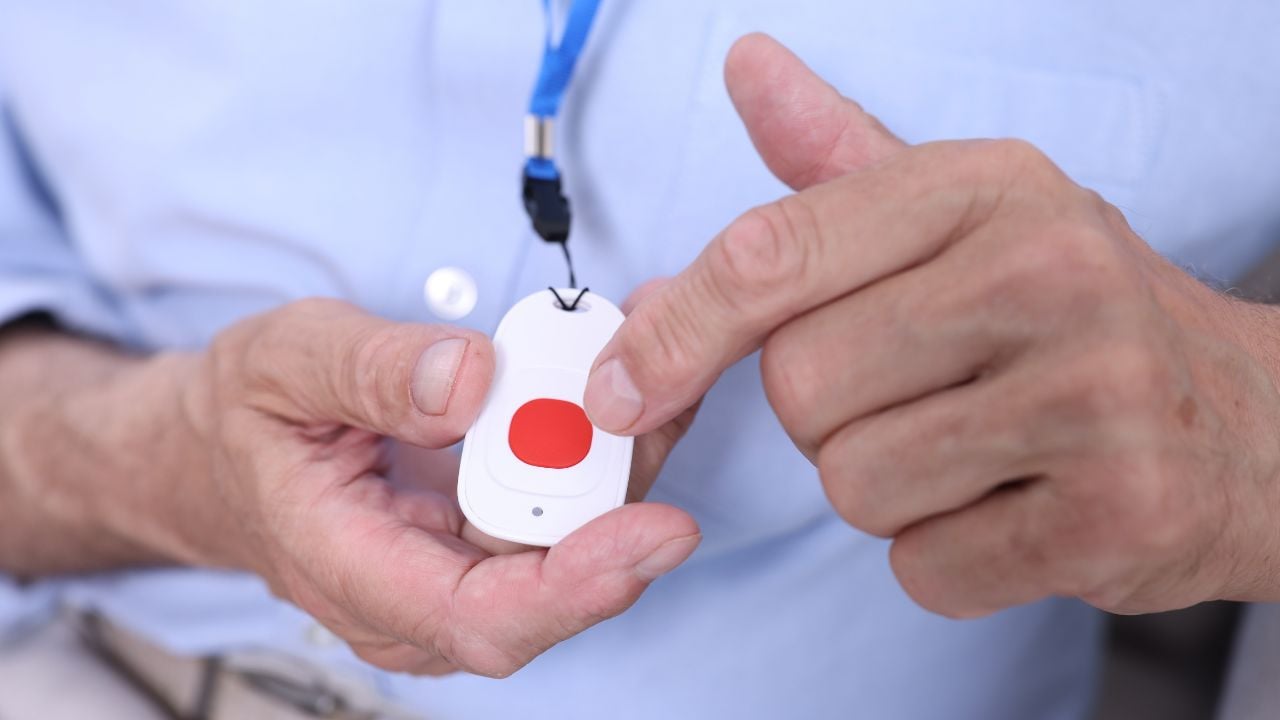
A fall-detection pendant from a company like Bay Alarm Medical answers the question adult children bring up again and again: What happens if Mom falls when nobody’s around?
These pendants run on cellular networks, so a landline isn’t necessary anymore.
Plans start around $24.95 a month, and automatic fall detection adds roughly $11 more, per the National Council on Aging.
Worth it.
The pendant’s accelerometer and barometer detect a hard fall, and it calls for help even if the wearer can’t press the button.
2. Choosing a 911-Calling Smartwatch
You already want a parent wearing an Apple Watch for the step count, and adult children push it harder for what happens when nobody’s around.
Fall Detection and Crash Detection work in the background on the Apple Watch SE, which starts at $249.
Here’s the part that wins adult children over: The Apple Watch doesn’t wait for the wearer to ask for help.
If the wearer doesn’t respond, Apple Watch calls emergency services automatically, according to Apple.
That call goes out within about 30 seconds of a crash, or after roughly a minute of no movement following a hard fall.
That’s the point.
The wearer never has to open an app or press a button first.
Apple Watch Fall Detection Isn’t Always On
Apple Watch doesn’t turn on full-time Fall Detection for every new owner automatically.
Setting up a watch for someone between 18 and 55 defaults to running Fall Detection only during workouts, not around the clock, according to Apple’s settings guide.
A parent’s watch needs a manual switch, found under Settings, then SOS, then Fall Detection, changed to run all the time instead of only during workouts.
Adding a Medical ID in the iPhone’s Health app matters just as much.
That’s what tells first responders about conditions and allergies the moment the watch calls for help.
3. Adding a Voice-Activated Speaker
You want a parent reminded about medication and a way to call for help if something goes wrong, and Amazon’s Echo speakers cover both without a second device.
A simple “Alexa, remind me to take my pills at 8” covers the reminders half for free, no subscription needed.
Alexa Emergency Assist covers the other half for $5.99 a month with Prime, or $7.99 without, connecting a parent who says “Alexa, call for help” to a live dispatch agent.
The service also notifies up to 25 emergency contacts and can pass along medical conditions or a gate code to first responders, according to Amazon.
Set it once.
Adult children configure the alert list from their phone, so nobody has to remember what to say when it matters.
4. Installing a Video Doorbell
A Ring doorbell answers a question a lot of adult children ask: Is Mom safe opening that door, or is it a stranger working a scam?
The battery-powered model runs around $100 and streams live video and two-way audio to a phone anywhere.
An adult child can see the porch and talk to whoever’s standing on it without driving across town.
No visit required.
No subscription is needed just to watch the live feed, either.
Add the $4.99-a-month Ring Protect Solo plan, though, and 180 days of video history come with it, enough to look back at a delivery, a repair visit, or a knock nobody answered.
5. Loading an Automatic Pill Dispenser
Hero’s automatic pill dispenser solves the argument adult children have every week: Did Dad take his blood pressure medication today?
The locked device sorts and dispenses up to a 90-day supply of ten medications, then alerts with a sound and a blinking light at pill time.
Skip a dose, and the connected app tells whoever’s watching.
No secret skipping.
Plans run from about $29.99 to $59.99 a month depending on the commitment, according to Hero.
A passcode and a maximum dispense limit come standard.
Together, they catch a missed dose and a doubled-up one.
Psst! How much do you know about the history of American safety and accessibility technology? Take our quiz and see how many you can get right.
Quiz
American Safety Tech IQ
Answer these questions on American safety and accessibility history. We bet you can’t get them all right. Prove us wrong?
The famous “I’ve fallen and I can’t get up!” catchphrase came from a 1989 TV commercial. Which company aired it?
6. Syncing a Blood Pressure Cuff
Adult children push a Wi-Fi blood pressure cuff like Withings' BPM Connect because it turns a blood pressure check into something that happens without a special trip to the doctor.
The $109.95 cuff syncs each reading automatically, so a dangerous spike doesn't need to wait until the next appointment to surface.
Simple as that.
You can pull the readings into a full health report and share them with a doctor, even from three states away.
Up to eight people in one household get a private profile, so Mom's numbers never mix with Dad's.
Who wants to keep a paper log of blood pressure readings anyway?
7. Running a Robot Vacuum
Adult children bring home a robot vacuum for parents who won't buy one themselves.
It clears a hazard the Centers for Disease Control and Prevention (CDC) calls out by name: Throw rugs and clutter that a parent can trip over.
More than one in four older adults falls each year, according to the CDC, and a cluttered floor is one of the easiest fixes.
iRobot's current lineup starts around $600 for the Roomba Plus 415 Combo, which also mops.
Not cheap.
Running it daily means a parent never has to bend down, unplug a cord, or drag a heavy upright vacuum across the living room to stay ahead of the mess.
8. Plugging in a Smart Outlet
Adult children plug in a smart outlet because it turns any lamp, space heater, or curling iron into something they can check on without a phone call.
Amazon's version pairs with the Alexa app in seconds, no hub required, and a four-pack typically runs under $30.
Kasa's competing plug adds local scheduling, so routines keep running even if the internet drops.
Simple as that.
Wondering whether the iron is off?
Check the app instead of calling to ask.
9. Switching to a Big-Button Phone
A Jitterbug Flip2 exists for the parent who flatly refuses a smartphone and means it.
Lively's flip phone runs around $80, with large buttons, a loud speaker, and a menu with none of the sliding and tapping a touchscreen demands.
Nothing fancy.
The selling point for adult children is the Urgent Response button, included on the $34.99-a-month Preferred plan, which connects to a live agent 24/7 with one press.
There's no app to download and no password to forget.
Just a button a shaky hand can still find.
10. Connecting a Smart Thermostat
Adult children connect an ecobee thermostat because it lets them check the one thing that's hard to notice from the road: Whether the house is dangerously hot or cold.
The ecobee Smart Thermostat Essential, priced around $140, connects to an app that any family member can open to adjust the temperature from a phone.
Extreme heat and sudden cold snaps hit older bodies harder.
Nobody's checking daily.
A bumped thermostat or a heat pump on its last leg can go unnoticed for days in a house nobody visits every day.
A quick check from across town beats finding out the hard way.
Psst! Curious which of these devices fits your family's budget? Sort the table below by price, or search for the device that solves your worry.
What Home Wi-Fi Decides
A device like the Ring doorbell, the Echo speaker, or the Withings cuff only works as well as a parent's home Wi-Fi.
Virginia still has about 392,000 locations without broadband access, roughly 13% of the state.
Those gaps concentrate in Southside, the Shenandoah Valley, and Southwest Virginia, according to the state's Joint Legislative Audit and Review Commission.
Full connectivity isn't expected statewide until 2030 at the earliest.
That's four years out.
That's also the same year the University of Virginia's Weldon Cooper Center projects one in five Virginians will be 65 or older.
Adult children in one of those counties get more mileage from a cellular pendant or a flip phone, neither of which needs home Wi-Fi to work.
A doorbell or a speaker that leans on the router in the hallway is a riskier bet there.
8 Aldi Perks Virginia Shoppers Over 60 Should Never Skip

Aldi refreshes its weekly ad and rolls out new Aldi Finds every Wednesday, year-round.
Social Security also pays millions of retirees on a Wednesday, and that overlap opens the door to a handful of perks Virginia shoppers over 60 routinely miss.
8 Aldi Perks Virginia Shoppers Over 60 Should Never Skip
7 Virginia Laws Still on the Books That Sound Made Up

Virginia hasn't rewritten its full legal code since 1950, a 76-year gap that let some strange rules survive.
A few of them are still technically enforceable, and they read like a joke until someone checks the actual statute.
