
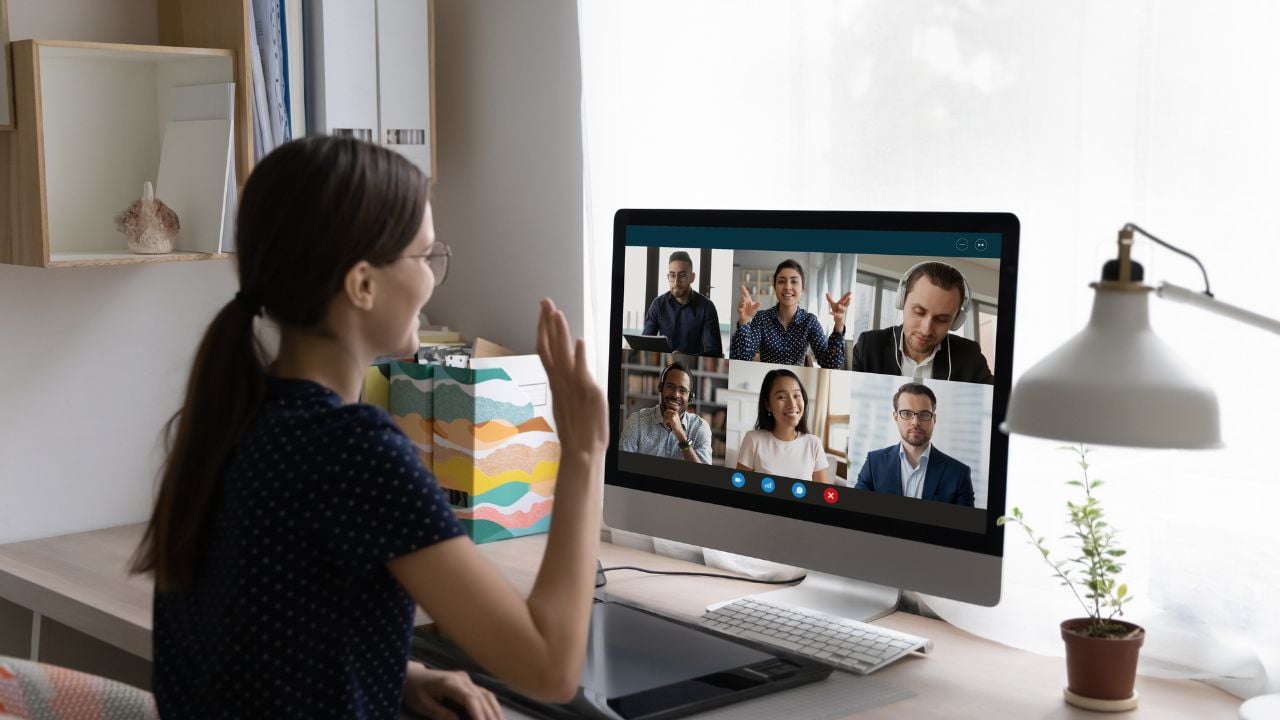
9 Office Behaviors Remote Work Changed Forever in Missouri

H&R Block is subleasing half its Kansas City headquarters because it doesn’t need the space anymore.
More than 610 corporate employees there work remotely, about a quarter of headquarters staff.
Only 10% of Missouri’s workforce is fully remote, per University of Missouri Extension economists, so the other 90% walked back through a door that had already changed.
These are the office behaviors remote work changed forever in Missouri.
1. Assigned Desks
Your assigned desk at the office probably isn’t yours alone anymore.
H&R Block is subleasing half of its headquarters building in Kansas City because it doesn’t need the space anymore.
More than 610 corporate employees, about a quarter of headquarters staff, now work remotely.
The company isn’t planning to change that.
That’s a lot of desks.
University of Missouri Extension economists found that just 10% of Missouri’s workforce worked entirely from home in 2024.
The other 90% are still walking through some office door many weeks, just not at the same desk twice.
Nationally, the ratio of workers to desks in a hybrid office rose from about 1.1 or 1.2 people per seat in 2019.
The ratio grew further from there, reaching as many as 1.5 per seat by now.
Square footage leased per worker fell right along with it.
CBRE, a commercial real estate firm, found in a 2022 brief that space per employee had dropped to a 22-year low nationwide.
A desk used to belong to one person.
Now it’s first-come, first-served, and if you roll in at ten, you might end up working from a folding table near the help desk.
2. Five-Day Office Weeks
Ask a hybrid worker in Missouri when their office fills up, and the five-day office week isn’t the answer anymore.
A national Gallup survey found hybrid workers show up 63% of the time on Tuesdays and Wednesdays, but only 33% of the time on Fridays.
Monday comes in at 49%.
Thursday rises back to 58%, closer to a full office day than either end of the week manages.
Friday turned into a ghost town instead of a full workday.
Not everywhere, though.
St. Louis-based Edward Jones went the opposite direction: The company issued a back-to-office rule requiring its home-office associates to show up four days a week starting the following spring.
Tuesday through Thursday became the workweek that counted at many Missouri offices, while Monday and Friday stayed optional.
Unless your employer had other plans, the way Edward Jones did with its four-day rule.
3. Meeting Overload
Meeting overload was supposed to be remote work’s undoing, not its legacy.
Fewer hallway conversations were supposed to mean fewer meetings, not more of them.
It went the other way.
Nationally, Teams usage data shows the average worker’s weekly meeting time jumped 252% between February 2020 and February 2022.
The number of separate weekly meetings rose 153% over the same stretch.
Daniel Goering, an assistant professor at Missouri State University, points out that employers lost a lot of the oversight they used to have once workers left the building.
Packing the calendar with check-ins became one way managers could get some of that back.
You might have kept a few standing check-ins on your calendar before.
Now you’re moving from one call to the next for something closer to a full shift.
Cutting the commute didn’t cut the calendar.
4. Coffee Badging
Coffee badging has a simple definition: Badge into the building, grab a coffee, then work the rest of the day from home.
The move caught on right as Missouri employers, from H&R Block to Gov. Kehoe’s office, started counting office days again.
Nationally, Owl Labs surveyed hybrid workers in 2023 and found that 58% admitted to doing exactly that.
Another 8% said they hadn’t tried it yet but wanted to.
Nobody has to explain it to a manager.
Nobody asks twice.
If your badge reader logs the day as present, that’s the only conversation that happens.
Why Coffee Badging Works At All
Coffee badging works because badge-based attendance tracking counts days, not hours.
The pattern shows up nationally at large employers like Amazon.
The system that flags employees for skipping the office measures how many days a week they badged in, not how long they stayed once inside.
Badge in at nine, leave by half past, and you still count as present for the whole day.
5. Office Dress Codes
Office dress codes in Missouri used to come with actual enforcement.
Many employers dropped that habit instead of writing a new one.
A January 2025 Monster survey of more than 1,300 U.S. workers found 43% hadn’t worked anywhere with a dress code in the past year, maybe including yours.
Slacks and blazers used to be the unspoken uniform for anyone walking past a manager’s office.
Now jeans pass without comment in buildings that once required a blazer.
Missouri’s return-to-office push, from H&R Block’s headquarters to the governor’s office, brought workers back through the door.
Nobody bothered restoring the wardrobe rules that used to come with the badge.
Enforcement stopped instead.
6. Optional Office Days
Showing up on an optional office day has become a strategy for hybrid employees who want managers to notice them.
Daniel Goering, an assistant professor at Missouri State University, describes the dynamic as a fight over control.
Employers lost the oversight they used to have once workers left the building.
Showing up on a day nobody requires is one of the few ways left to hand some of that oversight back voluntarily.
The stakes are high.
Nationally, Live Data Technologies analyzed 2 million white-collar workers and found only 3.9% of fully remote employees were promoted in 2023, compared with 5.6% of hybrid or in-office employees.
That gap works out to about 31% fewer promotions for the people working from home.
Being seen started counting almost like a job qualification.
If you’re weighing whether to log in from the kitchen table on a day nobody’s tracking, that calculation is exactly why so many hybrid employees choose the office instead.
Out of sight still tends to mean out of mind.
7. Full-Time Office Attendance
Full-time office attendance became something Missouri’s governor had to formally order back into existence.
Gov. Mike Kehoe’s administration issued an internal memo in early 2025 requiring state employees to return to their offices by late March.
A governor doesn’t have to write that memo if showing up was never in question to begin with.
University of Missouri Extension economists also tracked a shift in job postings.
The share of Missouri listings advertising fully remote work fell from about 11% in 2021 to about 5% by 2025.
That’s the same direction Missouri’s private employers were already moving before Kehoe’s memo made it official for state government too.
Employees don’t reverse old habits just because a memo tells them to.
Some still don’t.
A few state workers are still finding reasons to work from home on days nobody’s double-checking.
Psst! How much do you know about the offices and workweeks that came before remote work went mainstream? Take our quiz and see if you can ace it.
Quiz
Office History IQ
Answer these questions on the offices, tools, and workweeks that came before remote work went mainstream. We bet you can’t get them all right. Prove us wrong?
The man who designed the modern cubicle for Herman Miller in 1967 condemned what companies built from his design in a 1997 New York Times interview. What did he call it?
8. Instant Messaging
Instant messaging used to be a backup plan for quick questions at the office.
Now it's often the first option, not the last.
Nationally, Teams users sent 32% more chat messages per week in February 2022 than they did back in March 2020, according to Microsoft's usage data.
At St. Louis-based Edward Jones, headquarters associates now split their week between four office days and time working from home.
A quick question doesn't wait for the next in-person day anymore.
It goes out over chat instead.
You used to stand up and walk over.
Now you type a few lines and wait for a reply bubble instead.
That habit didn't reverse when people went back to sitting near each other again.
Typing still beats walking over.
9. Workday Edges
Your workday used to have clear edges.
It doesn't anymore.
Nationally, Microsoft's usage data shows the average workday stretched more than 13%, about 46 extra minutes, between February 2020 and February 2022.
After-hours work increased 28% in the same stretch, and weekend work rose 14%.
University of Missouri Extension economists also found that the average one-way commute in Missouri grew from 15 miles in 2003 to 18 miles by 2023.
By 2023, most of the state's jobs, 53.7%, were filled by workers who crossed a county line to get there.
For many workers, the drive itself used to be the line between the office and everything else.
On the days that drive doesn't happen, that line just isn't there.
You don't have to leave a building to signal the day is over anymore.
Nobody's checking the clock.
A closed laptop used to work like a locked door. Once yours clicked shut, nobody expected an answer until morning.
Now the same phone that holds your work inbox holds everything else too. Closing one app takes about as much effort as opening it back up minutes later.
5 Things Missourians Know About Casey's That the Rest of the Country Doesn't
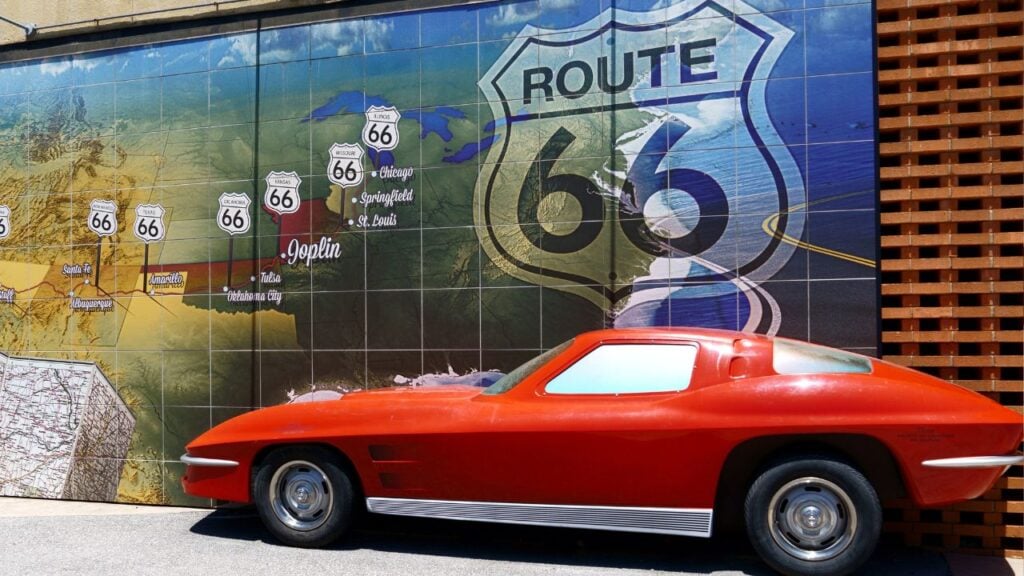
Missouri's governor once made a special trip from Jefferson City to Joplin just to help open a new warehouse.
It wasn't stocked with anything glamorous, just pizza dough and gas station donuts.
5 Things Missourians Know About Casey's That the Rest of the Country Doesn't
9 Things Missourians Say That Baffle Everyone Else
A first-time visitor orders dessert at a St. Louis custard stand, and the server flips it upside down without any warning.
Regulars don't even blink because that move is just one small piece of the vocabulary that comes standard with living in Missouri.
