
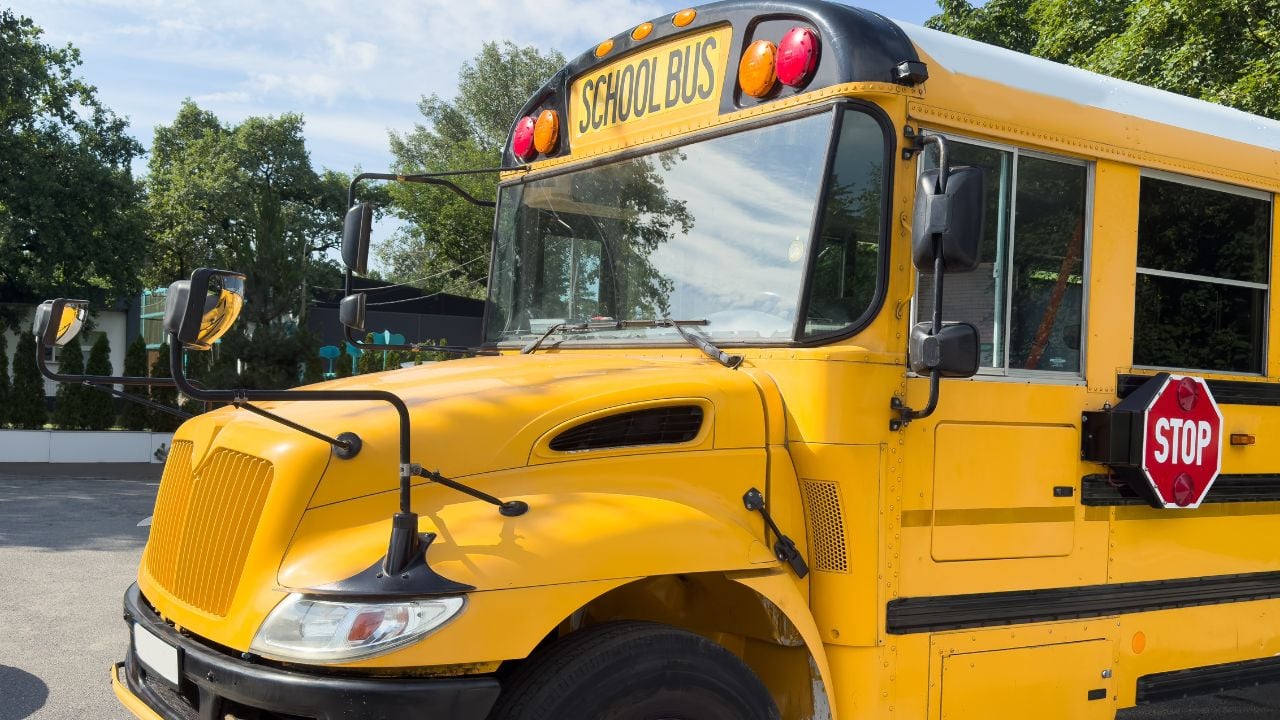
8 Things Alabama School Bus Drivers Want Parents to Know

Alabama’s school buses carry roughly 350,000 students every school day, according to the state Department of Transportation.
Jefferson County alone runs more than 500 routes with 30 driver seats still empty.
The people behind the wheel see the same handful of things go wrong every morning, and almost none of it starts on the bus.
These are the things Alabama school bus drivers want parents to know.
Note: This is general information, not legal advice. Alabama’s school bus and traffic laws are subject to change, so confirm the current requirements with the Alabama Law Enforcement Agency.
Stopping the Instant Lights Flash
On almost every Alabama school bus route, drivers see the same mistake: A car waits until the bus is nearly alongside it, then brakes.
Too late.
Once the driver flips on the red flashing lights and swings out the stop arm, every approaching or trailing car has to stop.
Alabama law requires that stop to happen before reaching the bus, not a slowdown somewhere near it.
No section of the code names an exact number of feet.
A driver who eases off the gas instead of stopping outright is already breaking the law before the bus comes into view.
The moment those lights start flashing is the moment to stop, not the moment to start hunting for a gap.
The Owner’s Fine
Alabama school bus drivers know exactly how often a car blows past their stop arm because more districts now catch it on camera.
Under the state’s School Bus Safety Act, a bus equipped with a stop-arm camera can send a citation straight to whoever owns the car, not whoever was driving it.
That catches people off guard.
A parent who lends the car to a teenager, or a grandparent borrowing it for the week, doesn’t shield the registered owner from the bill.
The civil fine runs $300, and districts have up to 14 days after reviewing the footage to mail it out.
Fighting it means proving someone else was behind the wheel, not just saying so.
Bus drivers want parents to know that lending the keys doesn’t lend away the responsibility.
What a Police-Witnessed Pass Costs
Alabama’s camera fine isn’t the only price tag for passing a stopped school bus.
An officer who witnesses the pass can write it up as a moving violation instead, with penalties that get steeper on each repeat.
A first offense runs $150 to $300.
A second offense adds 100 hours of community service and a 30-day license suspension on top of a fine up to $500.
A third offense doubles the suspension to 90 days, adds a minimum of 200 hours of community service, and raises the fine as high as $1,000.
A fourth offense becomes a felony, with a fine up to $3,000 and a full year without a license.
What a Late Bus Means
A late Alabama school bus at the curb almost always means one thing.
The driver behind the wheel is doubling up two routes, not blowing off the schedule.
Jefferson County Schools alone runs more than 500 routes a day with 30 driver positions still empty, according to the district’s transportation director.
Substitutes fill many of those empty shifts.
Some routes still run without a permanent driver, which means a handful of families end up driving their kids themselves until the district fills the seat.
It’s not just Jefferson County.
Districts from Talladega to Dothan are running the same math this school year.
Jefferson County approved new hiring incentives this fall to close the gap.
New drivers get a sign-on bonus of more than $200 after three months on the job.
Drivers who pick up a second route earn an extra $90 a day, and attendance bonuses run as high as $750 a year.
For a parent watching the clock at the stop, that’s the story behind a late bus.
A staffing gap the district is racing to fill, not a driver who skipped the route on purpose.
Retired Teachers Behind the Wheel
The person behind the wheel of an Alabama school bus this fall could be a face parents already know from a classroom.
A new state law lets retirees from Alabama’s teacher and employee retirement systems drive a school bus full time without losing their pension checks.
It took effect June 1, 2026.
Dothan City Schools has already brought back two retirees to drive under the option.
Retirees still have to clear the same hurdles as anyone else: A commercial driver’s license, state certification, and a cap on how much they can earn.
The badge is new, not the skill set.
Other districts are watching to see how many more retirees sign up now that the law is live.
Same face, new route.
Psst! How much do you know about Alabama’s school bus rules? Flip these cards and see how many you get right.
The Grown-Up at the Stop
Alabama school bus drivers can watch the road or watch the curb, but not both at once.
With more than 350,000 kids boarding a bus across the state each school day, the wait at the stop is where a lot of the risk sits.
The Alabama Law Enforcement Agency recommends parents team up with neighbors to keep one adult supervising the stop every morning, rather than leaving young kids to wait alone.
One adult is enough.
It doesn’t have to be a parent, either.
A grandparent, an older sibling, or a rotating neighbor covers it just as well.
Bus drivers want parents to know a supervised stop means fewer kids wandering into the road while they’re still three houses away.
The Ten-Foot Rule
Around an Alabama school bus, a driver loses sight of a kid the instant they get too close.
District safety guidance tells students to cross at least 10 feet in front of a stopped bus, never behind it.
Students also have to make eye contact with the driver before stepping off the curb.
Eye contact isn’t a formality.
It’s how the driver confirms a kid is seen before the bus moves again.
Baldwin County’s transportation guidance spells out the same routine.
Wait for the bus to stop completely, then check that traffic has stopped too.
Cross only where the driver can see you clearly.
Practicing that walk at home beats explaining it once in the car.
Getting to the Stop Early
Alabama school bus drivers can’t wait around for a kid who’s still finishing breakfast.
District guidance tells families to have kids at the stop at least five minutes before the scheduled pickup.
Kids should stand back 10 to 15 feet from the curb until the bus arrives.
Running for a bus that’s already moving is exactly how kids get hurt.
A driver who sees a child sprinting toward a bus that’s pulling away can’t always stop in time, especially with a load of other kids to think about.
Five minutes early costs nothing.
Bus drivers want parents to know a kid standing calmly at the curb beats one racing to catch a bus that’s already left the stop.
The No-Reach Bus Rule
An Alabama school bus’s blind spot runs straight down its side.
It swallows a dropped hat or a rolling water bottle no matter how hard the driver tries to see into it.
That’s exactly where district guidance tells kids never to go looking for one.
If something falls near the bus, the rule is simple.
Just say something.
Tell the driver and let them handle it, instead of bending down to grab it.
A driver who’s already checking mirrors and watching for other cars has no way to spot a kid crouched by a front tire.
Speaking up takes three seconds, and it’s the one habit Alabama school bus drivers wish every kid had memorized before the first day back.
8 Things Alabamians Keep in the Freezer That Baffle Everyone Else

Dothan declared itself the boiled peanut capital of the world in 1929, and Alabamians still lean into it.
A batch of boiled peanuts spoils within about a week even in the fridge, so freezers end up doing work many outsiders never expect.
8 Things Alabamians Keep in the Freezer That Baffle Everyone Else
8 Road Trip Mistakes Alabama Drivers Still Make Every Summer
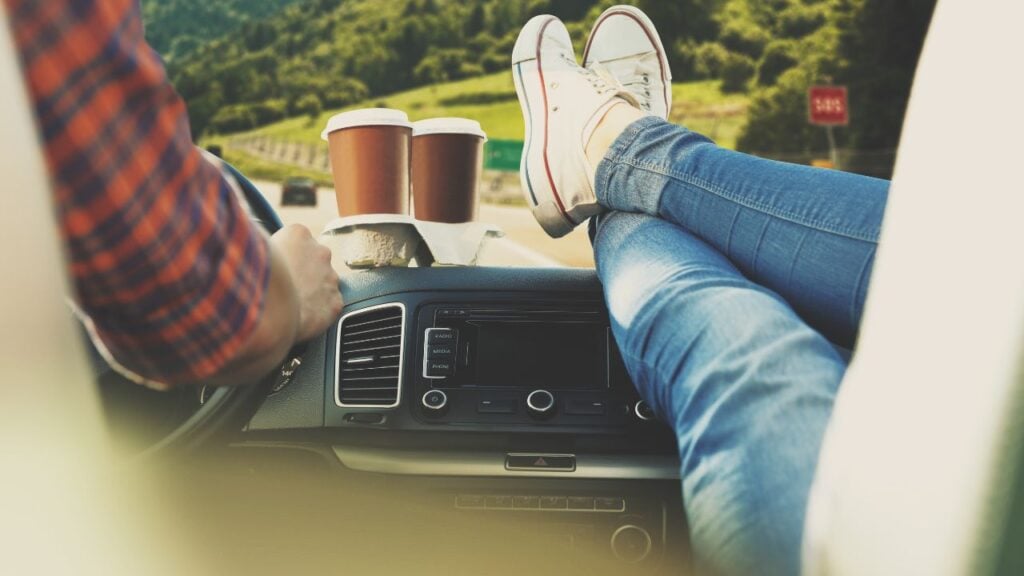
The same summer road trip year after year has a way of teaching drivers habits that don’t hold up.
Those habits carry a cost, from tickets to wasted hours, and many drivers never connect the dots back to the trip that taught them.
8 Road Trip Mistakes Alabama Drivers Still Make Every Summer
