

9 Popular Money Rules That Don’t Work for Every Iowa Household

Iowa’s effective property tax rate runs 1.40%, against a 0.91% national average, according to the Tax Foundation.
That’s roughly 54% more than the typical American homeowner pays.
These are the popular money rules that don’t work for every Iowa household.
Note: This is general information, not financial, tax or legal advice. Rules of thumb, tax figures and loan terms are subject to change.
1. 50/30/20 Budget Rule
For Iowa homeowners following the 50/30/20 budget rule, property tax often claims a bigger share of the needs column than the formula assumes.
The rule splits take-home pay into 50% needs, 30% wants and 20% savings, a formula Elizabeth Warren popularized in her 2005 book All Your Worth.
Needs are supposed to cover housing, utilities, groceries, insurance and transportation.
Iowa’s effective property tax rate runs 1.40%, compared with a 0.91% national average, according to the Tax Foundation‘s research on the state.
That’s roughly 54% higher than what the typical American homeowner pays in property tax alone.
That’s before a mortgage payment even enters the picture.
Run the math with an Iowa mortgage payment that already escrows that tax bill, and the 50% needs line leaves less room than the rule assumes.
2. Six-Month Emergency Fund
On August 10, 2020, a derecho tore across Iowa in under an hour, and insurance alone didn’t make every household whole.
Insurers eventually paid Iowa policyholders more than $3 billion in claims within a year of the storm.
That wasn’t the whole story.
The Federal Emergency Management Agency (FEMA) approved more than $3.1 million in Individual Assistance grants for over 900 Iowa households within a month of the storm, aid meant for losses that fell outside what insurance covered.
Financial advisers commonly tell savers to bank three to six months of expenses for a job loss or a medical bill.
You can carry full coverage and still watch a single bad storm season wipe out that whole cushion.
A farm family covering grain-bin and outbuilding damage on top of it can blow past the standard budget even faster.
3. 28/36 Mortgage Rule
A mortgage calculator rarely shows Iowa homebuyers how fast they hit the 28/36 rule’s ceiling.
The guideline caps housing costs at 28% of gross income and total debt at 36%, tallying the mortgage, taxes and insurance together.
Iowa’s median home carries a value of $208,000, according to the U.S. Census Bureau, and the median Iowa homeowner pays $2,825 a year in property tax on it, according to the Tax Foundation’s research on the state.
On Iowa’s median household income of $75,059, that 28% ceiling allows about $1,751 a month for housing.
Property tax alone claims close to 13% of that entire housing allowance before anyone counts a mortgage payment, insurance or a single utility bill.
You might not see it until your first escrow statement arrives.
Iowa’s 2023 Reform Caps Cities, Not Your Bill
Iowa lawmakers passed a property tax overhaul in 2023, and new buyers often assume it caps what they personally owe.
The law slows how fast a city or county’s total tax collections can grow before local rates have to come down.
It doesn’t cap what happens to one reassessed home.
A home reassessed well above the neighborhood average can still see its bill rise faster than the citywide numbers suggest.
4. 1% Home Maintenance Rule
A single furnace replacement can undo years of careful budgeting under the 1% home maintenance rule in Iowa.
The rule tells homeowners to set aside about 1% of their home’s value every year for upkeep, which comes to roughly $2,080 on Iowa’s median $208,000 home.
A new furnace, the kind many Iowa homes need roughly every 20 years, costs $2,823 to $6,897 to install nationally, according to Angi’s 2026 cost data.
That’s more than a full year of the entire 1% target spent on a single repair, sometimes over three.
They don’t fail on schedule.
A roof or a water heater can land the same way, all at once instead of spread evenly across the years the rule assumes.
5. 20% Down Payment Rule
A federal program lets some Iowa buyers skip the 20% down payment rule entirely.
The U.S. Department of Agriculture’s (USDA) Rural Development program backs home loans across eligible rural areas with no down payment typically required at all.
Eligibility depends on the property’s location and the buyer’s income, determined through USDA’s eligibility mapping tool rather than a single population cutoff.
Many of Iowa’s small towns outside its handful of metro cores fall inside that map.
Zero down changes the math for you.
6. 10% Retirement Savings Rule
Since 2023, Iowa has rewritten the math behind the 10% retirement savings rule.
Advisers commonly tell workers to save 10% to 15% of pretax pay for retirement, a target built around an assumed tax bite on those dollars later.
Iowa now excludes qualified retirement income from state tax entirely for residents 55 and older, per the Iowa Department of Revenue.
That exemption covers pensions, IRAs, 401(k)s and required withdrawals alike, with no income cap.
A flat 10% target calibrated to a national tax bite assumes Iowa’s 3.80% state tax still applies when the money comes out.
It doesn’t, so an Iowa retiree can bank less than that 10% and still land on the same after-tax income the rule was built to protect.
The target moves down, not up.
7. 4% Retirement Withdrawal Rule
Nursing home costs in Iowa blow straight through the 4% retirement withdrawal rule’s assumptions.
The rule, developed by financial planner William Bengen in 1994, says a retiree can safely draw an inflation-adjusted 4% from savings every year through a 30-year retirement.
A semi-private nursing home room in Iowa runs about $107,128 a year, according to the 2024 CareScout/Genworth cost of care survey.
Four percent of a $1 million portfolio produces $40,000 a year.
That’s less than half of what one nursing home stay alone could cost you in Iowa.
The standard math doesn’t include that kind of expense.
8. 10% Car Payment Rule
Public transit doesn’t reach much of Iowa, and that breaks the common rule that transportation should cost no more than 10% of gross income.
That guideline, sometimes bundled into the 20/4/10 rule for car shopping, assumes one vehicle covering one household’s needs.
Rural Iowa counties run regional transit systems, per the Iowa Department of Transportation, but coverage is limited compared with driving yourself.
Without a bus or a train nearby, many Iowa households run two vehicles or more, covering work, school runs and errands across longer rural distances.
Each extra vehicle adds a separate loan, insurance bill and fuel cost, stacking well past the 10% the rule budgets for your one car.
One car rarely covers it.
Psst! How much do you know about Iowa’s taxes, farmland and insurance costs? Take our quiz and see how many you can get right.
Quiz
Iowa Money IQ
Answer these questions on Iowa taxes, farmland and insurance costs. See how many you can get right.
How does Iowa’s average cost for full-coverage car insurance compare to the national average, according to The Zebra?
9. 3x Salary by 40 Rule
Self-employment defines much of Iowa's farm economy, and that breaks the popular age-based savings milestones.
Major brokerages commonly set targets like having three times your salary saved by 40 and six times by 50, numbers built around steady paychecks and an employer 401(k) match.
Iowa counted 86,200 farm operations in 2024, according to the U.S. Department of Agriculture's (USDA) National Agricultural Statistics Service.
Farming doesn't pay like that.
Many of those farm operators are self-employed, with no employer match sitting behind them.
A milestone built on salary growth and matching contributions doesn't translate cleanly to income that swings with commodity prices and a harvest.
10 Things That Instantly Give Away an Iowa Transplant Anywhere Else in the Country

A Casey's General Store looks like just another gas station to many people outside Iowa.
To an Iowa transplant, it's the unofficial pizza standard, and that's just one of the habits that gives them away anywhere else they land.
10 Things That Instantly Give Away an Iowa Transplant Anywhere Else in the Country
9 Cracker Barrel Traditions That Have Disappeared
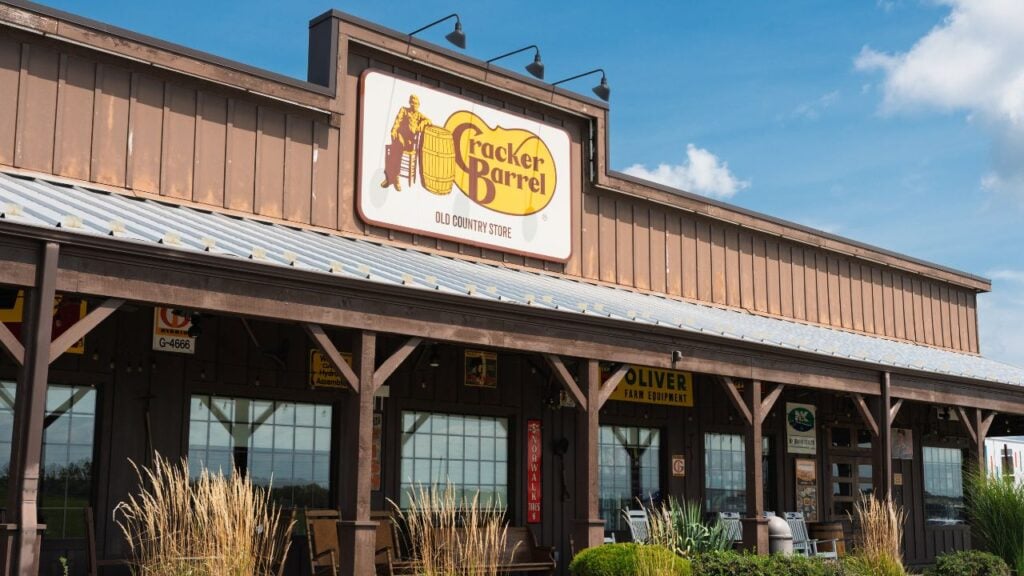
Cracker Barrel's stock dropped by $94 million in a single trading day in August 2025, right after the company swapped its old logo for a slimmer one.
The company put the old logo back within days, but that wasn't the only change fans had already watched disappear from the dining rooms.
