
8 Things Newcomers Never See Coming When They Move to Wyoming

Wyoming’s governor stood at Trapper’s Point in Sublette County in June and signed off on the state’s first legally protected pronghorn migration corridor.
The herds have walked that route for 6,000 years.
None of that is in the brochure, and neither is most of what a newcomer runs into in the first year.
These are the things newcomers never see coming when they move to Wyoming.
1. Newly Legal Corner Crossing
Wyoming still carries a checkerboard land pattern from 19th-century railroad grants, alternating public sections with private ranches one square mile at a time.
A newcomer who buys rural land can find federal ground touching all four corners of their fence line.
Few see that coming.
A federal appeals court ruled in March 2025 that hunters can legally step corner to corner between two public squares.
Neither boot may touch the private ranch squeezed between them.
The U.S. Supreme Court declined to hear the rancher’s appeal that October, so the ruling now stands across six Western states.
What Corner Crossing Allows in Wyoming
Corner crossing in Wyoming only protects a person’s feet moving between two public corners that touch at a single point.
Stepping onto the private ranch itself, leaving gear behind, or flying a drone over that land can still count as trespassing under Wyoming law.
The checkerboard behind all of this covers about 2 million acres in southwest Wyoming, laid out in one-square-mile sections under an 1862 railroad law.
2. Interstate Closures From Wind
The Wyoming Department of Transportation (WYDOT) has closed sections of interstate highway to light, high-profile vehicles since 2011, when Wyoming’s wind proved strong enough to warrant it.
WYDOT doesn’t sugarcoat it: The agency’s page for drivers calls the gusts hurricane-force winds.
Moving trucks count too.
WYDOT built a weight-based closure system in 2023, so road signs now show an actual gross-weight cutoff instead of a vague warning.
These checkpoints flag rental trucks, campers, and horse trailers just as often as full-size semis, so nothing tall or boxy crossing southern Wyoming is exempt.
3. New Cars’ Steep Registration Fee
Wyoming taxes a brand-new vehicle at 60 percent of its factory cost the first year it’s registered, a number that catches many newcomers off guard.
County treasurers calculate the fee from that factory price, not a flat statewide number.
A brand-new vehicle with a $20,000 factory price gets a first-year county fee of $360, per Uinta County’s posted formula.
Older cars cost less.
The rate then eases year by year: 50 percent of factory cost in year two, 40 percent in year three, and 30 percent in year four.
Year five drops to 20 percent, and the rate finally settles at 15 percent in year six and beyond.
Wyoming charges no personal income tax at all, the trade-off newcomers usually hear about before they ever see a registration bill.
4. The Hour-Long Grocery Drive
Wyoming counted 80 food deserts across 21 counties in a 2019 tally, places where the closest grocery store sits 10 or more miles away.
Wyoming’s hunger initiative has pointed out that some families travel upwards of 100 miles to reach a grocery store.
That’s not a quick errand.
A newcomer used to a supermarket on every corner has to start planning grocery runs like a small road trip, restocking a chest freezer instead of shopping twice a week.
5. Wildlife’s Right of Way
Wyoming ranks among the nation’s top 10 states for animal-vehicle collisions, according to State Farm’s most recent nationwide claims data.
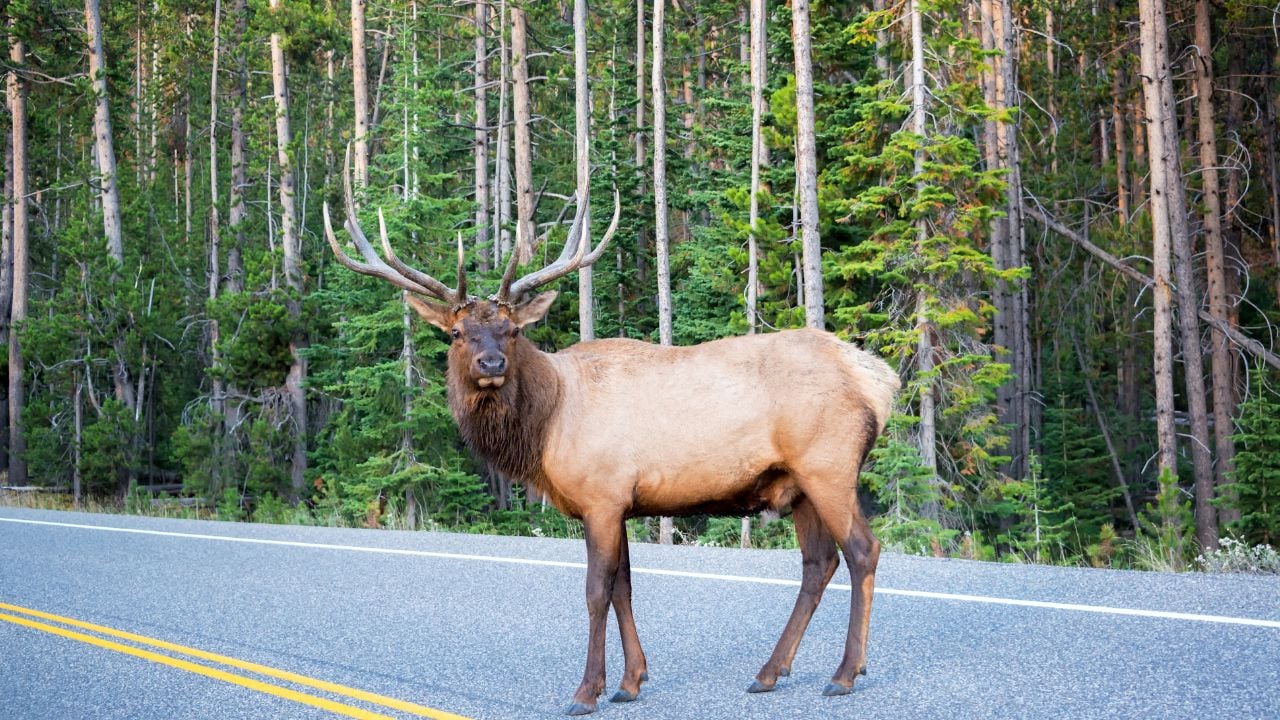
Deer, elk, and pronghorn cross roads on their own schedule, not the driver’s.
Sublette County’s pronghorn herd follows a 150-mile migration corridor first used some 6,000 years ago, a route Wyoming only finished protecting this past June.
The herd won’t wait.
A newcomer’s evening commute near Pinedale or Rock Springs can mean idling for several minutes while a few hundred animals finish crossing.
October through December brings the highest collision risk nationwide, and Wyoming’s wide-open highways offer little warning before an animal steps into the headlights.
6. Your License’s Nonresident Start
Game and Fish requires 365 consecutive days of physical, documented residency before a Wyoming newcomer can buy a resident hunting or fishing license.
A newcomer who moves in October for elk season is still counted as a nonresident that whole first year.
The clock doesn’t start early.
Nonresident hunters compete for a much smaller share of tags and pay far more for them.
Someone who moves to Wyoming for the hunting alone can spend an entire year priced like a visitor.
Psst! How much do you know about Wyoming? Take our quiz and see if you can ace it.
Quiz
Wyoming Trivia Roundup
Answer these questions on Wyoming history and geography. We bet you can’t get them all right. Prove us wrong?
Wyoming earned its nickname ‘The Equality State’ after a milestone on December 10, 1869. What was it?
7. Rural Life's Flight Plan
Helicopter rides support an entire licensed industry in Wyoming: air ambulance membership organizations regulated by the state's insurance department.
Rural hospitals sit far enough apart that a serious accident or a heart attack can mean a helicopter ride instead of a short ambulance trip.
That flight isn't cheap.
Households in remote counties buy annual memberships to cap what an uncovered flight would otherwise cost, a habit state regulators have had to write rules around.
That membership fee is simply the cost of choosing Wyoming's wide-open country over quick access to a hospital.
8. Hail Season's Total Roof Loss
Southeastern Wyoming sits inside what federal storm scientists call Hail Alley, the corridor where Wyoming, Nebraska, and Colorado meet.
The National Oceanic and Atmospheric Administration (NOAA) says that stretch of the state usually sees more hailstorms than anywhere else in the country.
That stretch logs seven to nine hail days there a year.
Cheyenne bears the brunt.
Storms there can drop hail the size of golf balls, enough to crack a windshield or strip a new roof down to the decking in minutes.
Filing a hail claim before the first spring ends is common in this corner of Hail Alley, no matter how carefully newcomers budget for Wyoming's dry climate.
13 Types of People at the Wyoming DMV Who Make You Wish You Could Do Everything Online

Walking into a Wyoming Department of Motor Vehicles (DMV) office means grabbing a paper ticket, scanning for an open chair, and settling in for a long wait.
Somewhere in that crowded waiting room sits a certain type of person who makes the whole experience worse, and this list rounds up all 13.
13 Types of People at the Wyoming DMV Who Make You Wish You Could Do Everything Online
18 Clever Tricks Stores in Wyoming Use to Make You Spend More

Shoppers rarely notice it, but stores have spent decades studying exactly how people move through the aisles.
Small details built into that layout nudge every trip toward spending more, and this list breaks down 18 of the tricks at work.
18 Clever Tricks Stores in Wyoming Use to Make You Spend More
