
10 Appliances Michigan Homeowners Should Consider Repairing Instead of Replacing

Michigan’s homes carry a median age of 53 years. That’s eight years older than the national median, according to a Bridge Michigan review of state housing data.
Old houses come with old machines.
The instinct is to replace the whole thing, and the math almost never supports it.
These are the appliances Michigan homeowners should consider repairing instead of replacing.
1. Gas Ranges With a Dead Igniter
A gas range fails most often at one small part: The igniter clicks every time you turn a dial, and it’s the first thing to go.
Replacing it costs $150 to $250, parts and labor combined.
That’s it.
A gas range also outlasts almost everything else in the kitchen, with an expected life of up to 15 years.
Toss a range at year six over a $200 igniter, and a homeowner throws away most of its working life along with it.
2. Dishwashers That Won’t Drain
Standing water at the bottom of a dishwasher tub means one thing nine times out of ten: A clogged or failed drain pump, not a dying machine.
A new dishwasher, installed, runs $500 to $1,300.
The repair doesn’t come close.
Angi puts the average dishwasher repair at about $225, with typical jobs landing between $175 and $325.
Most dishwashers last 10 to 12 years, so a pump failure at five or six is a part problem, not an age problem.
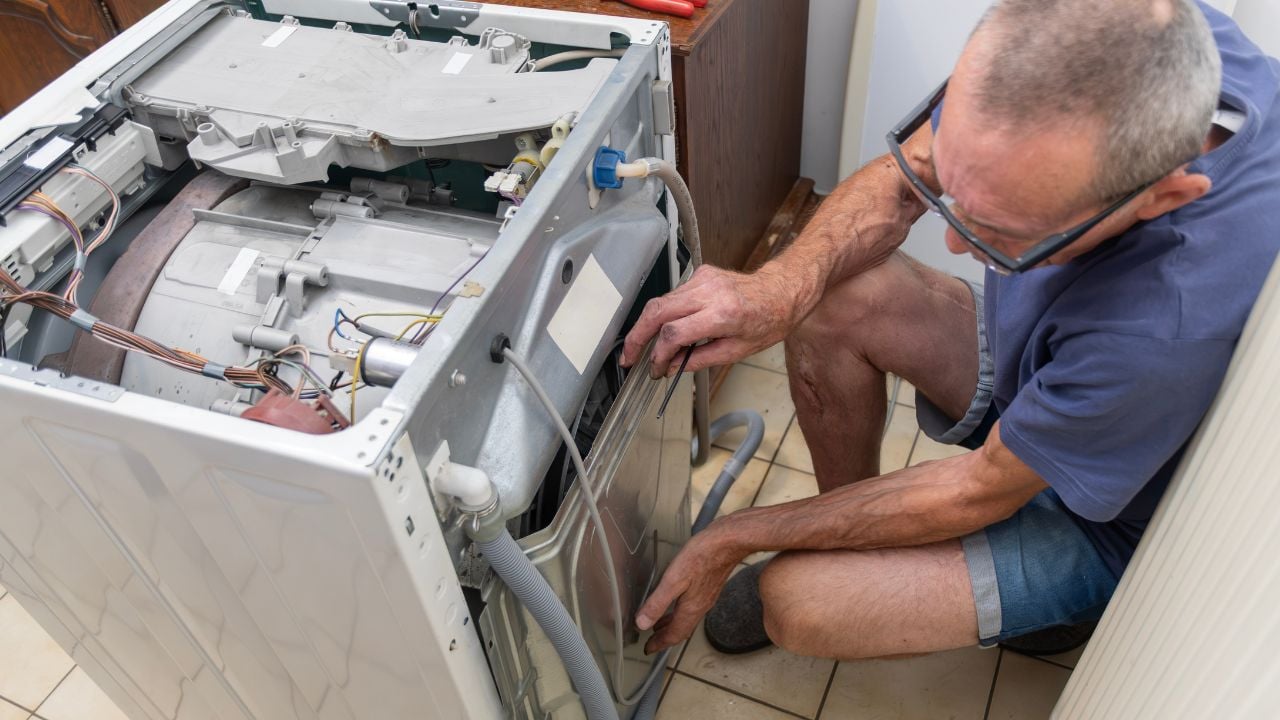
3. Washing Machines That Won’t Spin
Whirlpool got its start with washing machines, electrifying the wringer washer out of Benton Harbor back in 1911.
A washing machine that fills but won’t spin these days is usually just down a belt or a worn drive part, more than a century later, not a burned-out motor.
A washer repair still averages around $220.
Front-load machines are expected to run 10 to 12 years, with top-load machines stretching to 14.
A new machine starts at $500.
A belt doesn’t.
4. Dryers That Blow Cold Air
A dryer that tumbles clothes without ever warming them has almost always lost its heating element.
Swapping it runs $100 to $350, averaging around $230, a small slice of what a new dryer costs delivered and installed.
Cheap fix.
A Maytag or a General Electric dryer both run on the same basic element.
Angi expects either one to work for 10 to 13 years with a clean lint trap.
A dead element at year seven still has years left in the rest of the machine.
5. Refrigerators Losing Their Cool
A refrigerator repair averages $275 according to Angi, with most jobs falling between $150 and $400.
Running warm is a common reason for those calls, and it usually points to a bad thermostat, a worn door seal, or a failing fan, not a dead compressor.
That’s the whole fix.
A standard General Electric or Frigidaire replacement costs $1,000 to $3,000, and a Sub-Zero build-in runs well past that.
A standard fridge is built to run about 12 years on average, so a repair at year six is early, not overdue.
The Math Behind the 50% Rule
A refrigerator repair decision usually comes down to one comparison: The repair bill against half of a replacement’s price.
On a $1,800 refrigerator, that puts the ceiling at $900, which clears even a $700 compressor job with room to spare.
A $1,000 refrigerator only leaves $500 of room, tight enough that the same compressor repair can tip the decision the other way.
6. Water Heaters Running Out of Hot Water
A common complaint about a water heater is running out of hot water fast.
The culprit is almost always a failed heating element or thermostat, not a cracked tank.
Angi prices a professional heating-element repair at $200 to $300, and an electric thermostat swap at $150 to $200.
Both handled in an afternoon.
A full replacement, tank and installation included, runs $850 to $1,800, according to Angi.
Cheaper by a wide margin, almost every time.
Michigan’s homes carry a median age of 53 years, eight years older than the national median of 45.
A Bridge Michigan review of the state’s housing stock names aging water heaters as one of the parts homeowners inherit along with an older house.
Typical gas units run 6 to 12 years, and electric units run 10 to 15, so a repair well inside that window almost always beats a full swap.
7. Garage Door Openers That Won’t Fully Close
A garage door opener that won’t fully close, or reverses back up right before it hits the floor, usually has one culprit: Misaligned safety sensors.
The motor is rarely the problem.
Angi prices professional sensor repair at $150 to $250.
A wiring fix, nothing more.
A full Chamberlain or LiftMaster replacement, installed, averages $379, well above that sensor repair bill.
An opener is built to run 10 to 15 years, and a $150 sensor fix rarely justifies starting over years early.
8. Furnaces With a Dead Blower Motor
A furnace that stops pushing warm air through the vents has often lost its blower motor, the fan that moves heated air through the ductwork.
Swapping the motor alone costs $300 to $900.
A whole new furnace, installed, runs $2,823 to $6,897 on average, according to Angi.
Big gap.
A gas furnace is built to run 15 to 20 years, so a blower failure partway through that run rarely justifies starting over.
9. Garbage Disposals That Just Hum
Every InSinkErator and many other garbage disposals carry a small red reset button on the bottom of the unit, built to clear a jam for free.
Free fix, first.
A garbage disposal that hums without turning is usually just jammed, not broken.
When the reset button doesn’t clear it, a full disposal repair still averages $230, against roughly $550 to swap the whole unit.
Disposals are built to run 10 to 12 years, longer with regular cold-water use.
10. Range Hoods With a Dead Fan
Replacing a Broan or similar range hood’s fan motor costs $100 to $300 installed.
That’s usually the fix when a range hood runs its light but not its fan, since the motor typically fails before anything else in the housing.
Motor only.
Replacing the entire hood, wiring and ductwork included, runs $483 to $1,010.
A motor rarely takes down the housing, the ductwork, or the light with it, so a range hood failure often stays a one-part job.
Psst! Before you call anyone, run through this checklist and see where the math lands.
The Stakes of Older Homes
Michigan’s housing stock skews old, with a median home built in 1973 and a median age of 53 years.
Not by a little.
Roughly six in ten occupied Michigan homes were built in the 1970s or earlier, with much of that older stock clustered around Detroit and Grand Rapids.
A furnace or water heater installed alongside one of those houses has usually been swapped out once already.
A dishwasher, a disposal, or a range hood often hasn’t.
Detroit Edison, now DTE Energy (DTE), will still pay $50 for a full-size refrigerator or freezer.
The unit just needs to be between 10 and 30 cubic feet and running when the truck arrives.
A smaller fridge or freezer under 9.9 cubic feet only earns $20, and the utility won’t take one with the cord already cut.
9 Michigan Lake Access Rules Property Owners Get Wrong

Michigan’s Great Lakes shoreline runs 3,288 miles across four lakes.
A dock, a seawall, or a stretch of beach can all carry rules a property owner never sees coming.
9 Michigan Lake Access Rules Property Owners Get Wrong
9 Things Michigan Does Better Than Ohio
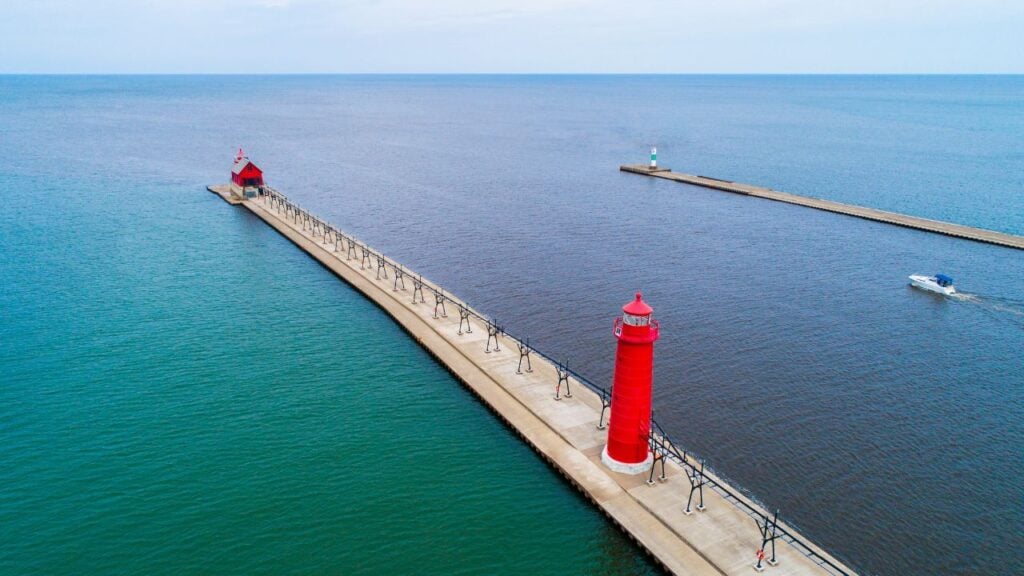
Michigan lost Toledo to Ohio in 1836 and got the Upper Peninsula in the trade, a deal Michigan’s newspapers panned at the time.
People who’ve lived on both sides of the border still keep a running list of what Michigan gets right.
9 Things Michigan Does Better Than Ohio, According to People Who Lived in Both
