
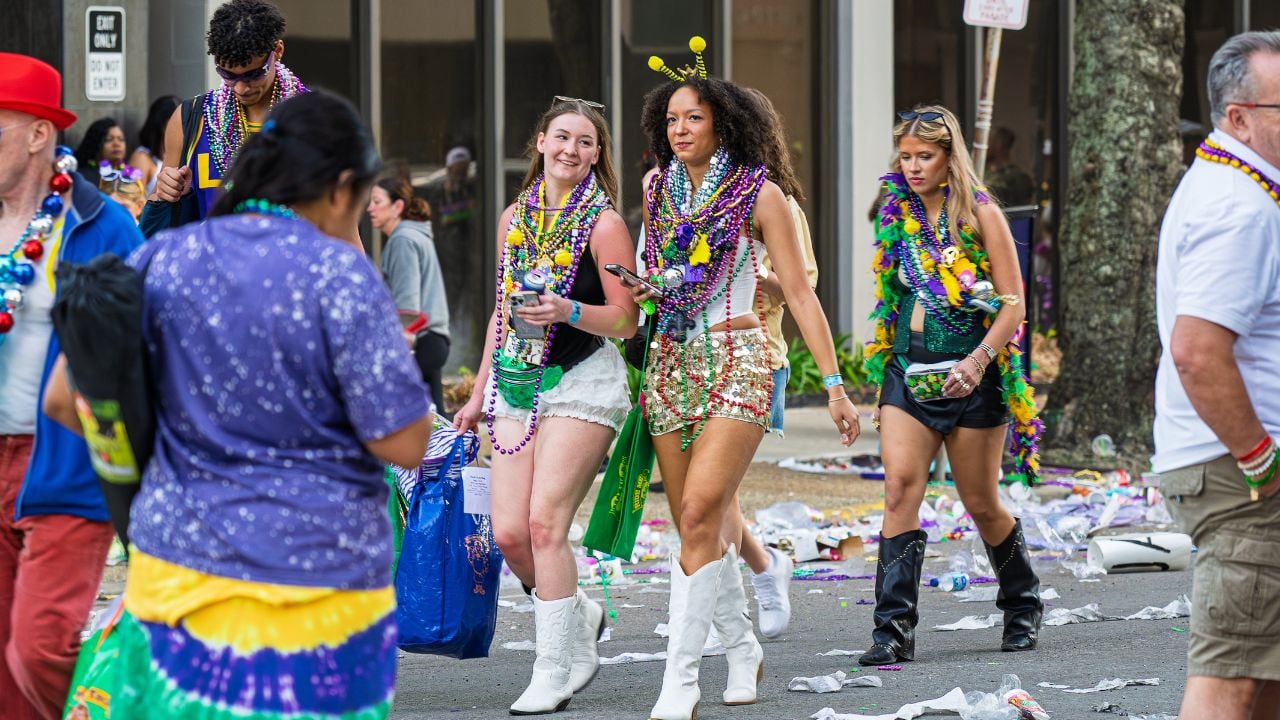
9 Unwritten Rules Louisianians Follow on a Mardi Gras Parade Route

Mardi Gras parade routes have rules, even when the celebration looks like anything goes.
Louisianians learn them through years of catching throws, watching relatives, and discovering which mistakes earn a few sideways glances.
These are the unwritten rules locals follow on a Mardi Gras parade route.
1. Yelling for It
Louisianians don’t stand on a parade route waiting to be noticed.
They shout.
The call is “Throw me somethin’, mister!”, and the Historic New Orleans Collection traces it through a 1969 pamphlet a Carnival regular wrote on the art of catching throws.
That writer’s verdict was that yelling barely improves your odds.
He told readers to do it once per float anyway because a parade you watched in silence isn’t a parade you attended.
A silent adult on St. Charles Avenue reads as somebody who came straight from the airport.
2. Nothing Off the Pavement
Louisiana parade crowds leave the beads that hit the street where they land.
Much of what never gets caught stays right there on the pavement.
Hands go up, never down.
Reaching into a crowd at ankle level puts your fingers where a few hundred shoes are landing.
By one Historic New Orleans Collection estimate, Louisianians leave 25 million pounds of throws behind on the ground in a single Carnival season.
One metal throw tempts people to break that rule anyway.
A dropped doubloon doesn’t bounce back up for a second chance the way a strand of beads does.
A bare hand on the pavement is still asking for a boot heel.
3. Knowing Somebody
Louisianians who want a hand-decorated Krewe of Muses shoe don’t stake out a good spot on the route and hope.
They find out which float their friend is riding before the parade rolls, then call the rider by name once the float reaches them.
That’s the workaround that works.
Signature throws like Muses shoes travel by relationship, not by luck.
A rider decorates a small batch by hand, and those go to faces the rider is watching for along the route.
Standing in the right place with your hands up doesn’t buy you one.
Where a Louisiana Parade Route Pays Off
Louisiana parade regulars pick a spot on the route before they pick anything else.
The beginning of the route catches riders while they’re fresh and their bags are still full.
The end catches them dumping whatever they don’t want to carry home.
Standing under a balcony that sits a little too high for an accurate throw collects everything that falls short.
4. Tipping the Flambeaux
Louisiana’s night parades still move behind men carrying open flame on a pole.
The flambeaux carriers dance the route, spin the torches, and work the curb for tips.
That money isn’t charity.
The National World War II Museum documents a 1946 strike in which carriers asked for five dollars a parade instead of the two they’d been paid before the war.
Hermes, Proteus, and Comus all rolled in the dark rather than meet the number.
Crowds hand up folded bills as the torches pass, and nobody along the route has to be told to reach for a pocket.
5. Ladder Rule Louisiana Wrote Down
One Louisiana Mardi Gras parade custom stopped being unwritten, and families still build it in a garage.
Parents bolt a painted wooden seat box to the top of a stepladder so kids ride above the crowd instead of inside it.
New Orleans now writes down the rest of it.
City rules cap a parade ladder at six feet tall and require it to stand free instead of strapped to another.
It also has to sit six feet back from the curb.
Nothing goes out on the route more than four hours ahead, either.
Six feet either way.
The custom underneath the code never changed, and an adult still stands behind the ladder to swat away whatever arrives too fast.
6. Looking, Not Touching
Louisiana’s Black Masking Indians spend close to a year hand-sewing the suit they wear on Mardi Gras morning.
Thousands of beads and rhinestones go on one at a time.
The Historic New Orleans Collection’s preservation guide treats those suits as far more than costume.
It says decisions about handling or repairing a suit belong with the person who made it and with the Black Masking Indian community.
Crowds who catch a tribe masking through its neighborhood on Mardi Gras Day give the suits that same room.
You watch from a step back and ask before you photograph up close.
Nobody reaches out.
7. Waiting for the Capitaine
Cajun parishes in Louisiana run their Mardi Gras on horseback and flatbed trailers instead of floats.
A courir de Mardi Gras works its way house to house through the countryside, and one unmasked man decides when it moves.
He carries a flag as the sign of his authority.
Nobody argues with it.
The capitaine goes ahead to the door, asks the family, and promises them nothing on the property will be stolen or damaged.
Masked runners hold the road until he lets them go.
In whipping communities like Tee Mamou, capitaines carry a thick braided burlap whip to keep order.
Runners there take a whipping as part of the day, and it isn’t a violent one.
By afternoon, the capitaine leads his runners out of the countryside and back toward town.
Tee Mamou-Iota’s Mardi Gras caps its day with a parade through town that a curbside crowd lines before the communal gumbo starts.
8. Never Reaching for the Coconut
Louisiana’s Zulu Social Aid and Pleasure Club has thrown coconuts from its floats since 1910.
The decorated version became a coveted catch, one the Historic New Orleans Collection now calls a Carnival prize.
Then the lawsuits caught up.
Riders had been lobbing coconuts into a packed crowd for decades, and by 1987 the injuries cost Zulu its insurance.
The throw went on hold.
Louisiana lawmakers passed the Coconut Bill in 1988, shielding krewes from liability for items traditionally thrown at a parade, coconuts included.
Zulu doesn’t use that legal cover as license to throw them.
The krewe’s parade rules ban the throw entirely and require every coconut to be handed directly to a fan instead.
Reach up for one anyway, and a rider will wave you off.
9. No Unmasking the Captain
Louisiana keeps a Mardi Gras rider’s identity hidden by law, not just by choice.
The state bans masks in public every other day of the year.
Carnival is the one carved-out exception, and only for parades a mayor or sheriff has authorized in advance.
A krewe’s captain takes that exception seriously.
The mask stays on.
He rides masked from the first block to the last, often on horseback flanked by his lieutenants.
His name rarely reaches the crowd.
Comus, one of Carnival’s oldest krewes, keeps its king’s identity a secret by tradition.
Guess anyway, and many Louisianians will just shrug.
Psst! How much do you know about Louisiana’s Carnival history? Take our quiz and see how many you can get right.
Quiz
Louisiana Carnival Pop Quiz
Test yourself on Louisiana’s parades, krewes, and country Mardi Gras. We bet you can’t get them all right. Prove us wrong?
A New Orleans artist wanted krewes to start throwing aluminum coins. How did he prove to a doubtful krewe captain that they were safe?
Where Louisianians Still Argue
Louisianians have never agreed on which side of a parade route is better.
The neutral ground is the grassy median where the streetcar runs, and the sidewalk side is everything across from it.
Families spread out on the neutral ground because it holds chairs, coolers, and a lot of cousins.
The Historic New Orleans Collection's parade guide makes the case for the other side, where a tighter crowd packs more throws into less pavement.
Nobody settles it.
A folding chair set out on the neutral ground four hours early does the same job either way, at least until somebody moves it.
9 Louisiana Towns Visitors Skip Because They Never Leave New Orleans
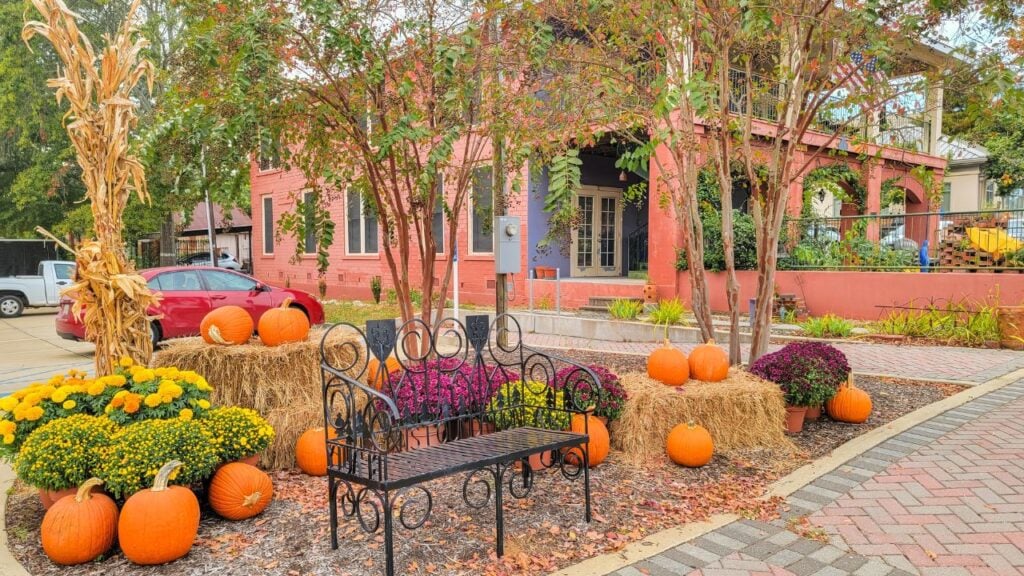
Louisiana has 64 parishes, and New Orleans sits in just one of them.
That leaves 63 more waiting on visitors who never make it past the French Quarter.
9 Louisiana Towns Visitors Skip Because They Never Leave New Orleans
8 Things Brookshire's Deli Workers Wish Louisiana Shoppers Knew
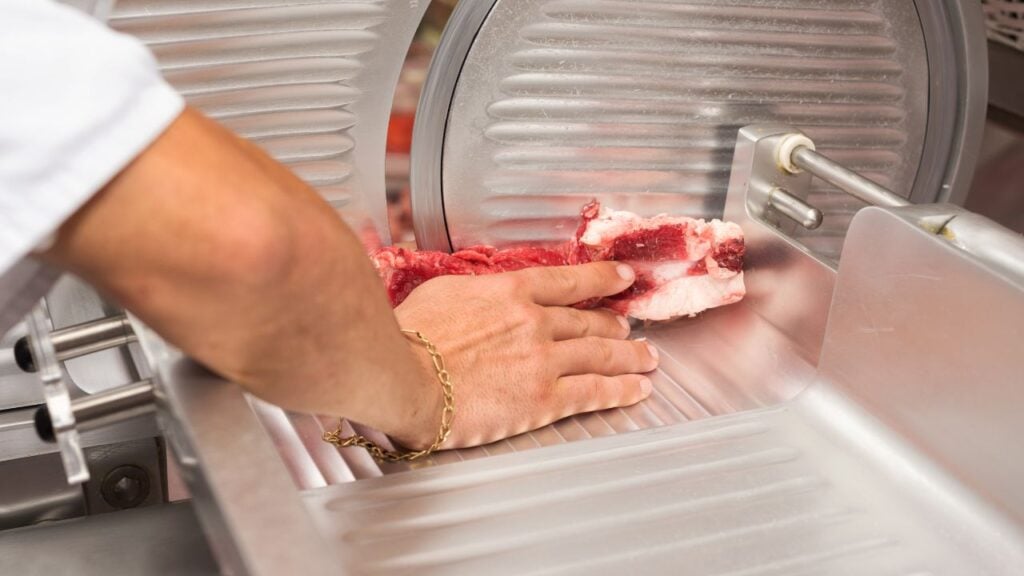
Years of Friday night fried chicken runs don't teach you everything about a Brookshire's deli counter.
Shoppers who order the same way every week keep walking past deals and shortcuts the staff would happily point out.
8 Things Brookshire's Deli Workers Wish Louisiana Shoppers Knew
