
6 Things North Dakotans Do Every County Fair That Visitors Find Charming

More than half of North Dakota’s 53 counties still put on a county fair every summer, by the state historical society’s count.
A first-time visitor pulls in expecting rides and fried food.
Both are there. But what often sticks with people more is everything happening in the barns and the grandstand.
These are the things North Dakotans do every county fair that visitors find charming.
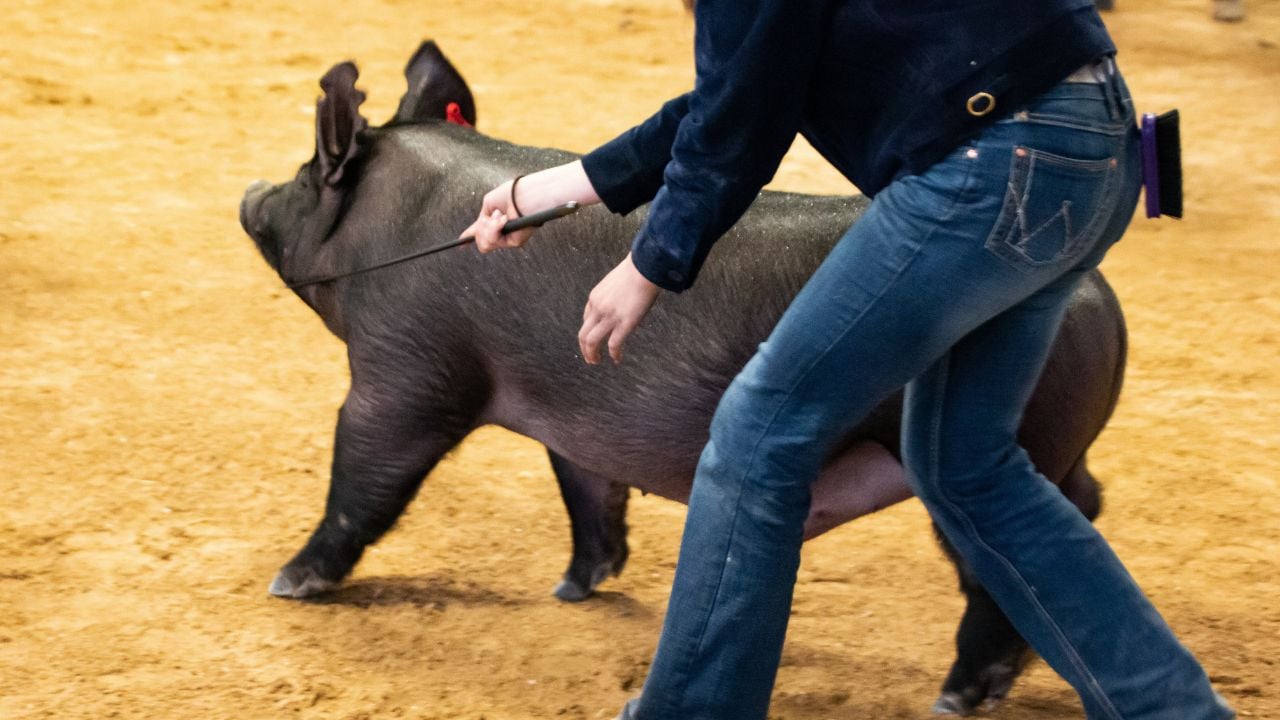
1. Bidding Big on 4-H Animals
North Dakotans turn the 4-H livestock sale into the county fair’s headline event.
At the Red River Valley Fair in West Fargo, more than 100 animals went through the auction ring in a single morning.
Buyers bid on cattle, sheep, goats and pigs raised by kids ages 8 to 20.
One animal sold for more than $10,000.
That’s steep money for a county fair auction.
The money goes straight to the kid, not the fair board, covering a future animal, another 4-H project, or a start on college.
The Ag Education Coordinator behind the Red River Valley sale says the auction forces kids to spend a whole day talking with buyers they’ve never met.
That’s a skill nobody grades, but everybody who’s done it remembers it.
In Amidon, the tiny town that hosts the Slope County Fair, the local bank makes a habit of buying one or two of the priciest animals every year.
It’s another way of investing in the kids, not the cattle.
2. Packing the Grandstand for a Demolition Derby
North Dakotans treat a demolition derby as one of the county fair’s biggest draws, right up there with the rodeo.
Roughrider Days is the Stark County Fair’s Fourth of July event in Dickinson.
Roughrider Days has featured a derby since the tradition began there in 1970, alongside a parade and three days of rodeo.
That’s more than fifty years of crumpled hoods and cheering bleachers.
McKenzie County’s fair board runs a derby every June at the Ag Expo in Watford City, where the 2026 fair marked its 67th year.
Drivers there build cars meant to get wrecked, and the last one still moving wins.
A visitor headed straight for the crash-up usually buys a ticket to the derby alone, separate from the gate price for the rest of the fair.
Why This County Fair’s Derby Skips the Fourth Some Years
Stark County’s fair board moved the Roughrider Days demolition derby off the Fourth of July weekend in 2022.
The county fair board made the change after drivers reported thinning car counts on a date that competed with everyone’s holiday plans.
3. Crowning a Queen at the Rodeo
North Dakota county fairs pick a rodeo queen and princess almost every summer, and at the Ransom County Fair, they’re crowned in the same arena where the rodeo happens.
The contest opens in the morning with a horsemanship round.
Contestants come back that afternoon for speeches and modeling, well before the actual rodeo starts.
Ransom County crowns its Rodeo Queen and Princess that evening, right in the arena.
The coronation happens before that night’s rodeo, not after it.
It’s not a separate pageant hall.
The whole contest plays out between chores, livestock judging and a fireworks show, on the same dusty grounds as everything else.
4. Entering Pickles for a Ribbon
Many North Dakota county fairs set aside a building for anyone with a jar of pickles or a fresh-cut bouquet, not just 4-H kids.
At the Stutsman County Fair in Jamestown, the Open Class Home and Hobby Department pulled in about 142 exhibitors and roughly 690 exhibits in one recent year.
Canned tomatoes sit next to quilts, cross-stitch, sunflowers and photography, judged the same way the 4-H entries are.
Blue ribbon means first place.
Red takes second, and white takes third.
Any adult, any age, any skill level can walk in with a pie or a wood-burned sign and walk out with a ribbon on the wall.
Nobody has to raise a steer to compete.
5. Cheering on the Mutton Bustin’ Kids
Rodeo weekend at a North Dakota county fair almost always saves a slot for the littlest riders.
At the Pembina County Fair in Hamilton, kids climb onto a running sheep for mutton bustin’ on both nights of the rodeo, right alongside the bronc riding and barrel racing.
The rule is simple: Hang on as long as you can.
Riders wear a helmet and let go the second the sheep decides otherwise, the same setup the North Dakota State Fair uses in Minot.
Grown men who ride broncs for a living still lose it laughing at this one.
6. Keeping a Fair Alive in a Tiny Town
North Dakota keeps some of its oldest county fairs running in its smallest towns.
The Slope County Fair has been held every summer in Amidon since 1920, and Dakota Community Bank, a longtime sponsor, calls it one of the state’s longest-running county fairs.
The fair board describes Amidon as a town of about 20 people, in a county of roughly 700.
Somehow the fair still pulls in rodeo contestants from as far as Montana, plus enough locals to fill a grandstand.
That’s not bad for a town of 20.
The Wells County Fair has run every summer in Fessenden since 1907.
The newly organized fair association bought the fairground land on the edge of town within six months of forming.
Fessenden’s population sits under 500 today, and the fair still calls itself the state’s last county fair with free-gate admission.
That’s two small towns proving a county fair doesn’t need a big one to keep it going.
Psst! How much do you know about North Dakota’s biggest fairs and farm shows? Take our quiz and see if you can ace it.
Quiz
North Dakota Fair IQ
Answer these questions on North Dakota’s biggest fairs and farm shows. We bet you can’t get them all right. Prove us wrong?
One North Dakota agricultural show bills itself as “The World’s Largest Crop Show.” Where is it held?
Fair Season Across the State
North Dakota's historical society counts more than half of the state's 53 counties still running a county fair every summer.
That's dozens of fairs.
Many run two to four days, often back to back with a neighboring county's fair the very next week.
A visitor could plan a summer road trip around the calendar and hit a different county fair almost every weekend.
A county fair calendar this packed keeps fairgrounds across North Dakota busy from June through September with barely a gap.
Grandstand entertainment changes fair to fair, but the same volunteer boards and 4-H families keep the lights on year after year.
15 Things North Dakotans Do When They're Alone That They'd Never Admit Out Loud

North Dakotans keep a whole different side of themselves reserved for whenever nobody else is around.
The habits get stranger than many people would ever admit to a neighbor.
15 Things North Dakotans Do When They're Alone That They'd Never Admit Out Loud
16 Simple Pleasures That Made 1980s North Dakota Malls so Special

A North Dakota mall in the 1980s didn't need a reason for a visit, just a ride and a few dollars in a pocket.
The food court noise and the walk past every storefront twice made an ordinary Saturday feel like an event.
16 Simple Pleasures That Made 1980s North Dakota Malls So Special
