

8 Vacation Day Rules Virginia Employees Follow Even When Nobody Requires Them

Your vacation request was approved.
But your guilt, second-guessing, and urge to stay available somehow came along for the trip anyway.
These are the vacation day rules Virginia employees follow even when nobody requires them.
1. Checking Email Every Day
Employees open their inbox on vacation out of habit, not because a boss told them to.
A LinkedIn survey found 59% of American workers check in with the office at least once a day while they’re off the clock.
Almost a quarter do it three times a day or more.
Nobody requires that.
Gen Z checks in the most of any generation, at 86%.
Workers do it from a rental on the Chesapeake Bay as often as they do it from a desk in Tysons.
2. Leaving Days on the Table
Workers earn vacation days and then let a share of them go unused, year after year.
Pew Research found that 46% of workers who get paid time off don’t use all of it.
Just over half said they didn’t feel like they needed more time away.
Nearly as many worried about falling behind at work.
So why skip it?
The excuse doesn’t have to make sense.
It only has to feel safer than asking.
Workers do it to themselves, one skipped Friday at a time.
3. Capping Unlimited Time Off
Employees with an unlimited vacation policy often act like the old limit still exists.
A Patriot Software survey found 66% of workers under an unlimited policy would still cap themselves at 15 days a year or fewer.
No handbook sets that number.
Workers pick it on their own, guessing at what looks acceptable to a boss who never set an actual ceiling.
Ninety-one percent said they’d rather have a mandatory minimum instead, something that spells out exactly how many days they’re allowed to take.
An unlimited policy sounds generous.
Employees still invent a limit nobody asked for.
4. Answering Calls off the Clock
Employees keep their phone within reach even after telling everyone they’re unreachable.
A Harris Poll found 56% of workers have taken a work call during their time off.
Separately, 86% said they would check an email from their boss even while they’re supposed to be off the clock.
Employees answer anyway.
No paid time off (PTO) policy spells out an exception for the boss’s number.
The phone stays face-up on the towel, in case.
5. Cutting Trips Short for Work
Employees book a week away and then trim it once work piles up.
A Korn Ferry survey found 63% of professionals said they’d shorten a vacation to handle a heavier workload.
Nobody tells them to come back early.
They do the math themselves.
Three unread projects beat three more days on Chincoteague.
A four-day trip turns into a three-day trip, and the flight home moves up without anyone in HR asking why.
6. Apologizing Before Taking a Day Off
Employees ask for a Friday off and then spend half of it apologizing for asking.
A 2019 Alamo Rent A Car survey found 48% of workers had felt shamed by a coworker or supervisor for taking time off.
Parents felt it worse, at 55%.
That shame is the guilt talking, and the apology is what it produces.
A separate Qualtrics survey found the top reason workers skip earned days off is fear of falling behind, followed closely by fear of letting a teammate down.
No manager asked.
Employees hand over the apology anyway, before anyone requests it.
7. Treating PTO as a Risk
Employees who just started a new job treat every vacation request like it might backfire.
Pew Research found workers with less than a year on the job are more than twice as likely to worry that time off could cost them their position.
The gap runs 24% versus 11% for more tenured employees.
No offer letter says a first-year employee has to earn the right to rest.
New hires assume it anyway.
They shrink their requests without saying so.
A senior employee asks for a week without blinking.
A new hire asks for three days and packs an excuse just in case.
8. Working Through the Time Off
Employees pack a laptop for vacation even when the job never asked for it.
Qualtrics found 49% of workers do at least an hour of work a day while they’re supposed to be off.
Twenty-four percent put in three hours or more daily, from a hotel room in Virginia Beach or a cabin in the Blue Ridge Mountains.
Separate research from Perceptyx found 43% of employees plan to fully disconnect and end up working anyway.
Who assigned that work?
No one did.
Employees took it with them anyway.
How Much Time off Counts as Normal
Employees comparing notes on vacation often have no idea what’s typical nationally.
Bureau of Labor Statistics data shows private-sector workers average 10 days after their first year on the job.
That number rises to 15 days by year five, 17 by year ten, and 20 after two decades.
Federal law guarantees none of it.
Nothing requires it.
It’s just what employers, competing for the same workers, have settled into offering.
Why a Big PTO Number Can Mislead
An employee comparing a 20-day PTO bank at one company to a 10-day vacation policy at another isn’t comparing two versions of the same thing.
Many employers bundle vacation, sick time, and personal days into one combined PTO pool instead of offering them separately.
That pool has to stretch across a flu, a dentist appointment, and a week away, all from the same bucket.
The bigger number on paper isn’t always the bigger number in practice.
Psst! How much do you know about the history of paid vacation in America? Take our quiz and see how many you can get right.
Quiz
Vacation Day History IQ
Answer these questions on the history of paid vacation in America. We bet you can’t get them all right. Prove us wrong?
Which U.S. president once proposed that American workers get two to three months of vacation a year?
Where Virginia's Deadline Fits In
Virginia state employees earn annual leave on a sliding scale, starting at four hours every pay period for anyone with less than five years in.
That rate rises to nine hours a pay period after 25 years.
The carryover cap rises right along with it, from 192 hours for newer employees up to 432 hours for the most senior ones.
Cross that line, and the extra hours are gone on January 10.
A supervisor can't waive it.
An agency head can approve a narrow extension, up to 80 extra hours, but only if the employee uses them within six months.
Private-sector employers across Virginia rarely put a forfeiture date in writing at all.
The pressure shows up anyway, dressed up as a year-end email pushing everyone to use whatever leave they have left.
8 Things Cracker Barrel Servers Wish Virginia Regulars Would Stop Doing
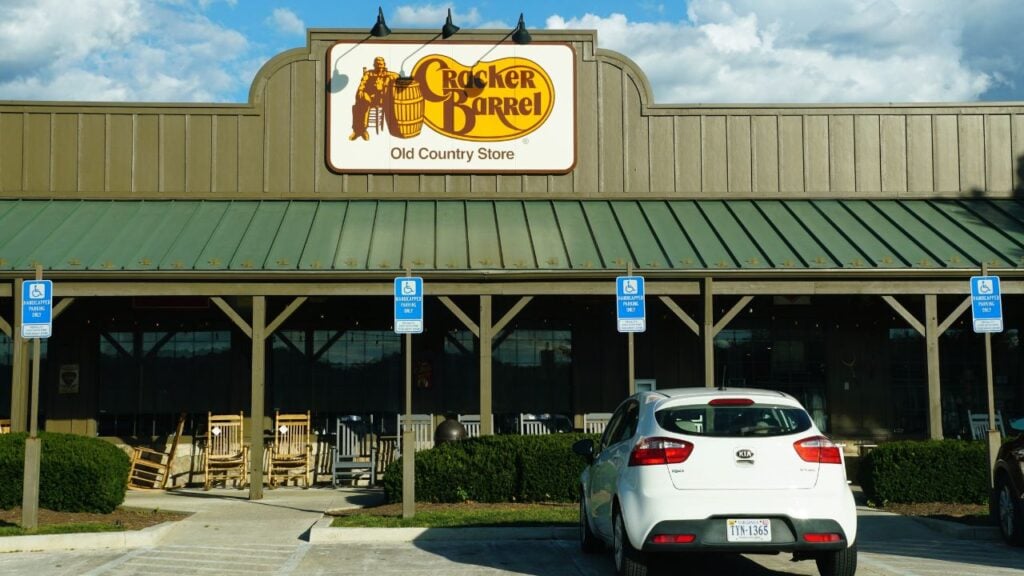
The Wednesday breakfast crowd at a Cracker Barrel off I-81 in Troutville shows up so often the servers know their coffee order before they sit down.
Familiarity has a downside, and many Virginia regulars have picked up habits their server would love to see stop.
8 Things Cracker Barrel Servers Wish Virginia Regulars Would Stop Doing
8 Aldi Perks Virginia Shoppers Over 60 Should Never Skip

Aldi rolls out a fresh weekly ad and new Aldi Finds every Wednesday, the same day Social Security deposits land for millions of retirees.
Virginia shoppers over 60 who time their trip around that overlap are cashing in on more perks than many regulars realize.
