
8 Things Washingtonians Should Do Before Wildfire Smoke Arrives

A box fan with a filter strapped to the front clears the air in a 15-by-15 room in about 10 to 15 minutes.
That should be an emergency backup, not your plan.
Washington’s smoke season doesn’t send a warning, and everything that helps once it arrives should be bought before it does.
These are the things Washingtonians should do before wildfire smoke arrives.
Note: This is general information, not medical advice. Air quality guidance and safety recommendations are subject to change, so confirm current conditions with the Washington State Department of Health.
1. MERV 13 Filters
Wildfire smoke gets into your house fastest through a weak air filter.
Washington’s health department recommends a MERV 13 filter or higher.
That’s short for Minimum Efficiency Reporting Value (MERV), the scale that rates how well an air filter traps fine particles.
Buy the highest-rated filter your heating, ventilation, and air conditioning (HVAC) system can handle, before wildfire season starts, not after.
Wait for smoke to show up, and you’re shopping with everyone else.
Shelves empty fast.
Get the deepest pleat your system can take without straining the blower, and make sure the filter fits snugly around the edges.
2. True HEPA Cleaners
A cheap air purifier does almost nothing against wildfire smoke.
Washington’s health department says to look for a filter-only unit with true high-efficiency particulate air (HEPA) filtration, sized to the room, without any ionic, ozone, or ultraviolet (UV) add-ons.
Skip the gadgets that claim to scrub the air with a jolt of ozone.
It’s not worth it.
A carbon filter built into the same unit pulls out some of the gases smoke leaves behind, too.
3. The Box-Fan Backup
Washington’s health department also backs a cheaper fix built from a box fan and a filter.
Use a 20-inch box fan made in 2012 or later and carrying a safety listing from Underwriters Laboratories (UL) or Intertek (ETL).
Those marks confirm it’s been tested against overheating.
Older fans carry a fire risk.
Strap a 20-inch MERV 13 filter to the front with bungee cords, clamps, or tape, and set the whole thing at least a foot from the wall.
Give it time.
It takes about 10 to 15 minutes to clean the air in a small, 15-by-15 room, so let it run.
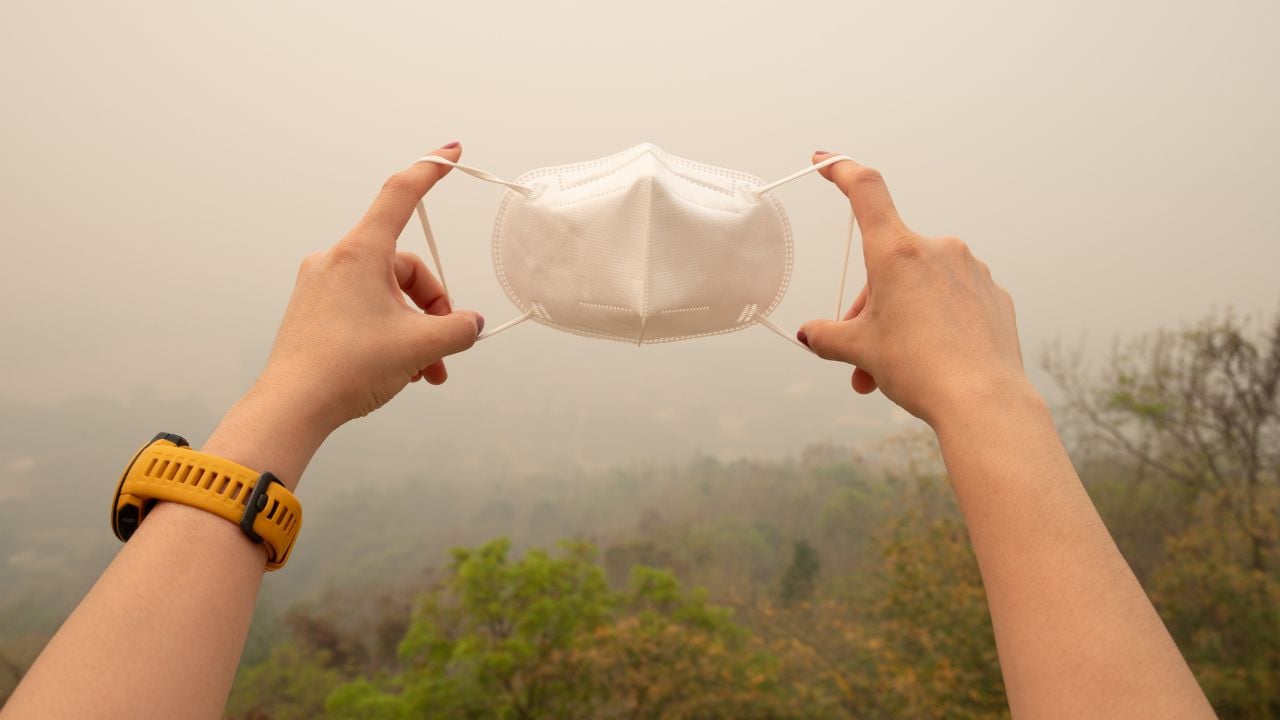
4. N95 Masks Now
A bandana does almost nothing once wildfire smoke rolls in.
Washington’s health department recommends an N95 or KN95 mask instead.
It filters fine particles a bandana can’t.
Fit matters more than the brand.
Beards break it.
Kids under seven don’t have great mask options yet, either.
Check the fit before smoke day, not during it.
Anyone with lung or heart disease should ask a doctor before counting on a mask at all.
Psst! How wildfire-smoke-ready is your Washington home? Run through this checklist and see where you stand.
5. The Clean-Air Room
Wildfire smoke doesn’t spread through a house evenly.
Washington’s health department recommends picking one small room with a door that shuts.
Pick it now.
Set your air cleaner up there before smoke season starts, not during it.
That’s the room you retreat to.
A bedroom beats a great room with an open floor plan, since a closed door keeps the clean air from drifting back out.
6. The HVAC Switch
Washington homes run their HVAC systems differently once wildfire smoke shows up.
Federal and state guidance both say the same thing: Learn your system’s recirculate setting before smoke shows up.
Some HVAC systems pull in fresh air from outside by default.
Find the switch that closes that intake, or set the system to recirculate, and test it now.
A window air conditioner needs the same check, since some models have an outdoor air damper you can close by hand.
Portable single-hose units are different.
They can pull smoke inside faster than they cool the room, so line up another way to stay cool on a bad air day.
7. The State’s Air Map
Washington runs a live air quality map.
The state’s air quality map shows current conditions county by county, and Ecology also runs an email list that sends alerts before conditions turn unhealthy.
Sign up now.
Waiting until the sky looks strange means you’re already behind, since conditions can shift fast once a fire kicks up smoke nearby.
What Washington’s Air Quality Colors Mean
Washington’s air quality map runs on six colors, each tied to a number range.
Green covers 0 to 50 and is fine for everyone outside.
Yellow covers 51 to 100, where sensitive groups should ease up while everyone else watches for symptoms.
Orange, 101 to 150, means sensitive groups cut outdoor time.
Red, 151 to 200, means everyone does.
Purple covers 201 to 300, and Dark Red covers 301 and up. Both call for the same response: Stay inside, run your air cleaner, and leave if you can.
8. Meds for Sensitive Family
Wildfire smoke hits some Washington households harder than others.
The state’s health department names kids, older adults, pregnant people, and anyone with a heart or lung condition as higher risk once smoke moves in.
Ask now, not later.
A doctor can say whether a mask is safe for that person and whether a prescription needs refilling before smoke season peaks, not during it.
A week’s cushion on daily medication beats a scramble once the air turns bad.
Why This Fall Still Feels Risky
Washington wildfires burned hundreds of structures around Spokane during the first weekend of August alone.
Smoke from those fires, plus blazes across Eastern and Central Washington, drifted all the way into the Seattle area.
That wasn’t a one-week event.
Gov. Bob Ferguson’s office ordered a burn ban across all 39 counties that same month, and it runs through noon on September 30.
Small, contained campfires are still allowed on private property under that order, along with any burn already covered by a valid permit.
9 Reasons People Are Leaving Washington, According to Those Who Left
Nearly a quarter of Washington employers say they’re weighing a move out of state, according to a spring 2026 survey from the Association of Washington Business.
Housing costs, taxes, and traffic all show up when people explain why they finally packed up and left.
9 Reasons People Are Leaving Washington, According to Those Who Left
