
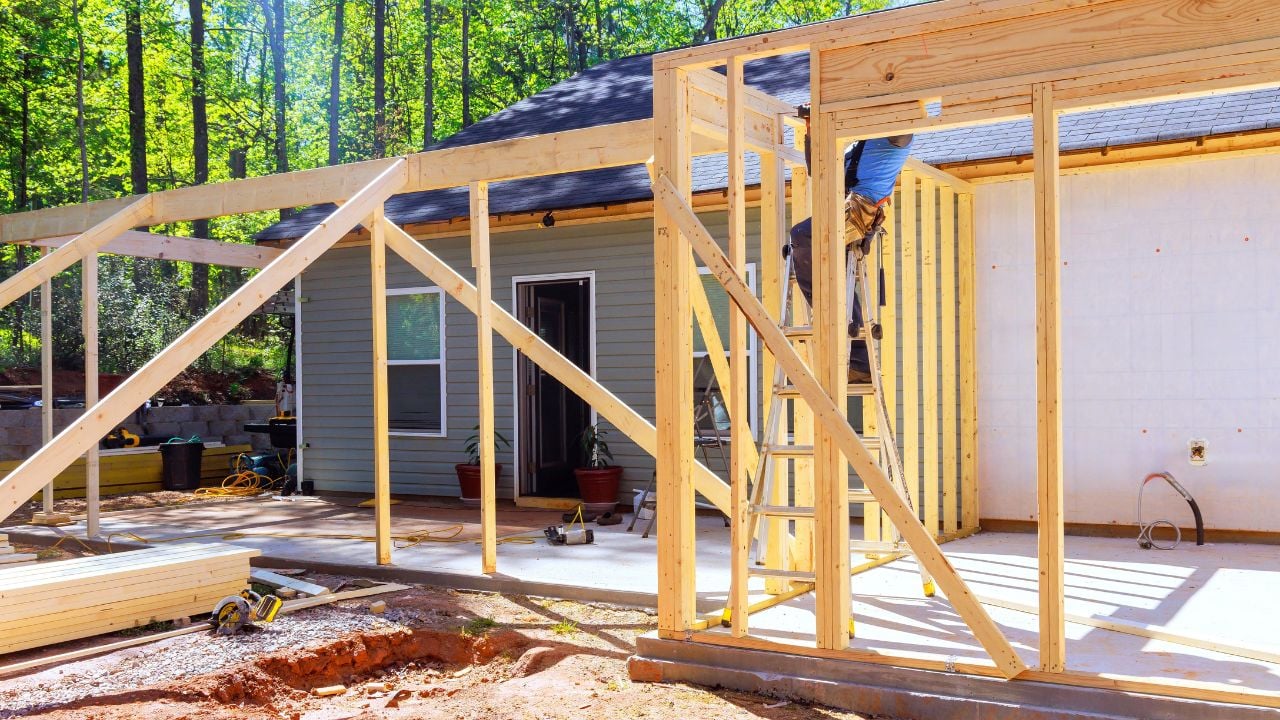
Why Is Your Property Tax Bill Higher After a Home Addition in Tennessee?

Tennessee taxes residential property at 25% of appraised value, and a county assessor adds an addition’s value the year it’s built, not at the next reappraisal.
What counts is the market value the addition adds to the house, not what the materials and labor cost.
A job that came in under budget can still raise the bill as much as one that ran over.
Note: This is general information, not legal or tax advice. Assessment rules and reappraisal schedules are subject to change, so confirm the current details with your county assessor of property.
How Tennessee Assessors Value Your Addition
Tennessee assessors track building permits the moment a homeowner files one for an addition.
Nashville’s Davidson County assessor tracks every building permit the city’s codes department issues.
It adds the land’s value to what fresh construction would cost today, then subtracts for age and wear.
That covers a finished basement, a new bedroom, a sunroom, or a converted garage.
Routine repairs and cosmetic updates, like fresh paint or a new water heater, don’t carry the same weight with the assessor.
Many homeowners assume the number on their contractor’s invoice is the number that lands on the tax roll.
It isn’t.
What the Assessor Counts as Your Addition’s Value
Hamilton County’s assessor puts it plainly: What counts is the market value new construction adds to the property, not the cost of materials and labor.
A $70,000 addition built at a discount, or an addition that runs over budget, still gets valued at what a buyer would pay for the finished home.
That number can land higher or lower than the contractor’s invoice, and either way, it’s the number the assessor uses.
Your County’s Reappraisal Cycle Doesn’t Decide This
Every Tennessee county runs a reappraisal cycle, spaced four to six years apart under state law.
Nashville’s Davidson County reappraises every four years.
Sumner County stretches that out to five.
Your addition doesn’t sit around waiting for either deadline.
Assessors log it the year it’s built, using a systematic review many counties run every year on a rotating slice of the county.
A countywide reappraisal also resets the tax rate under what Tennessee calls its certified tax rate law.
The county recalculates the rate so total collections don’t jump just because home values rose across the board.
Your addition doesn’t get that reset.
The county taxes it at whatever rate is already in place the year it’s added, dollar for dollar.
Tennessee voters go further this fall.
A ballot measure on November 3 asks them to permanently bar a state property tax, something Tennessee hasn’t had in more than 75 years.
Your county assessor isn’t waiting on that vote, either.
The Property Tax Math Behind the Bigger Bill
Tennessee taxes residential property at 25% of its appraised value, not the full sticker price.
That 25% figure is called the assessment ratio, and it applies to your whole home, addition included.
Take Nashville’s Davidson County as an example.
A homeowner there adds a sunroom that appraises for $80,000 in new market value.
Twenty-five percent of that is $20,000 in new assessed value.
Multiply $20,000 by Davidson’s Urban Services District rate of $2.814 per $100, and the bill rises about $563 every year.
You keep paying that amount for as long as the addition stands.
Nashville’s other tax zone, the General Services District, charges $2.782 per $100 instead, so the same sunroom adds closer to $556 there.
Counties set that rate independently, so the same addition costs a different amount depending on which side of a county line it sits on.
Psst! How much do you know about Tennessee’s tax rules? Take our quiz and see how many you can get right.
Quiz
Tennessee Tax IQ
Answer these questions on Tennessee taxes. We bet you can’t get them all right. Prove us wrong?
Add in local rates, and Tennessee’s average combined sales tax ranks it where in the country?
When You'll Get the Notice
Sumner County tells homeowners in writing when their assessment changes.
Its assessor's office mails a notice of assessment change in May, the same year it logs the addition.
The higher number doesn't just show up on your bill unannounced.
Not every Tennessee county mails that kind of standalone notice for a mid-cycle change.
Some counties fold the addition's new value straight into the regular fall tax bill, with no separate letter first.
Either way, that notice or bill is the homeowner's first chance to catch a number that doesn't match the addition.
Can You Appeal the New Value?
Tennessee homeowners can push back on a new assessment, addition included.
The first stop is the county board of equalization, a local panel that reviews the number and can adjust it.
Stay unhappy with that result, and the next stop is the State Board of Equalization.
That state-level appeal has to reach the board by August 1 of the tax year, or within 45 days of the county board's notice, whichever lands later.
The board won't extend it.
Bring comparable sales or a contractor's estimate of the addition's finished value, since the board weighs evidence over a homeowner's opinion of the number.
Seniors, homeowners with a disability, and disabled veterans have a separate track worth knowing about, too.
Tennessee runs a state tax relief program for those groups, and it works as a rebate on the bill instead of a change to the assessment.
A separate breakdown covers Tennessee's tax relief programs and who qualifies for each.
FAQ
Quick answers to what homeowners ask most about a bigger bill after an addition.
Why does a home addition raise my Tennessee property tax bill?
The county assessor adds the addition's market value to your account once it logs the building permit. It applies the same 25% residential assessment ratio and current tax rate that already cover the rest of your home.
Does my bill go up right away, or do I wait for reappraisal?
It goes up before reappraisal in many Tennessee counties. Assessors update individual properties with permitted work between countywide reappraisals, which land only every four to six years.
How much more will I owe after an addition in Tennessee?
Multiply the addition's added market value by Tennessee's 25% residential assessment ratio, then by your county's tax rate per $100. In Nashville's Davidson County, an $80,000 addition adds about $563 a year in the Urban Services District.
Can I appeal a reassessment after adding onto my home in Tennessee?
Yes.
Appeal first to your county board of equalization, then to the Tennessee State Board of Equalization if you're still unhappy with the result.
When will I see the higher bill?
Sumner County, for example, mails a notice of assessment change in May of the year the change is logged. The higher amount then shows up on the regular fall tax bill.
Skip the permit, and a Tennessee assessor can still catch the addition later.
Every reappraisal cycle includes a fresh review of the property, so an unpermitted room usually surfaces eventually, often with several years of missed value added at once.
8 Ways a Tennessee Neighbor Can Get You Fined for Noise

Ninety-five decibels is the legal limit for a car engine on a Tennessee street.
A neighbor with a phone and a grudge is often enough to start the paperwork.
8 Ways a Tennessee Neighbor Can Get You Fined for Noise
9 Tennessee Sales Tax Holiday Mistakes That Cost Shoppers Money

A Knoxville dad piles backpacks and a laptop bag onto the counter during Tennessee's tax-free weekend.
One item in that cart breaks the exemption without him ever noticing.
9 Tennessee Sales Tax Holiday Mistakes That Cost Shoppers Money
