
12 Old Gadgets Hoosiers Refuse to Replace With Newer Technology

Just over one in five American adults still lives in a household with a landline telephone, according to the Centers for Disease Control and Prevention’s latest survey on phone habits.
Some people will have their landline until the day they die.
These are the old gadgets some Hoosiers refuse to replace with newer technology.
1. DVD and Blu-ray Players
A digital video disc (DVD) or Blu-ray player earns its keep every time a streaming bill jumps again.
A 2025 Deloitte survey found that 73% of streaming subscribers feel frustrated by rising prices.
Many said a $5 hike would be enough to make them cancel.
A disc already on the shelf can’t be pulled from a library overnight or repriced without warning.
No warning ever comes.
Many people keep an old player running for exactly that reason, especially for movies a streaming service has since dropped.
2. Point-and-Shoot Cameras
A point-and-shoot camera does one job, and it does that without touching a phone’s battery or storage.
It also carries true optical zoom instead of a phone’s cropped-in digital stretch.
That’s zoom without the guesswork.
Camera makers have noticed people reaching for one again.
Shipments of compact cameras jumped 30% in 2025, the camera industry’s trade group reported, after years of decline.
That’s a buying trend, not proof people are keeping an old camera.
But it tracks with something simpler: Once a point-and-shoot still works, there’s less reason to leave it in a drawer for a new phone.
For a lot of people, that beats whatever a phone update claims it will fix.
3. AM/FM and Weather Radios
An AM and frequency modulation (FM) radio, the old analog dial, keeps working when a storm knocks out the power and the cell towers at the same time.
A National Oceanic and Atmospheric Administration (NOAA) weather radio works the same way, tuned to severe weather alerts.
Batteries don’t need Wi-Fi.
Indiana averages 22 tornadoes a year, according to the National Weather Service.
A weather radio carries a loud alert tone built to wake someone up for that kind of warning.
Fresh batteries are the only upkeep.
That’s a low bar for something that might be the only warning going off in the house.
4. Dedicated GPS Units
A dedicated Global Positioning System (GPS) unit built for bigger vehicles tracks a bridge’s clearance and a road’s weight limit, the kind of detail a phone’s map app skips.
Standard map apps like Google Maps and Apple Maps skip all of that.
That gap causes wrecks.
One Connecticut bridge alone has been struck almost 150 times over a decade by drivers following turn-by-turn directions, a U.S. senator’s office reported.
Indiana has a version of the problem too.
The Indiana Department of Transportation (INDOT) says drivers strike roughly 40 bridges and overhead structures across the state every year.
INDOT’s campaign points at navigation apps as part of the problem, since they route trucks without ever checking a vehicle’s height first.
Recreational vehicle (RV) and truck drivers feel that gap first, since a wrong turn costs more than a fender bender once the load is oversized.
A dedicated GPS unit built for bigger vehicles routes around the low bridges and weight limits a standard phone app doesn’t track.
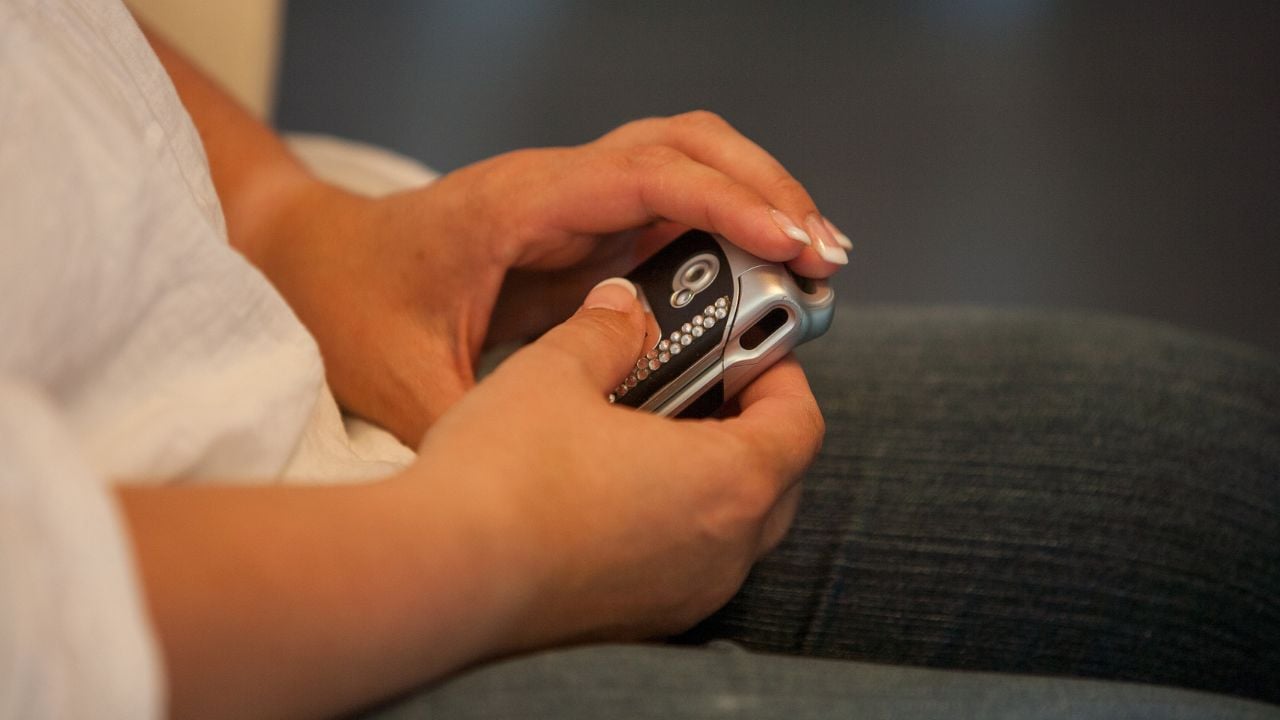
5. Basic Flip Phones
A basic flip phone runs for days on one charge instead of hours, and that’s most of the appeal for people trying to cut screen time.
It still makes calls and sends texts, which covers what many people need a phone to do in an emergency.
No app needs opening.
HMD Global (HMD) is the company behind today’s Nokia-branded phones.
HMD told reporters back in 2022 and 2023 that it was selling tens of thousands of feature phones a month in the U.S.
That was a stretch when interest in flip and bar phones was rising fast.
It does that job without a notification pulling anyone’s attention away first.
6. TVs Without Smart Features
A television without smart features has nothing built in to log what’s playing and sell that information to advertisers.
Smart TVs have done exactly that.
Nobody told viewers.
In 2017, TV maker Vizio paid $2.2 million to settle Federal Trade Commission (FTC) and New Jersey charges that it collected viewing data from 11 million television sets without permission.
The company gathered that data through a feature marketed as personalized recommendations.
A plain, unconnected screen skips that feature entirely, which is why some people keep an older set around or leave the smart features switched off.
7. Wired Headphones
Wired headphones never need to be charged, paired, or found before they die in the middle of a call.
Plug in, and it works.
No dropped calls, no dead earbuds, and no separate charging case to misplace.
That’s one thing to keep track of.
The comeback shows up in the sales numbers too.
Revenue from wired headphones jumped 20% in the first six weeks of 2026, according to the retail-tracking firm Circana, after a decade of decline.
That’s a buying number, not proof of what’s sitting in a drawer.
But the two trends move together: The longer a pair someone already owns keeps working, the less reason turns up to trade it in for a wireless one.
For a lot of people, that’s worth more than any wireless feature a new pair promises.
8. Analog Alarm Clocks
An analog alarm clock does one thing, and it does that without pulling anyone into a phone at 11 p.m.
A 2023 survey from the American Academy of Sleep Medicine found that 87% of adults regularly sleep with a phone in the bedroom.
Sleep doctors keep pointing to that habit as one reason a bedroom never fully powers down.
There’s no scrolling required.
Keeping a clock on the nightstand instead is one small way to be the exception.
9. Corded Landline Phones
A corded landline phone draws its power straight from the copper phone line, not the wall outlet.
That’s part of why just over one in five American adults still live in a household with a landline, according to the CDC’s latest survey on phone habits.
The outage doesn’t matter.
Phone companies keep battery systems running at their central offices around the clock, which keeps a dial tone alive on a corded phone during a blackout.
That’s the whole trick.
A cordless handset can’t do the same thing because its base station needs power from the same outlet that just went dark.
The Difference Is What Powers the Line
This landline gadget only keeps working through a power outage if it’s an old-style corded phone plugged straight into the wall jack.
An internet-based “landline,” the kind that runs over cable or fiber instead of copper, depends on power at the customer’s house instead of the phone company’s building.
Federal rules only require its provider to keep a dial tone alive for as little as 8 hours on battery backup once the power goes out.
10. Paper Checkbooks
A paper checkbook still works for the landlord, contractor, or small local business that doesn’t take a card.
In 2024, about a third of U.S. adults had paid a bill with a check within the past 30 days, according to the Federal Reserve Bank of Atlanta.
Some payees still insist on it, especially the kind that don’t run a card reader.
A check register also works like a running budget nobody has to open an app to see.
The math is right there.
For anyone tracking every dollar closely, that visible paper trail beats scrolling back through a banking app to find one purchase.
11. Handheld Calculators
A handheld calculator is allowed into testing rooms that ban phones outright.
The Scholastic Assessment Test (SAT) still lets students bring an approved physical calculator, even though the digital test has one built in.
The exam’s rules explicitly ban calculator apps on phones.
Phones stay in the car for the rest of the test.
Batteries outlast the school year.
A dedicated calculator does the same math without a text message flashing across the screen mid-problem.
Psst! How much do you know about the old technology Americans left behind? See if you can ace this quiz.
Quiz
Old Tech Trivia
Answer these questions on tech history many people have forgotten. We bet you can’t get them all right. Prove us wrong?
In May 2000, the government made GPS suddenly far more accurate for ordinary drivers and hikers. What changed?
12. Standalone Flashlights
A standalone flashlight sits in a drawer for exactly the night a phone can't afford to lose its charge.
The phone might be needed for a call.
The Federal Emergency Management Agency's (FEMA) emergency kit checklist lists a flashlight and extra batteries by name, right alongside water and a first aid kit.
A phone's flashlight drains the battery fast.
Every minute counts.
Running a flashlight app for just twenty minutes can pull a phone's battery down enough to matter if the power stays out overnight.
A cheap, battery-powered flashlight skips that trade-off entirely and just lights the room.
21 Hilarious Indiana Laws You'd Never Believe Existed

Indiana's lawbooks hide a few rules nobody expects, the kind that sound like a joke until someone checks the actual statute.
From coroners with arrest power to an official state snack, these are the laws that make Hoosiers do a double take.
21 Hilarious Indiana Laws You'd Never Believe Existed
15 Skills From the Past Americans Don't Need Anymore

Sending a fax and balancing a checkbook by hand used to be ordinary life skills, not a novelty act.
Newer technology replaced a long list of everyday know-how, and many people haven't thought about it in years.
