
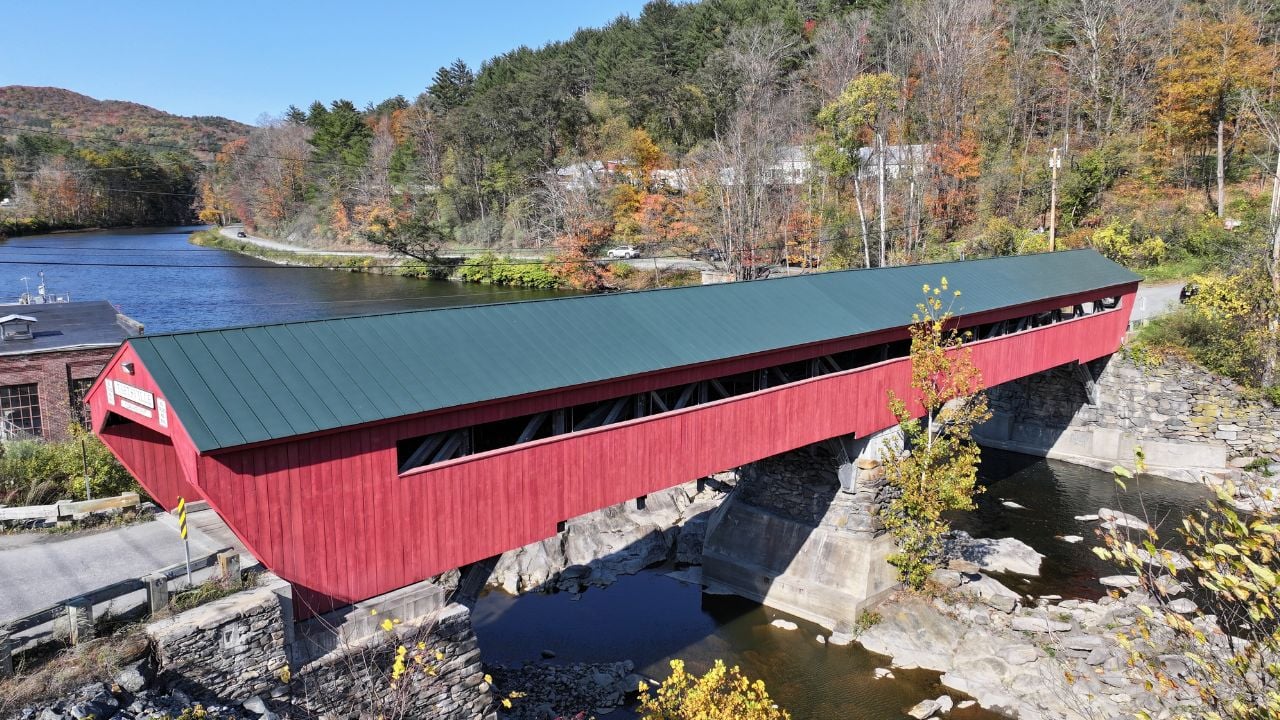
5 Vermont Booking Mistakes That Ruin a Fall Trip

Vermont’s fall colors may arrive on nature’s schedule, but seeing them can require planning months ahead.
A reservation that looks straightforward can come with more strings attached than the average traveler expects.
These are the Vermont booking mistakes that can ruin a fall trip.
Note: This is general information, not legal advice. Short-term rental registration rules and lodging cancellation policies vary by property and town and are subject to change.
1. Treating a Deposit Like It’s Refundable
Vermont’s small inns and bed-and-breakfasts each set their deposit rules, and many look nothing like a chain hotel’s.
At the Made Inn Vermont bed-and-breakfast in Burlington, a stay of two nights or more takes a 50% deposit the moment the reservation goes through.
The property’s policy calls that deposit non-refundable.
Read further, though, and there’s a narrow exception.
Cancel at least 30 days before arrival, and the inn refunds the deposit minus a 10% administrative fee.
Wait less than 30 days, and nothing comes back at all.
Holiday weekends and multi-room bookings need 45 days of notice instead of 30, tightening that window during Vermont’s busiest stretch.
Read the fine print first.
The Math Behind a Vermont Inn’s Deposit
Run the math on a typical $220-a-night fall room in Vermont, and two nights comes to $440 before tax, so a 50% deposit due at booking would run $220.
Cancel 30 days before arrival, and the property refunds that $220 minus a 10% fee, or $198.
Cancel with even one day less notice, and the refund drops to zero, even though the trip is still weeks away.
2. Assuming One Night Is Always an Option
At Made Inn Vermont, every reservation from June 1 through October 31 needs a minimum of two nights.
That covers the entire run-up to, and through, Vermont’s peak color.
One-night stays only come back once that window closes for the year.
A one-night booking made through a general search site doesn’t override a property’s minimum-stay rule.
The front desk can still bump that room once it checks the calendar.
Call ahead and ask.
Holiday weekends push some Vermont properties to a three-night minimum on top of that, covering dates like Labor Day, Thanksgiving, and Christmas.
3. Underestimating How Fast Vermont Sells Out
Woodstock, Vermont’s inns can sell out weeks before a single leaf turns color.
Heather Adams, co-owner of the Village Inn of Woodstock, told a local paper her rooms were fully booked from Sept. 19 through Oct. 20 one recent fall.
Not a single night was open anywhere in that stretch.
That’s nearly five weeks with nothing left to grab.
A second Woodstock innkeeper says visitors are booking closer to their travel dates than they used to.
That sounds like it should open up rooms.
It doesn’t.
The Woodstock area’s chamber of commerce recorded 19,237 visitors at its welcome center in just the first two weeks of October 2025.
That’s up from 14,240 over that same stretch in 2024.
A small town’s lodging supply doesn’t stretch to match a crowd that size.
Vermont doesn’t wait for stragglers.
4. Booking a Short-Term Rental Without Checking Its Registration
Killington, Vermont treats every short-term rental as a business the town has to approve first.
The town’s zoning bylaws require an annual registration for each rental unit, renewed by Nov. 15 every year.
Skip that step, and it’s a zoning violation.
Killington says it enforces that rule.
Vermont’s rental housing law folds a short-term rental into the same violation process as any other rental unit.
Once a rental is cited, state law bars the owner from renting it to anyone new until the violation is fixed.
A guest holding a paid reservation at that address has no claim on the room once that notice goes up.
None of that paperwork shows up on a booking site.
The listing shows photos, a calendar, and a price, not whether the town has approved the address behind them.
Ask the host directly.
A host who dodges the question is the clearest sign a Vermont rental could leave a guest with a canceled stay and no room to fall back on.
Psst! How booking-ready is your Vermont fall trip? Run through this checklist and see where you stand.
5. Date Change vs. Cancellation Costs
Made Inn Vermont writes one clause to cover a cancellation and a date change alike.
The inn calls a schedule change an adjustment.
An adjustment needs the same 30 days of notice a cancellation does to get any deposit back.
A guest who reserves two nights in early October and later wants to slide the trip a week is making that same adjustment.
Maybe the color forecast moved, or a work schedule changed instead.
Wait less than 30 days to make that change, and the inn’s policy treats it exactly like a cancellation filed too late.
The inn charges early departures and no-shows as booked, with no refund.
A late adjustment falls under that same rule.
The deposit doesn’t move with the calendar.
The color still does.
Vermont State Parks Open Their Books First
Vermont’s state park system takes camping reservations up to 11 months before an arrival date, further out than many fall inns will even talk to a caller.
That’s an early window many out-of-state visitors never think to use.
Many Vermont state parks stay open through the second Monday in October, covering the tail end of many towns’ color, though a handful close earlier and a handful stretch later.
Before March 1, a reservation needs a two-night minimum at many parks, the same kind of rule an inn would set.
After March 1, a one-night stay opens up Sunday through Thursday for that year’s season.
None of that replaces a heated room in October.
That’s the trade-off.
It does mean a camper who plans early can lock in a Vermont fall weekend the same month vacationers everywhere else are still checking inn websites.
Those vacationers are still waiting on a callback from a booked-up inn.
A tent pad at Little River State Park or Lake Elmore State Park still needs a sleeping bag rated for near-freezing nights once October settles in.
An 11-month reservation window locks in a campsite, not the weather that greets it.
8 Austin Freecycling Options That Don’t Require Climbing Into a Dumpster

Austin set a goal back in 2009 to divert 90 percent of its trash from landfills and incinerators.
Giving things away instead of tossing them does a good share of that work, and a handful of local freecycling groups make the handoff easy.
8 Austin Freecycling Options That Don’t Require Climbing Into a Dumpster
