
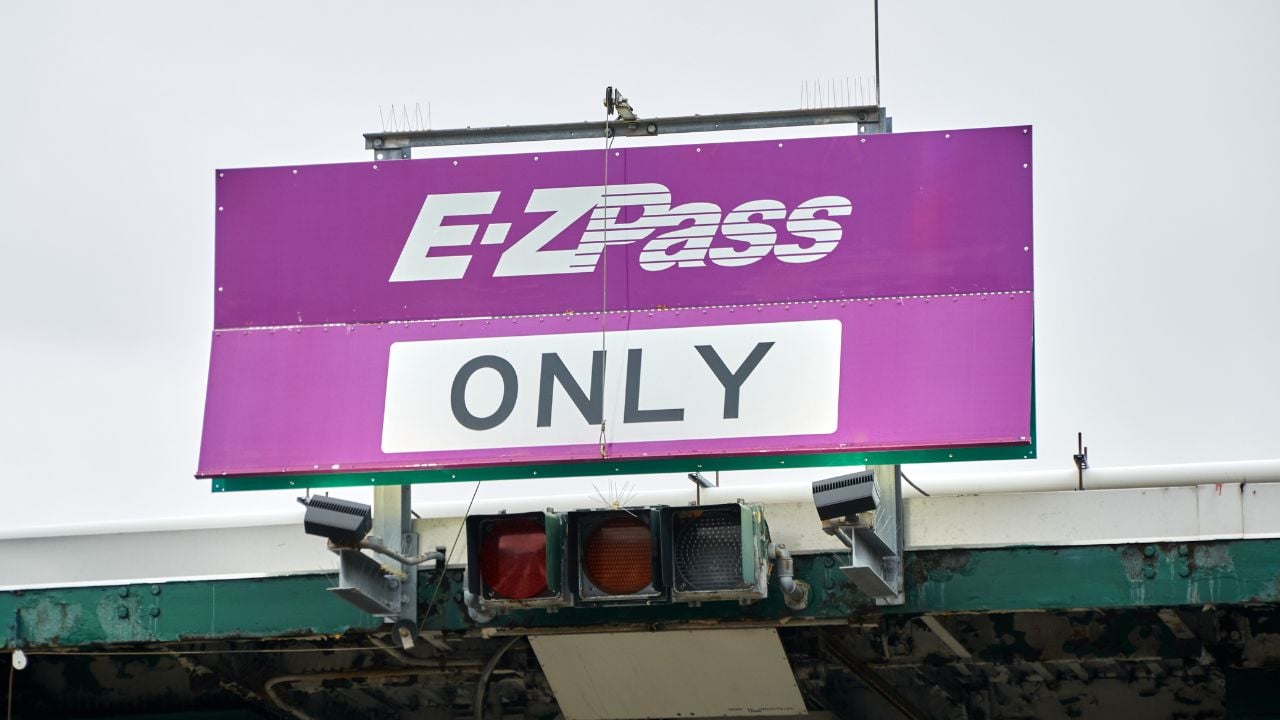
7 Reasons Your New Jersey E-ZPass Bill Runs Higher Than the Toll Signs

More than 90 percent of drivers on the New Jersey Turnpike and Garden State Parkway pay with E-ZPass instead of cash, according to the New Jersey Turnpike Authority.
The monthly statement rarely matches the number on the sign at the plaza.
These are the reasons your New Jersey E-ZPass bill runs higher than the toll signs.
Note: This is general information, not financial or legal advice. Toll rates, discounts, and fees are subject to change, so confirm the current requirements with the New Jersey Turnpike Authority.
1. Weekend-Long Peak Hours
New Jersey’s E-ZPass program carries more than 90 percent of the traffic on the Turnpike and Parkway.
A scheduling rule many of those drivers never read decides part of what they pay.
The New Jersey Turnpike Authority defines peak periods as 7 to 9 a.m. and 4:30 to 6:30 p.m. on weekdays.
Then the authority adds something many drivers miss.
All day Saturday and all day Sunday count as peak too.
It’s never just rush hour.
A Saturday afternoon run down the Parkway to the shore bills at the same full rate as a Tuesday commute at 5 p.m.
Off-peak pricing only exists on weekdays outside those two windows.
2. Out-of-State Transponders
An E-ZPass account issued outside New Jersey pays full freight on the Turnpike and Parkway, no matter what time of day the car crosses.
The New Jersey Turnpike Authority states plainly that customers whose accounts come from other states don’t qualify for the New Jersey discounts.
New Jersey first drew that line in 2011, when the authority voted to stop extending its off-peak discount to out-of-state accounts.
The tag still works.
It just never gets the off-peak break.
A Pennsylvania-issued transponder pays the standard rate on the New Jersey Turnpike at 2 a.m. on a Tuesday, the same rate it would pay during peak.
3. Senior Discount You Never Enrolled In
New Jersey offers E-ZPass account holders 65 and older a discount, but nothing switches it on automatically.
A senior driver has to enroll directly with the New Jersey Turnpike Authority, submit proof of age, and register the vehicle in their name before the 10 percent break applies.
It never happens by accident.
Even after enrollment, the discount only shaves the off-peak rate, never the peak one.
Since peak now covers every weekend hour, a senior who mostly drives the Parkway on Saturdays for groceries or the shore gets a discount that almost never fires.
Why a New Jersey Senior Discount Can Sit Unused
New Jersey only takes 10 percent off the off-peak rate.
Saturday and Sunday no longer count as off-peak on the Turnpike or Parkway.
A retired driver crossing a standard Parkway barrier plaza on a Saturday for groceries or the shore still pays the full $2.25 Class 1 rate every time, discount and all.
The enrollment did its job.
The discount just never applies on a weekend trip.
4. Trailer Axle Count
Garden State Parkway tolls run on axle count, not on the kind of vehicle sitting in the lane.
A two-axle passenger car is Class 1 and pays $2.25 with E-ZPass at a standard barrier plaza.
The axle count decides.
Hook up a small trailer, and the classification changes.
That same car towing even a small utility trailer becomes Class 3 at that plaza.
The toll there jumps to $6.66, nearly three times the two-axle rate.
A camper or a boat trailer pushes the classification even higher, since the Parkway’s rate table runs all the way to six-axle combinations before it stops rising.
Psst! How much do you know about New Jersey’s toll roads? Take our quiz and see how many you can get right.
Quiz
New Jersey Toll Roads IQ
Answer these questions on E-ZPass and New Jersey’s toll roads. We bet you can’t get them all right. Prove us wrong?
E-ZPass first went live in 1993 on which road?
5. Two Monthly Flat Fees
Every New Jersey E-ZPass account carries a flat service charge that has nothing to do with any single toll.
New Jersey's E-ZPass program charges a $1 monthly account fee on every open account.
That's $12 a year.
It applies whether a driver crosses once or fifty times a month.
Anyone who still gets paper statements pays another $1 every other month for that mailing, about $6 a year.
Neither fee shows up on a toll sign anywhere because neither one is a toll.
6. A Fifty-Dollar Missed Read
A New Jersey E-ZPass crossing can turn into a violation two ways: A transponder that fails to read, or an account balance that runs dry first.
Either way costs the same.
New Jersey proposed doubling its violation administrative fee from $25 to $50 back in 2011.
That $50 per-occurrence charge is still what a driver pays today.
That's on top of whatever the toll itself would have cost.
A driver who ignores the notice risks account revocation, not just the one bill.
7. The Annual Increase
Turnpike and Parkway tolls in New Jersey don't just vary by time of day and vehicle class.
They also rise most years in January.
The New Jersey Turnpike Authority raised every toll class by 3 percent on January 1, 2026, on both roads.
The formula comes from a schedule the authority adopted in 2020, an automatic increase of up to 3 percent a year.
Tolls didn't rise that January.
The 2024 increase didn't take effect until that March 1, after Governor Phil Murphy vetoed the board's toll resolution in October 2023.
A driver who last checked the Parkway's Class 1 rate a few years ago is working from a number that no longer exists.
The authority doesn't need a public hearing to raise tolls again next year, but the board still passes a toll resolution the governor can veto.
9 New Jersey Myths Residents Are Sick of Correcting

New Jersey packs more people into every square mile than any other state, and many visitors show up assuming that makes it flyover country next to New York.
These are the myths New Jerseyans correct on repeat, starting with the pump nobody lets a driver touch.
9 New Jersey Myths Residents Are Sick of Correcting
4 Lidl Checkout Mistakes That Cost New Jersey Shoppers Every Week
About 80 percent of what fills a Lidl shelf is the store's private label, and those lower prices come with their rules at the register.
These are the checkout mistakes we think cost New Jersey shoppers the most every week.
4 Lidl Checkout Mistakes That Cost New Jersey Shoppers Every Week
