
5 Sleep Products Arizonans Buy Before Fixing the Obvious Problems

A restless night can make almost anything in the sleep aisle look worth trying.
But the most tempting solution isn’t always the one that addresses what’s actually keeping you awake.
These are the sleep products Arizonans buy before fixing the obvious problems.
1. Melatonin and Other Sleep Aids
Melatonin gummies and other over-the-counter sleep aids crowd the shelves at just about every Arizona pharmacy each summer.
Phoenix’s summer nights have warmed for decades.
The city’s three-year average summer low climbed from 81 degrees in 1982 to a record 87.5 degrees in 2024, according to ABC15.
This year is tracking close behind, with the average overnight temperature running about 68 degrees so far, roughly 3 degrees above the previous record pace set in 2015.
The Centers for Disease Control and Prevention (CDC) lists a consistent bedtime as one of the best habits for good sleep.
Arizona’s hot, late-cooling evenings push many outdoor plans later into the night, since it only turns bearable outside after dark.
A later evening routine pushes bedtime back right along with it.
Many people reach for a melatonin gummy to fall asleep on that shifted schedule instead of pulling the evening routine back in.
The schedule is the free fix.
The gummy is the workaround.
2. Cooling Mattress Pads and Pillows
Cooling mattress pads and pillows, from a ChiliSleep pad to a Purple cooling pillow, sell well in Arizona bedrooms every summer.
Salt River Project (SRP) recommends setting the thermostat at 78 to 80 degrees when someone’s home, and as high as 85 when the house sits empty.
Air conditioning already eats up 50 percent or more of a typical Arizona summer power bill, according to SRP.
Keeping the thermostat number high pays off fast on a power bill like that.
The CDC recommends a bedroom closer to 65 to 68 degrees for sleep.
That’s a wide gap.
A cooling pad closes some of that gap without anyone touching the thermostat.
It doesn’t close all of it.
The Math Behind Arizona’s Thermostat Gap
Arizona’s recommended summer thermostat settings come with built-in math.
Salt River Project says every degree above 80 saves a customer about 2 to 3 percent on cooling costs.
Run that math backward toward the CDC’s 65-to-68-degree range, and a bedroom cooled that far down costs meaningfully more to run than one held at 80.
That’s the bill a cooling pad helps a shopper avoid without changing the thermostat.
3. White Noise Machines
White noise machines, a common Arizona sleep aid like a Yogasleep Dohm, cover up a sound that barely exists outside the Southwest.
Evaporative coolers, still common across Arizona because the dry climate suits them, run loud through the night to keep a house cool.
They cost far less to install and run than central air, which is exactly why so many older Arizona homes still lean on one.
Arizona’s monsoon season runs from June 15 through September 30, according to the National Weather Service.
The humidity that comes with monsoon season makes an evaporative cooler struggle to keep a room cool.
The noise problem gets worse during those humid stretches, not better.
Many people cover the sound with a machine instead of servicing the unit or switching over to central air for the season.
The noise doesn’t go away.
Psst! How much do you know about sleep science? Take our quiz and see how many you can get right.
Quiz
Sleep Science IQ
Answer these questions on sleep science and sleep myths. We bet you can’t get them all right. Prove us wrong?
In 1953, a scientist first identified rapid eye movement (REM) sleep while studying an 8-year-old research subject. Who was that child?
4. Allergy and Dust Nighttime Products
Air purifiers, saline nasal rinses, and nasal strips show up on many Arizona nightstands during monsoon season.
Haboobs, the wall-of-dust storms that roll across the Valley, can stretch for miles and coat everything outdoors in a layer of grit.
Winds up to 60 mph can stir that dust into a moving wall.
One to three storms that size move through the Phoenix area in a typical year, according to the National Oceanic and Atmospheric Administration (NOAA).
Skin and hair carry that dust indoors long after the storm passes.
Rinsing off or showering before bed washes that dust away, but many people skip that step and reach for a nasal spray instead.
The dust gets in regardless.
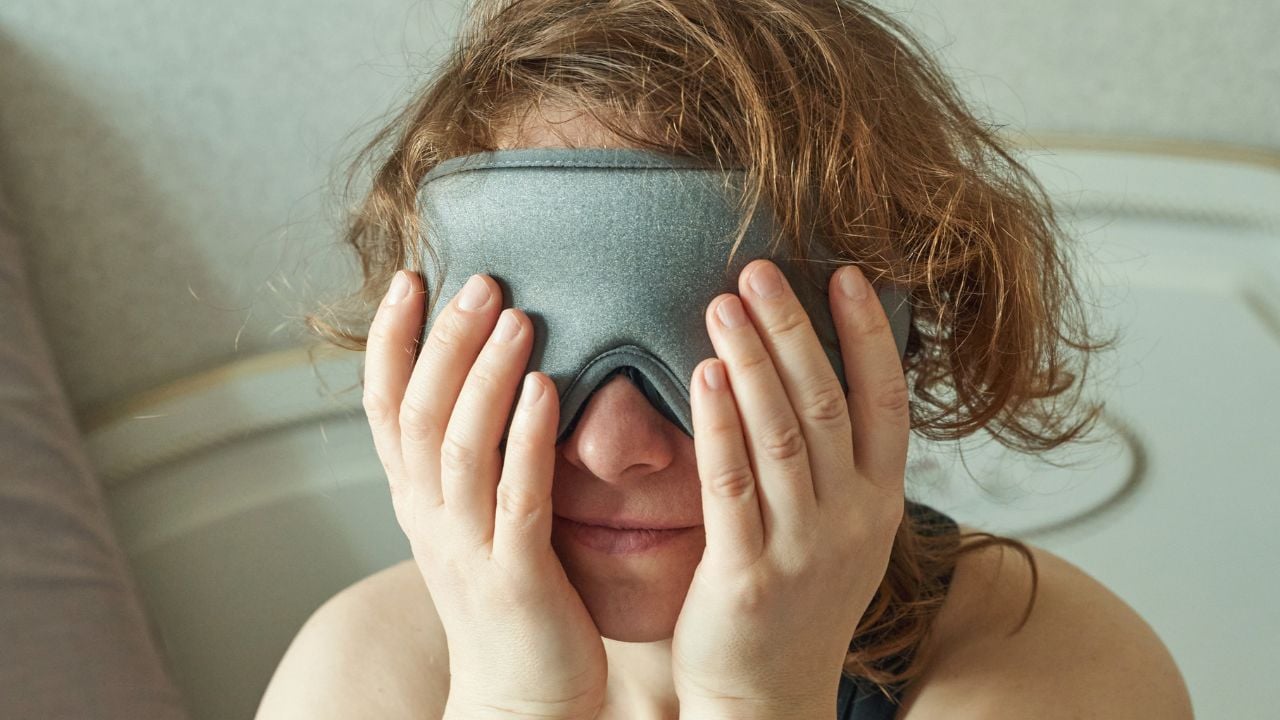
5. Blackout Curtains and Sleep Masks
Arizona bedrooms without heavy window coverage tend to pick up blackout curtains and a sleep mask, something like a Manta mask.
Summer sunrise reaches the Valley early enough to catch many sleepers still in bed.
Arizona stopped observing daylight saving time in 1968, one of only two states that still skip the spring clock change.
That decision keeps summer sunrise landing even earlier by the clock than it does in states that still spring forward.
An uncovered window catches that light well before a normal alarm goes off.
The sun rises at the same early hour no matter what anyone's sleep schedule needs.
A pair of blackout curtains or a plain sleep mask blocks it.
Neither one moves sunrise.
Dust's Reach Beyond the Bedroom
Arizona logs more cases of Valley Fever, a lung infection caused by fungal spores in desert soil, than any other state in the country.
The state accounts for more than half of the nation's reported cases, according to the CDC.
Arizona recorded a record high of nearly 15,000 cases in 2024, according to the state's 2024 Valley Fever Annual Report.
Not everyone realizes that.
Researchers point to increased testing and awareness, not just more infections, as one driver behind the rising case counts.
A nasal spray doesn't touch a fungal infection sitting in the lungs.
Valley Fever causes an estimated 15 to 30 percent of community-acquired pneumonia cases in the Phoenix and Tucson metro areas, according to the CDC.
9 Arizona Foods and Drinks Visitors Order Wrong Every Time

A burrito that fell into a hot fryer at El Charro Café decades after it opened in 1922 gave Arizona the chimichanga, curse word included, so the story goes.
Visitors get the name right almost every time and the order wrong almost as often.
