
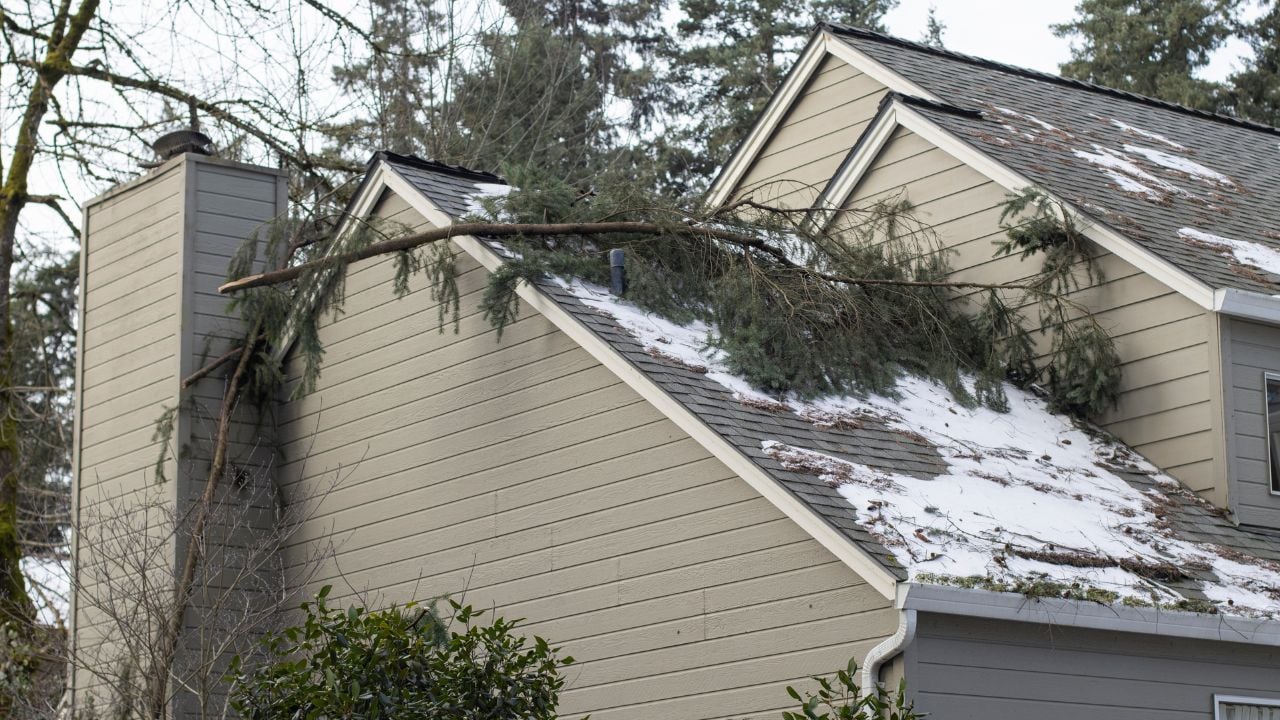
Why Is an Ohio Homeowners Insurance Premium Higher After a Roof Claim?

An Ohio homeowners insurance premium can rise the moment a roof claim ends a claims-free discount and puts the roof’s age in front of an insurer for the first time.
The record outlives the repair.
Ohio homeowners insurance premiums rose 14% in 2024 alone, according to A.M. Best data cited in an Ohio Insurance Agents trade-group report.
Ohio’s rate law lets that insurer charge the new price right away.
Note: This is general information, not insurance advice. Coverage and terms are subject to change, so check the specifics with your insurer or agent.
How a Roof Claim Lands in Your CLUE Report
A roof claim in Ohio doesn’t stay between the homeowner and one insurance company.
Nearly every insurer that writes homeowners coverage pulls a CLUE report, short for the Comprehensive Loss Underwriting Exchange.
It’s a claims database maintained by LexisNexis that logs the date, type, and dollar amount of a homeowner’s past claims.
That record sticks around.
A roof claim can sit in the database for up to seven years.
Any insurer the homeowner shops with during that stretch, including an insurer considering a renewal, can see it.
A single wind or hail claim on the roof reads to an underwriter as a property with documented loss history, not a repaired roof with a clean slate.
Shop for a new policy in Cleveland or Columbus two years after the claim, and the new insurer already knows about the roof before an agent ever asks a question.
Losing Your Claims-Free Discount
An Ohio homeowners insurance premium often carries a claims-free discount, a reward for going years without filing anything.
Nationwide, the Columbus-based insurer that writes homeowners coverage across Ohio, lists a “claims-free” discount right on its homeowners page: A lower premium for a homeowner who stays claims-free.
File a roof claim, and that discount is usually the first thing to go at the next renewal.
Gone.
The homeowner’s premium then reflects two changes stacked together: What the roof claim does to the rate, plus a discount that used to lower the bill every year.
A homeowner who never files anything again can sometimes requalify after a run of clean years, but the wait is measured in renewals, not months.
Why an Older Roof Raises the Premium
An Ohio homeowners insurance premium takes its hardest hit when the roof behind the claim is already getting old.
Several major insurers writing business in Ohio now settle roof claims on an age-based actual cash value (ACV) schedule instead of paying to fully replace the roof.
Progressive, headquartered in Mayfield Village, applies that schedule to roofs at 11 years old, Westfield Insurance at 10, and Auto-Owners waits until 16.
Erie Insurance goes a step further and flags a 3-tab asphalt shingle roof over 10 years old for limited or “functional” replacement instead of a full replacement.
Age sets the payout.
A claim is often the moment an insurer looks at the roof’s age up close.
That look can change the payout on the claim and the coverage terms a homeowner gets going forward.
Some insurers sell a “roof rating” adjustment tied to the roof’s age and surface type, which can move the premium either direction once an inspection updates what’s on file.
The Math on an Aged Roof’s Payout
Actual cash value on a roof means replacement cost minus depreciation, not the price of a brand-new roof.
Say a full roof replacement would run $18,000, and the schedule pays 50% of that once a roof passes the insurer’s age cutoff.
The check on that wind claim comes to $9,000, and the homeowner covers the other $9,000 out of pocket to finish the job.
Some insurers sell a “roof replacement cost” buyback endorsement that restores full payment regardless of age, but it has to be added before the claim, not after.
Psst! How much do you know about the insurance that protects your Ohio roof? Take our quiz and see how many you can get right.
Quiz
Insurance History IQ
Answer these questions on insurance history and how home coverage works. We bet you can’t get them all right. Prove us wrong?
In what Ohio city was Progressive Insurance founded in 1937?
Ohio Lets Insurers Reprice Fast
An Ohio homeowners insurance premium can move quickly after a claim because of how the state itself regulates rates.
Ohio runs a "file and use" system for homeowners coverage under Ohio Revised Code 3937.03.
An insurer files a new rate, and that filing takes effect immediately, the same day, with no waiting period and no prior sign-off from the state.
No pause button.
The Ohio Department of Insurance's superintendent can review a filing and disapprove it after the fact.
But the insurer doesn't have to wait for a green light before charging the new rate at renewal.
Compare that to a state requiring prior approval, where a regulator signs off before a higher rate ever reaches a policyholder's bill.
The same roof claim plays out on a much slower clock elsewhere in the country.
How Long the Higher Rate Follows You
Ohio homeowners insurance premiums were already rising before any single roof claim entered the picture.
Statewide premiums rose 14% in 2024 alone, and 33% since 2020, according to A.M. Best data cited in an Ohio Insurance Agents trade-group report.
The trade group points to aging roofs among the drivers behind carriers tightening underwriting and non-renewing homes.
A roof claim filed into that climate doesn't just cost money once.
That's a long memory.
It sits in the CLUE database for up to seven years, so it can keep shaping renewal pricing.
Shopping around doesn't dodge it either, since the record follows the homeowner long after the roof itself has been patched or replaced.
FAQ
Quick answers to what Ohio homeowners ask most after a roof claim.
Why is an Ohio homeowners insurance premium higher after a roof claim?
Insurers log the claim in a CLUE report they check for years, and it often costs a claims-free discount. An aging roof can also trigger a reduced payout, and Ohio's rate law lets insurers apply the new price immediately.
How long does a roof claim stay on your record in Ohio?
A roof claim can stay in the CLUE database for up to seven years, and any insurer that pulls a report during that window can see it.
Can one claim cost you a claims-free discount?
Yes. Carriers such as Nationwide advertise a lower premium for staying claims-free, and filing a claim typically ends that discount at the next renewal.
Does Ohio limit how much an insurer can raise your rate after a claim?
Not upfront. Ohio uses a file-and-use system for homeowners rates, so a new rate takes effect the day it's filed, though the state's insurance superintendent can review and disapprove a filing afterward.
Is it worth filing a small roof claim in Ohio?
Often not, once a homeowner weighs the lost discount and years of CLUE exposure against a repair cost close to the deductible. Many Ohio homeowners pay small roof repairs out of pocket for exactly that reason.
State Farm writes about 21% of Ohio's homeowners policies, and Allstate follows at more than 10%, both pricing renewals off the same shared CLUE history.
Switching companies doesn't erase the roof claim either, since the new insurer runs a CLUE check before the first bill ever goes out.
8 Things Ohioans Believe About Their Own State That Aren't True

Think you know Ohio inside and out? Its 1803 statehood story carries a twist many Ohioans never learn in history class.
These are the widely repeated "facts" about Ohio that turn out to be false.
8 Things Ohioans Believe About Their Own State That Aren't True
8 Utility Shutoff Rules Many Ohio Customers Learn About Too Late
Ohio law sets a window before a utility can cut off power or gas, and many homeowners have no idea how short it runs.
What isn't always advertised is everything that can undercut it even further.
8 Utility Shutoff Rules Many Ohio Customers Learn About Too Late
