
7 County Fair Traditions Hoosiers Would Never Give Up

Nearly every other Indiana county fair is done by Labor Day.
Luckily for DeKalb County residents, there’s still fun to be had.
DeKalb County’s fair board opens its Free Fall Fair in Auburn today, September 28, running through October 3.
These are the summer county fair traditions Hoosiers would never give up.
1. 4-H Livestock Auction
The 4-H livestock auction closes out fair week at county fairs across Indiana.
Jackson County has run its version every summer since 1953.
It hasn’t missed a summer since.
Nobody’s ending that streak.
The first sale that year featured beef and pigs, with the grand champion barrow selling for 30 cents a pound.
Local businesses in Jackson County have paid well above market price for 4-H kids’ pigs and steers ever since.
One recent five-year stretch averaged close to $239,783 a summer for local sellers.
Every August, teenagers count on that same auction to cover next year’s animal or a chunk of tuition.
What a County Fair Auction “Premium” Pays
The dollar figures from a county fair’s 4-H auction are the premium, the extra amount a buyer pays above an animal’s regular market price, not the animal’s full sale price.
A buyer bidding $3 a pound on a hog that would normally bring $1 a pound is paying a $2-a-pound premium.
That premium is the money that lands with the 4-H member who raised the animal.
2. Fair Queen Pageant
Every summer, the fair queen pageant crowns a new winner at county fairs across Indiana.
Johnson County has kept picking a fair queen nearly every summer since crowning its first in 1963.
That’s not a fading tradition.
Elkhart County crowns its senior queen in a single evening each summer, opening the fair’s week with a question-and-answer round judges use to size up every contestant.
Every county’s winner also earns a shot at the Indiana State Fair queen title, which lists finalists by home county, Jackson County included.
Skip the pageant, and a fair loses the one night its whole grandstand turns out just to cheer for local kids.
3. Demolition Derby
The demolition derby has closed out the Johnson County Fair every summer since 1973.
Fifty years, and it still closes the fair.
It’s grown into one of the loudest nights on the grounds.
More than a dozen other Indiana county fairs book a derby too.
Almost all of them save it for the very last grandstand event before the gates close for the year.
That’s not a coincidence.
Fair boards pencil the derby into next year’s schedule before almost anything else because few things fill the grandstand the way it does.
4. Harness Racing at the Fairgrounds
Harness racing became Elkhart County’s main grandstand draw by 1908, when fans started packing a new grandstand at the fairgrounds’ current site.
That track is still there, more than a century later.
Indiana still runs a statewide fair circuit built around the sport, and the state horse racing commission sets its fairgrounds dates every year.
Two- and three-year-old Standardbred horses bred and sired in the state race at roughly a dozen county fairs each summer.
The circuit’s 2026 county fair stops start at Converse in early June.
They wrap up at the Jay County Fair in Portland in early August, with Elkhart’s races landing in late July, right in the middle of the run.
Some of those races trace straight back to the 1800s.
Many other states let their fairgrounds tracks fall silent decades ago.
Indiana didn’t.
Psst! How much do you know about Indiana’s fair history? Take our quiz and see if you can ace it.
Quiz
Indiana Fair History IQ
Answer these questions on Indiana’s state and county fair history. We bet you can’t get them all right. Prove us wrong?
In what year did Indiana hold its very first state fair?
5. Old-Fashioned Fair Contests
The Open Class Building runs a different old-fashioned contest every day of the Elkhart County Fair.
Elkhart County first paired Open Class competitions with its 4-H fair in 1955, a tradition now 71 years deep.
Tuesday brings an apple-peeling contest.
Wednesday brings a cookie-stacking contest, where entrants race the clock to build the tallest stack before it topples.
Fair organizers in Elkhart County say people have kept these same contests going for years simply because they're part of the fair's history.
Some things don't need updating.
Other counties run similar contests inside home-ec buildings across the state, judging pies, quilts, and canned tomatoes the way fairs always have.
None of it needs a grandstand or a loudspeaker to pull a crowd.
6. Civic Club Food Booths
The civic club food booths at the Johnson County Fair have outlasted many of the rides on the midway.
The Center Grove Optimist Club has sold beaver tails from the same booth since 1982.
That single booth raises close to $16,000 during fair week each year for local scholarships and a holiday gift program for kids.
Indian Creek Future Farmers of America (FFA) has scooped homemade ice cream at its booth for more than 50 years to help fund the chapter's programs.
Five decades and counting.
Gateway Services has sold lemon shake-ups since 1972 to help cover the local match for the county's public bus system.
The Franklin Lions Club has roasted corn on the cob at the fair for the past two decades.
It still clears more than $6,000 a year for the local food pantry and a cancer-research fund.
Four different causes, four different booths, one shared fair.
Every one of those booths keeps coming back, year after year.
7. Free Admission at the Gate
Free admission has defined Fayette County's fair since it started as county Field Days in 1955, with the first fair at today's Connersville fairgrounds in 1958.
Free is still free.
The fair has grown a long way from its start, with annual premiums up from $500 to more than $38,000 today.
Connersville's junior livestock auction started in 1962 with 13 steers and now moves more than 300 animals a year for close to $200,000.
Connersville never added a ticket booth along the way.
DeKalb County keeps that same promise every fall with its Free Fall Fair in Auburn, which opens today, September 28, running through October 3.
No ticket, no gate fee, just a county turning out for its fair the way it has since 1958.
That's one line item Indiana counties keep refusing to cut from the budget.
8 Ways Out-of-Staters Break Buc-ee's Etiquette Before They Reach the Brisket
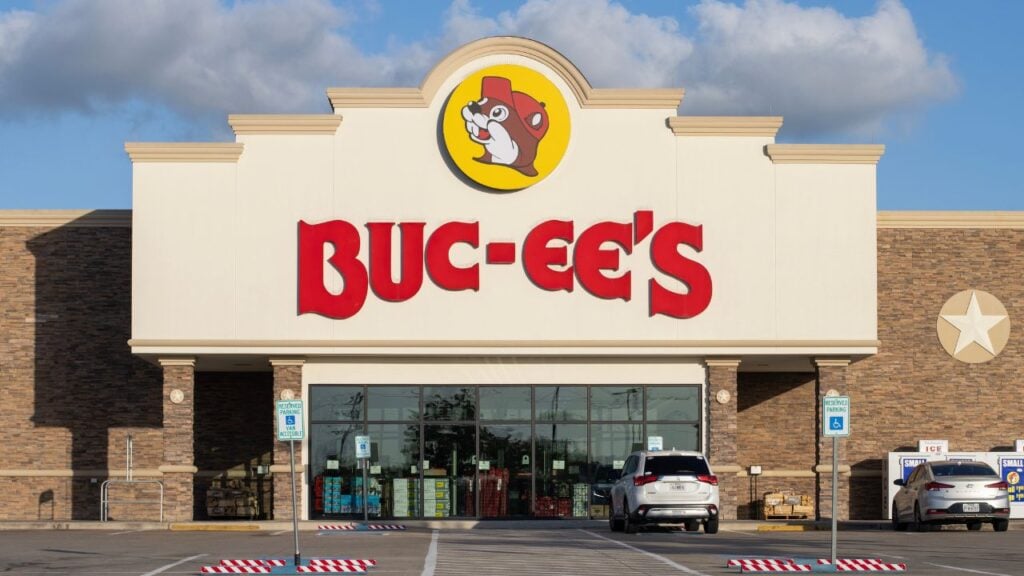
A loudspeaker announcement about fresh brisket can turn half a Buc-ee's into a footrace toward the barbecue counter.
Regulars already know the unwritten rules that keep that scramble civil, and out-of-staters tend to learn them the hard way.
8 Ways Out-of-Staters Break Buc-ee's Etiquette Before They Reach the Brisket
