
8 Community Gathering Places Disappearing From Missouri Towns

Can you still point to the bowling building where you rolled your first strike?
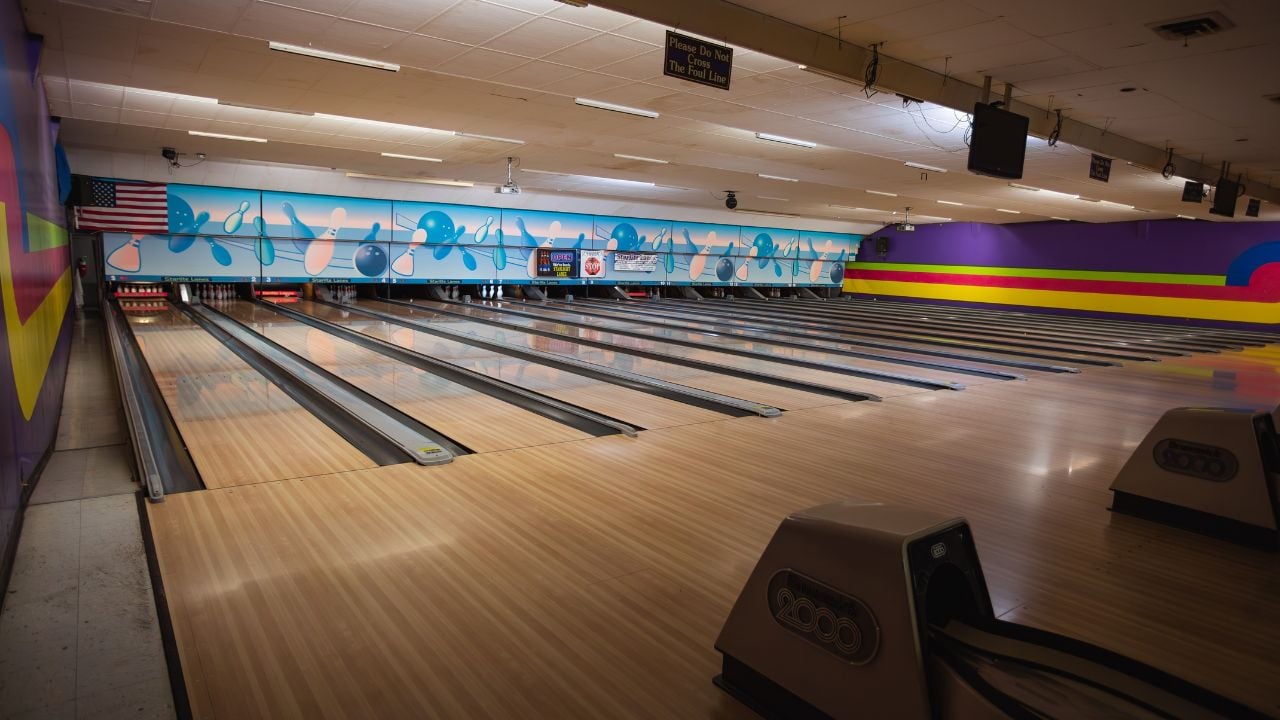
In Moberly, that building was Community Lanes, and ABC 17 News reported it went dark for good in 2013 after 56 years of Friday night leagues.
Missouri keeps losing buildings like it.
These are the community gathering places disappearing from Missouri towns.
1. Drive-In Theaters
Small-town drive-in theaters used to fill up on any warm Friday night.
Kansas City’s I-70 Drive-In ran along the interstate since the 1960s, and B&B Theatres shut it down in September 2018.
That was its last movie.
Owen Drive-In in Seymour lasted a little longer, until owner Harold Owen died in the spring of 2013.
The theater announced on Facebook that it wouldn’t open again for the 2014 season, Missouri Life reported.
Missouri Life counted ten drive-ins left across the state in a 2017 count.
The outlet later added an editor’s note that even the Kansas City screen mentioned above has since closed.
Why So Many Missouri Screens Went Dark at Once
Missouri’s drive-in theaters and small indoor houses ran on the same aging technology for decades: 35mm film.
Hollywood studios stopped shipping film reels in the early 2010s, so every screen suddenly needed a digital projector instead.
Missouri Life put that upgrade at $70,000 to $80,000 per screen, a bill many single-screen and drive-in owners couldn’t cover.
That one deadline closed more Missouri screens than any single competitor ever did.
2. Diners
Small-town diners built their regulars over decades of the same order at the same counter.
Oden’s in Belton did that for more than three decades.
The Oden family opened the diner in 1982.
A year before closing, they’d already dropped barbecue for fried chicken and tenderloins, since running a smoker had gotten too costly.
Sales slid while costs rose, and the owners finally closed for good rather than keep losing money.
It happened on a Sunday.
A planned sale to a new owner had fallen through the week before.
3. Roller Skating Rinks
Columbia, Missouri’s Empire Roller Rink kept its wood floor packed for 80 years.
Willie Trent’s parents opened the rink in December 1938.
Trent took over as sole owner in 1985, after his mother’s death.
The Columbia Missourian reported he finally sold the building in January 2019.
Trent worked on the sale for about ten years first.
He wasn’t in a hurry.
Running a rink, he decided, wasn’t a legacy his kids wanted to inherit.
The building went to Show-Me Central Habitat for Humanity instead.
4. Five-and-Dime Stores
Ben Franklin in Webster Groves stayed a five-and-dime gathering spot long after many towns lost theirs.
School kids packed the aisles for penny candy on early dismissal days.
A new toy craze could send a line wrapping around the building.
The store opened in the Old Orchard shopping strip in November 1982 and lasted 30 years.
Rent rose and big-box stores undercut the craft aisle.
Owner Gary Hampel called it quits rather than keep losing ground.
The final sale marked everything down 20% to 70% before the doors shut for good.
The closing ended the trip that always turned into running into a neighbor.
5. Soda Fountains
Ava Drug Store kept a soda fountain running long after many pharmacies ripped theirs out.
KY3 reported the counter finally closed on April 28, 2017.
Walgreens, which owned the store, had already pulled soda fountains from many of its other locations decades earlier.
Ava’s counter simply outlasted the rest.
Nothing forced their hand.
A company spokesman called it the ordinary cost of doing business.
6. VFW Halls
Missouri’s Veterans of Foreign Wars (VFW) halls used to anchor small towns the way a courthouse or a church did.
St. Martins’ VFW Post 35 dissolved and merged into Jefferson City’s Post 1003 in March 2014.
Its members had simply gotten older.
One town didn’t need two VFW posts anymore.
Post 35’s charter ended with the merger.
So did its regular meeting nights in St. Martins.
The building didn’t vanish.
Post 1003 kept it open as a rental event space for bingo and wedding receptions.
The veterans who used to hold meetings there were gone.
The merged post took the name Basinger/Sone Memorial Post 1003, honoring a World War I Marine and a World War II Marine from the two halls’ histories.
Nationally, VFW membership has been eroding for decades, and local posts haven’t been immune.
7. Movie Theaters
Blue Springs, Missouri’s Miller Theaters sold tickets on eight screens for decades.
KCTV5 reported the theater played its final shows on April 30, 2025.
Owners said Hollywood simply wasn’t releasing enough movies worth showing after the pandemic to keep an independent theater full.
They’d even added curbside popcorn pickup to survive the shutdown years.
None of it was enough to save Miller Theaters.
Psst! How much do you know about Missouri history? Take our quiz and see how many you can get right.
Quiz
Missouri Main Street IQ
Answer these questions on Missouri history and Main Street landmarks. We bet you can’t get them all right. Prove us wrong?
Which Missouri city hosted the very first Missouri State Fair in 1901?
8. Bowling Alleys
Moberly's Community Lanes bowling alley kept league nights going for 56 years.
ABC 17 News reported the bowling alley closed for good in May 2013.
The owners blamed a stretched economy that left fewer families with money to spend on a Friday night out.
The building stayed up for sale for a while after that.
The Population Math Behind the Empty Buildings
Small towns have lost more than buildings; they've lost the customers who once filled them.
University of Missouri Extension found that 78 counties out of Missouri's 115, or 68%, had fewer residents in 2020 than in 2010.
Sixty-four of those were rural counties, the kind that used to support a diner, a drive-in, and a VFW hall all off the same Main Street.
Northwest Missouri lost close to 5% of its population over that decade.
DeKalb County alone lost 15%, the steepest drop of any county in the state, University of Missouri Extension found.
Fewer neighbors means fewer regulars.
Missouri's South Central region has fewer people than any other part of the state, just over 205,000 residents spread across twelve counties.
University of Missouri Extension found that every one of those twelve counties lost population between 2010 and 2020, a combined drop of about 6,000 people.
8 Ways Out-of-Staters Break Buc-ee's Etiquette Before They Reach the Brisket
A loudspeaker call for fresh brisket sends half the store turning toward the counter at once inside a Buc-ee's.
Regulars already know the drill, and out-of-staters usually learn it the hard way.
8 Ways Out-of-Staters Break Buc-ee's Etiquette Before They Reach the Brisket
