

9 Household Habits Texas Pest Control Technicians Say Invite Bugs Inside

A single mature red imported fire ant colony can hold more than 200,000 ants, according to Texas A&M AgriLife Extension.
Without ever meaning to, some Texas households invite thousands of them inside, along with spiders, roaches, and mice.
These are the household habits Texas pest control technicians say invite bugs inside.
1. Stacking Firewood Against the House
Homeowners often stack a fall woodpile right against the siding, closest to the back door for easy trips inside.
That woodpile holds warmth, shade, and bark cover that termites, roaches, ants, and scorpions settle into fast.
Black widow spiders favor the same setup, according to Texas A&M’s urban entomology program, tucking into the dark gaps between firewood piles where a hand reaches in without looking first.
That’s the reach that ends in a bite.
The National Pest Management Association tells homeowners to keep firewood stacked at least 20 feet from the house instead of tucked against the wall.
A pile that close turns into a staging area for whatever already lives inside it.
2. Letting Mulch Touch the Foundation
Landscaping crews push fresh mulch right up against a home’s brick, and so do the bugs that end up living in it.
Wet mulch pressed against a foundation holds moisture long after the yard around it dries out.
That damp strip becomes a runway for the same fire ants whose colonies can hold more than 200,000 ants, plus roaches and termites hunting for a way inside.
A few inches of bare space between the mulch and the wall breaks that bridge.
Many homeowners skip that gap, mulching straight up to the brick because it looks tidier that way.
3. Letting Branches Rest on the Roof
Oaks and pecans grow fast, and homeowners fall into the habit of letting the lower limbs settle onto the roofline instead of cutting them back.
Texas A&M’s pest-prevention guidelines call for at least 6 feet of open air between a tree limb and the exterior wall.
Anything closer gives climbing pests a ladder straight to the attic.
Scorpions use that route.
So do rats and squirrels looking for a loose soffit or a gap under a shingle.
Trimming the limb back costs an afternoon.
Reaching the roof through it costs a lot more.
4. Letting Sprinklers Pool by the Foundation
Summers push homeowners to run sprinklers longer and more often, and much of that water ends up pooling against the house instead of soaking into the lawn.
Leaking faucets, window air conditioner units, and irrigation lines all send the same invitation.
Texas A&M AgriLife Extension has tracked fire ants moving toward that kind of moisture near a foundation during hot, dry stretches.
Water runs scarce.
A cracked hose bib behind a garage can drip for weeks before anyone notices, and a dripping hose bib gives every ant nearby all the water it needs.
That foundation trail sits one crack away from an indoor one.
A slab develops that kind of crack as it dries, and the ants follow the moisture straight through it into the wall.
Why Fire Ants Target the Air Conditioner
Fire ants don’t just want the water dripping from a Texas air conditioner.
Texas A&M AgriLife entomologists have documented worker ants drawn to the electrical current itself, crowding into switches and junction boxes until enough of them bridge a live connection.
That pileup is what shorts out an outdoor unit or a meter box, not the moisture alone.
The same research links fire ant damage to traffic signal boxes and transformer housings across the state, not just home air conditioners.
Keeping the ground clear of ant mounds under an outdoor air conditioning unit cuts that risk more than any spray does.
5. Leaving the Pet Bowl Out Overnight
Pet owners tend to leave the dog’s bowl on the patio overnight once cooler fall weather makes the evening refill feel optional.
National pest control guidance names pet food left out overnight as one of the clearest invitations a patio sends to ants and roaches.
A bowl licked clean by morning still leaves scent and crumbs behind.
They keep coming back.
The same door somebody props open to set the bowl out or bring it in is how roaches and ants slip past the threshold behind it.
Bringing the bowl inside after dinner costs nothing and closes the invitation for good.
6. Running Floodlights All Night
Many porches run a bright floodlight from dusk until whoever’s still up finally heads inside.
Texas A&M’s entomology fact sheet calls outdoor lighting the single biggest reason crickets swarm a house in the fall.
Crickets pull in spiders hunting for an easy meal, and spiders pull in whatever eats them next.
A porch swarm that size is one open door away from an indoor one, since whoever finally heads inside carries some of it in with them.
Standard bulbs draw the crowd.
Extension researchers recommend swapping a porch light for a sodium vapor or yellow bug bulb instead.
Neither bulb looks as bright.
That’s the goal.
7. Skipping the Gap Check at the Door
Homeowners rarely crouch down to check the gap under an exterior door once the weatherstripping wears thin.
Texas A&M recommends the same simple test pest control technicians use: Slide a credit card under the door, and if it clears, so does a mouse.
A gap as small as a quarter inch is all it takes.
Many exterior doors sag or shrink a little within a few years of daily use.
That sag sits below eye level, exactly where the card test catches what a quick glance misses.
8. Ignoring the Weep Holes
Homes built with a brick veneer wall carry small, evenly spaced gaps low in the mortar joints called weep holes, and many homeowners never learn what they’re for.
Builders space them every couple of feet along the base of a wall, so a single house can carry dozens of them.
Weep holes let moisture trapped behind the brick drain back out, so sealing them shut just trades one problem for another.
Left unscreened, though, each weep hole is a doorway.
Texas A&M’s scorpion research recommends packing each weep hole with copper mesh or steel wool, fine enough to block a scorpion but still loose enough to let water through.
A screened weep hole keeps draining the wall without doubling as a scorpion entrance.
Psst! Think you know Texas bugs? Flip each card below and see how many you get right.
9. Stacking Boxes in the Garage
Garages fill up fast with flattened moving boxes and old delivery packaging nobody’s gotten around to recycling.
The Environmental Protection Agency names stacks of newspapers, magazines, and cardboard as exactly the kind of clutter that gives pests a place to hide and breed undisturbed.
A garage stacked with flattened boxes is exactly the kind of cover a cockroach looks for.
Cardboard holds humidity the way a sponge does, and garages hold onto that dampness for months at a stretch.
A flattened box takes two minutes to break down for recycling.
A cockroach colony takes a lot longer to clear back out.
9 Words That Mean Something Completely Different in Texas

Texas has 254 counties, more than any other state in the country.
Somewhere between one county line and the next, an ordinary word starts meaning something else without warning, and a transplant usually finds out mid-sentence.
9 Words That Mean Something Completely Different in Texas
8 Texas Trash Violations That Turn Into a Bill Nobody Saw Coming
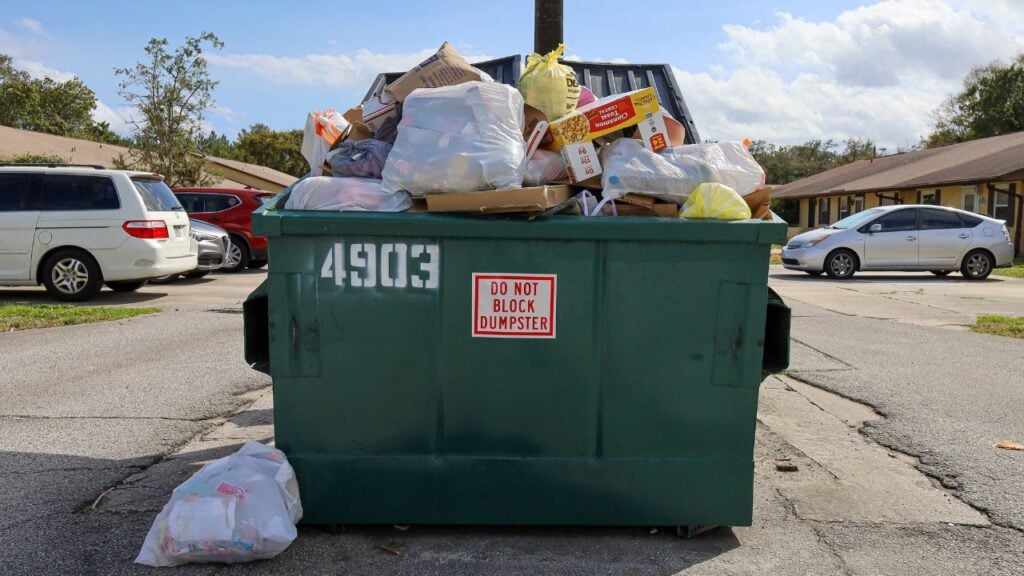
In Fort Worth, a camera mounted on a garbage truck can help decide whether a homeowner owes money, no police officer required.
Cities, counties, and homeowner associations across Texas now write bills for ordinary trash mistakes that many residents never think twice about.
8 Texas Trash Violations That Turn Into a Bill Nobody Saw Coming
