
9 Kitchen Features That Get Harder for Older Pennsylvanians to Use

Nearly 3.5 million Pennsylvanians are 60 or older. That’s almost one in four residents.
The Keystone State has the fifth-largest older population in the country, according to the Pennsylvania Department of Aging’s state plan.
Many kitchens were never built with seniors in mind.
These are the kitchen features getting harder to use as Pennsylvanians age.
Note: This is general information, not financial advice. Loan terms and program eligibility are subject to change, so confirm current details with the Pennsylvania Housing Finance Agency or your county’s Area Agency on Aging.
1. Standard-Height Upper Cabinets
Standard-height upper cabinets hang at the same spot in almost every kitchen, whether a builder was picturing a six-footer or someone reaching from a step stool.
A quarter of Pennsylvania’s occupied homes went up before 1940, and the median home is 57 years old.
That’s old enough that many cabinets went in before anyone ever wrote an aging-in-place guideline, and they’ve simply never been touched since.
That top shelf gets harder to reach once a shoulder stiffens or a knee makes climbing a step stool feel like the wrong idea.
It’s not worth the wobble.
National guidelines call for hanging those cabinets three inches lower, a fix Pennsylvania’s OPTIONS program can help residents 60 and older cover on a sliding scale.
Until then, that top shelf stays exactly where a builder left it decades ago.
2. Deep Base Cabinets Without Roll-Out Shelves
Deep kitchen base cabinets without roll-out shelves hide their back half behind whatever’s stacked in front.
Reaching a pot at the very back means kneeling on the floor and feeling around blind.
Down is the easy part.
Standing back up is what gets harder every year.
Those same guidelines recommend a roll-out tray or a lazy Susan in every lower cabinet.
That’s the kind of project the Pennsylvania Housing Finance Agency’s HomeStyle Renovation loan can roll into a refinance, covering up to 75% of the home’s finished value.
Until then, the back of that cabinet stays a blind reach for anyone who can’t kneel down and feel around for it.
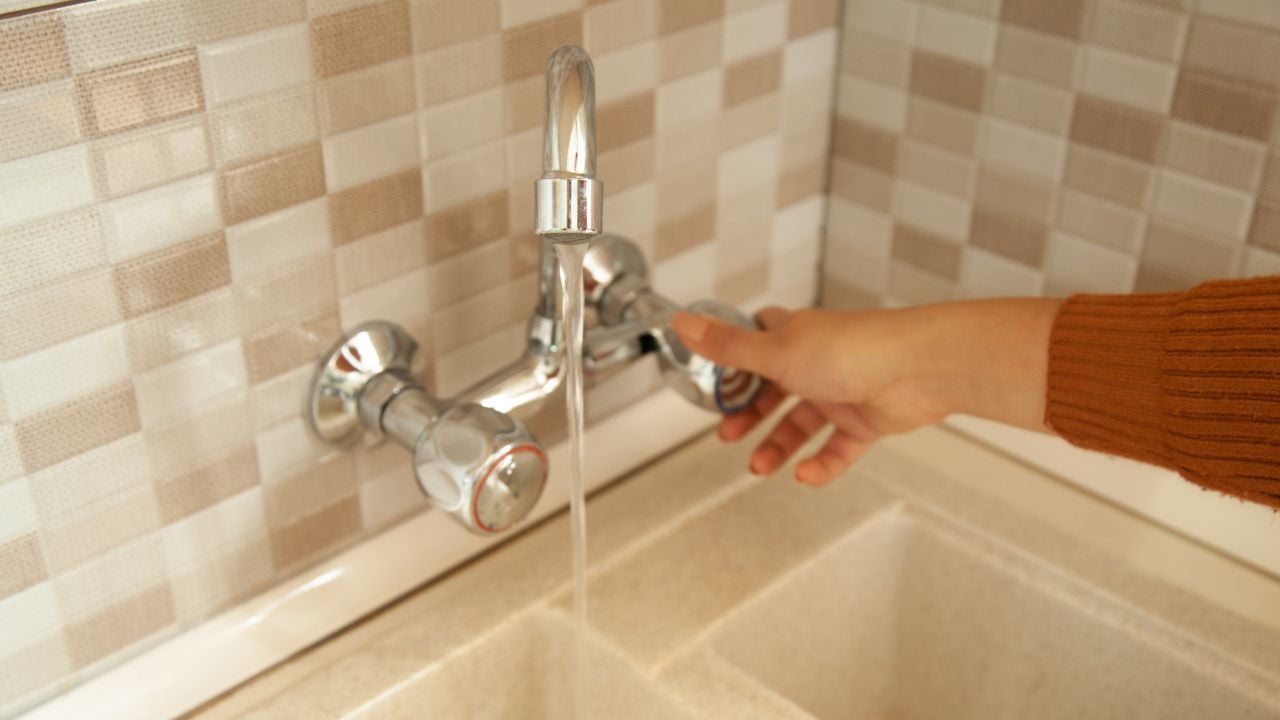
3. Round Twist Faucet Handles
Round twist faucet handles ask a hand to grip, squeeze, and rotate all at once, every single time the water needs to go on or off.
The Pennsylvania Department of Health puts arthritis at 31% of the state’s adults, nearly 2.95 million people, and that grip-squeeze-twist motion is exactly the combination stiff, arthritic joints struggle with most.
Wrists complain first.
A pull-out lever faucet needs only a push or a nudge instead of a twist, and installation runs roughly $467 to $773 with labor, per national cost-estimate sites in 2026.
For an aching wrist, that same twist repeats dozens of times a day, long before any of that gets easier.
4. Small, Low-Contrast Range Controls
Small, low-contrast range and oven controls print their settings in thin gray numbers on a black or stainless background.
Those numbers read easily only up close and in good light.
Vision changes with age make that kind of low-contrast type harder to read from a normal cooking distance.
Nearly 3.5 million Pennsylvania residents are 60 or older, the age group especially likely to feel it.
A bright kitchen window can wash the numbers out.
Squinting gets old fast.
Easy-to-read controls set at a reachable height fix it, per those same national guidelines.
Until a homeowner replaces the range, dinner still depends on guessing which gray number is which.
5. Bottom-Hinged Wall Ovens
Bottom-hinged wall ovens drop the door down and out, so pulling a hot dish free means bending forward over an open door at almost knee height.
More than one in four Pennsylvania adults 65 and older, 27.6%, reported falling in the past year, per America’s Health Rankings.
Bending over a hot oven door at knee height is exactly the kind of moment shaky balance picks.
One slip does it.
A side-swing wall oven opens sideways instead, so the dish comes out at standing height.
Until then, every hot dish still comes out bent over an open door at almost knee height.
Psst! How many of these aging-in-place kitchen assumptions hold up? Read each one, guess, then tap to see.
6. Top-Freezer Refrigerators
Top-freezer refrigerators put the freezer compartment above the door handle and the fresh-food section down near the floor.
That layout splits kitchen chores between an overhead reach and a deep bend.
Picture the same boxy top-freezer still doing duty in a Philadelphia rowhouse galley kitchen or a small-town kitchen out in the coal region, decades after it was new.
Neither height helps.
A side-by-side layout spreads the reach evenly instead, floor to ceiling on both sides.
Until then, one shelf still asks for a reach overhead and the other for a bend to the floor.
7. Round Cabinet Door Knobs
Round cabinet door knobs, often the same hardware installed decades ago in older kitchens, need the same pinch-and-pull grip as a twist faucet.
That grip repeats across every cabinet and drawer in the kitchen.
That’s dozens of small grips a day, each one harder on stiff or arthritic fingers than the last.
Ouch, every time.
Federal accessibility standards call for hardware that never requires tight grasping, pinching, or twisting the wrist to operate.
That rules out a round knob in favor of a loop or bar pull.
Until someone swaps those knobs, the same tight pinch repeats with every single drawer.
8. Hidden Dishwasher Controls
Dishwasher controls stamped along the inside top edge of the door force a cook to open the door partway and look down and in to find the right button.
That angle isn’t easy.
It’s an awkward angle for aging eyes.
It’s worse for anyone whose knees or back don’t love looking straight down anymore, a small daily strain in older kitchens that haven’t swapped a dishwasher in decades.
National guidelines call for any standard dishwasher to sit raised on a platform instead, with push-button controls facing forward at standing height.
Until then, every cycle still starts with a bent-over squint at the door.
9. Fixed-Height Counters
Fixed-height counters run at one measurement for every task and every cook, whether that’s chopping vegetables standing up or icing a cake when balance isn’t at its best.
Standing through an entire meal’s prep wears out tired legs fast, and tired legs are less steady legs, especially on a hard kitchen floor.
Sitting isn’t giving up.
Open under-counter space fixes it, leaving room for a stool or a wheelchair to roll in and keep working.
A single lower stretch of counter, even just a few feet of it in a Lancaster County farmhouse kitchen, gives a tired cook a place to sit.
Pulling one base cabinet to open that knee space turns a fixed counter into two workspaces, a standing one and a seated one, without touching a single wall.
8 Aldi Policies Pennsylvanians Over 60 Never Think to Use

A longtime Reading shopper drives fifteen minutes out of her way to Weis Markets, convinced Aldi won’t lift a finger if something in her cart goes wrong.
She’s wrong, and Aldi’s written policies prove it, even though Pennsylvania shoppers over 60 are among the least likely to ever use them.
8 Aldi Policies Pennsylvanians Over 60 Never Think to Use
8 Pay Stub Numbers Pennsylvania Workers Never Check Until Something’s Wrong
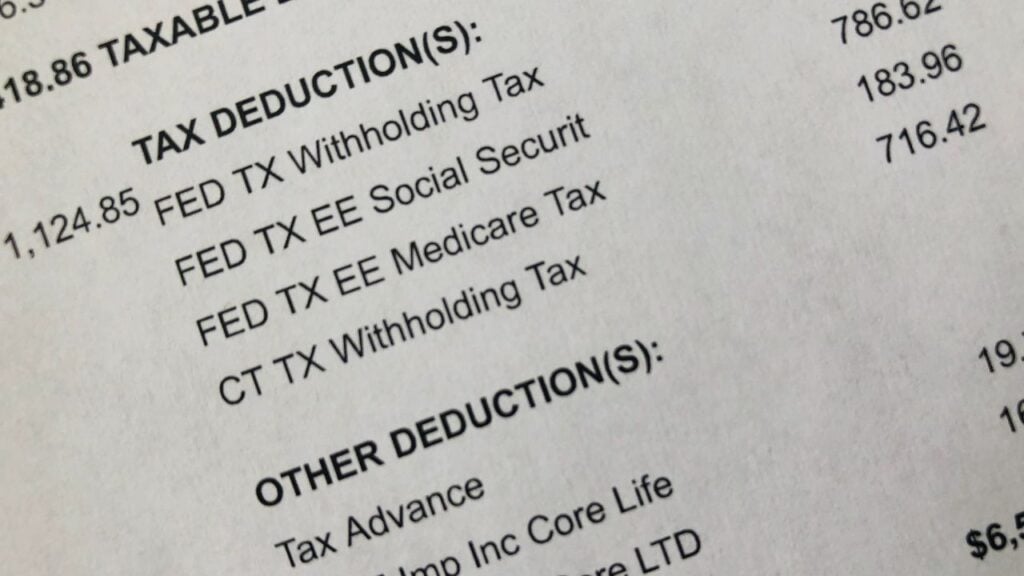
Pennsylvania taxes every paycheck at a flat 3.07%, and that line should match gross pay multiplied by 0.0307 to the penny.
A six-digit code further down decides between the home rate and the workplace rate for local Earned Income Tax, and missing it can cost hundreds a year.
8 Pay Stub Numbers Pennsylvania Workers Never Check Until Something’s Wrong
