
8 Alabama Church Cookbook Recipes Nobody Makes From Scratch Anymore

Mobile Bay Magazine credits a Junior League of Mobile cookbook with more than 164,000 copies sold since 1964, and collectors still spend hours hunting down a copy.
The book survived.
The scratch cooking inside it mostly didn’t, and cooks everywhere have traded it for shortcuts since.
These are the Alabama church cookbook recipes new people make from scratch anymore.
1. Tomato Aspic
Tomato aspic filled the salad section of church and community cookbooks for generations.
The savory gelatin mold, built from tomato juice, vinegar, and a splash of hot sauce, held its shape on a folding table through an entire fellowship supper.
It rode the same wave that put a refrigerator in nearly every American kitchen by the 1950s.
Working women lost the spare hours a mold needs to set, though, and congealed salads slid into a holiday-only dish by the late 1960s, according to the Atlanta Journal-Constitution.
That trade is rare now.
What “Congealed” Means
Alabama’s tomato aspic and its congealed cousins don’t set just because gelatin meets a cold liquid.
The powder has to bloom in a small amount of cool liquid first, then dissolve completely in something hot before it goes into the mold.
From there, most congealed salads need four to six hours in the refrigerator, sometimes overnight, before a cook can safely turn the mold out onto a plate.
Skip the bloom step or rush the chill, and the aspic weeps liquid or never fully sets at all.
2. Cornbread Dressing
Cornbread dressing, built from a skillet of scratch cornbread crumbled into broth, sage, celery, and onion, anchored Sunday dinner on the grounds at churches for generations.
Cooks baked the cornbread a day ahead on purpose, since a drier pan soaks up broth better than one fresh out of the oven.
Alabama’s home cooks had already leaned hard into industrialized convenience foods by the 1940s, the Encyclopedia of Alabama notes.
Wartime work had pulled many women out of the kitchen, leaving labor-intensive dishes like scratch dressing to Sundays and holidays.
Stove Top arrived on grocery shelves nationwide in 1972 and caught on fast, food-history site Tedium reports.
The company never published hard numbers on how much of the dressing aisle it took over.
A packet takes minutes.
Scratch cornbread dressing survives at many Alabama Thanksgivings.
Fewer cooks bother with it on an ordinary Sunday now that broth, sage, and a box do the same job in a fraction of the time.
3. Homemade Biscuits
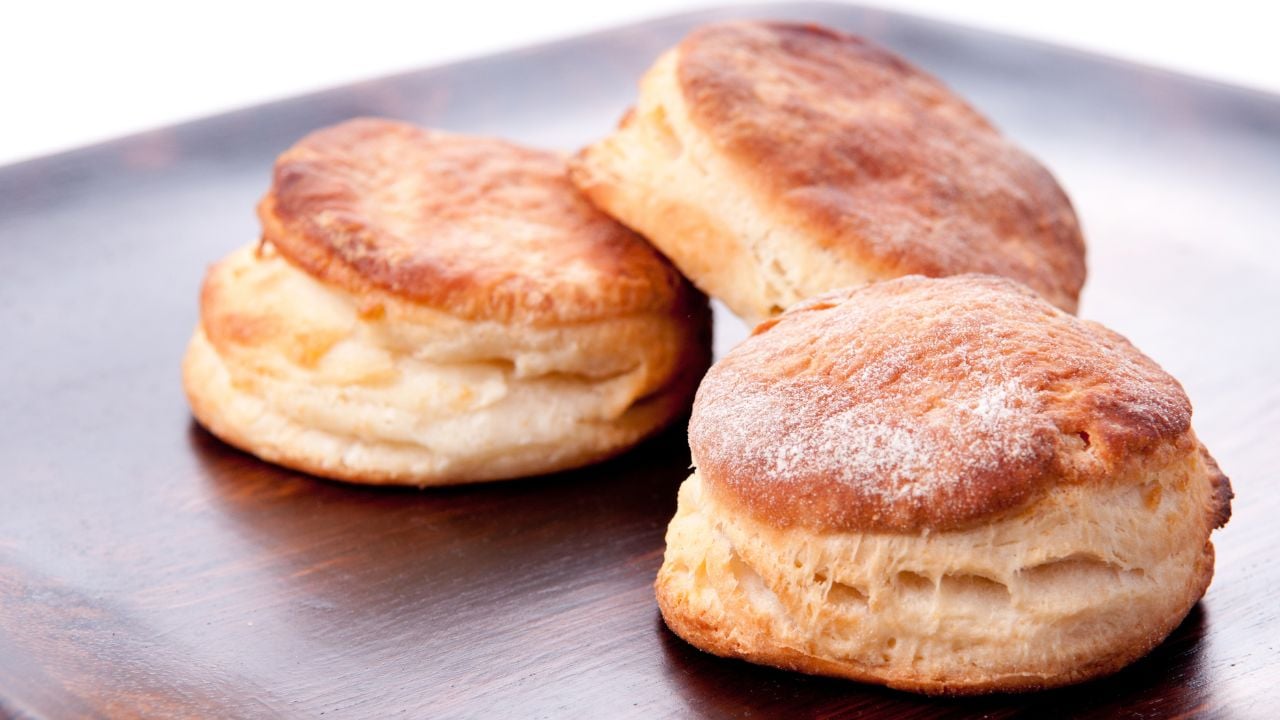
Homemade biscuits, cut from a bowl of self-rising flour and cold lard or shortening, opened almost every Sunday dinner spread in a church fellowship hall.
Many cooks reached for White Lily flour, a low-protein wheat flour that gave bakers a finer, more tender biscuit.
Refrigerated biscuit dough in a cardboard tube got its patent in 1931, and canned biscuits spread from a novelty into an everyday shortcut over the following decades.
The tube usually wins.
Even fast-food chains leaned into that shift.
Hardee’s built nearly half its revenue on biscuits by 2018, per King Arthur Baking’s account of the category’s history.
Alabama’s wartime turn toward factory-made bread had already set that pattern at home decades earlier, according to the Encyclopedia of Alabama.
4. Ambrosia
Ambrosia built from fresh oranges and hand-grated coconut turned up in Southern cookbooks as far back as 1867, in Maria Massey Barringer’s Dixie Cookery.
Alabama church potlucks kept the fruit salad in heavy rotation through the mid-20th century, usually chilled in a big glass bowl next to the deviled eggs.
Whipped cream sales fell 30% between 1962 and 1972, a 1982 Washington Post story reported.
The decline came amid a broader shift toward non-dairy toppings, among them Cool Whip, which had arrived on shelves in 1966.
Home cooks folded the whipped topping and canned mandarin oranges into the mix instead of grating a fresh coconut by hand.
The shortcut stuck.
Fewer tables set out ambrosia at all anymore, since cooks stopped treating fresh citrus and coconut as anything special once supermarkets started stocking both year-round.
5. Homemade Yeast Rolls
Homemade yeast rolls, kneaded from scratch and left to rise twice before their turn in the oven, filled the bread basket at Sunday dinner on the grounds.
Churches kept that basket full for generations.
A hot roll takes planning.
The dough needs an hour or more for its first rise, a shorter second rise after shaping, and a hot oven at exactly the right moment.
Patricia Barnes tested her grandmother’s Parker House roll recipe, passed down through five generations, at a 1989 frozen food fair.
The fair was held at St. Mark’s Episcopal Church in Troy, Pike County, according to the Encyclopedia of Alabama.
The rolls outgrew the church fair fast.
Southern Living featured Barnes’s rolls in 1993, and national demand followed, the Encyclopedia of Alabama reports.
Her company, Sister Schubert’s, was turning out more than 9 million rolls a day from its Luverne, Alabama factory by 2018, per the same source.
Fewer cooks knead a batch from scratch for an ordinary Sunday now that a church-tested recipe already sits bagged in the freezer aisle.
Psst! How much do you know about Alabama’s food history? Take our quiz and see how many you can get right.
Quiz
Alabama Food IQ
Answer these questions on Alabama food history and small-town trivia. We bet you can’t get them all right. Prove us wrong?
The cafe that inspired Fannie Flagg’s Whistle Stop Cafe in “Fried Green Tomatoes” sits in which Alabama town?
6. Scratch Pound Cake
Scratch pound cake, made the old way with a pound each of butter, sugar, eggs, and flour, has shown up in cookbooks since Hannah Glasse published the method in 1747.
Church bake sales and dessert tables leaned on that same dense, buttery loaf for generations, sliced thin and served plain or with fresh berries.
Home cooks had already turned to factory-made cake mixes as part of the wartime shift to industrialized convenience foods, per the Encyclopedia of Alabama.
Betty Crocker, Pillsbury, and Duncan Hines all had boxed cake mixes on grocery shelves nationwide by 1951, according to America's Test Kitchen's history of the category.
Cracking eggs got optional.
The mixes cut the ingredient list and the mixing time down by a lot.
A box of cake mix does the job in a fraction of the time.
Many bakers reach for it instead of measuring out a pound each of butter, sugar, eggs, and flour.
7. Homemade Pimento Cheese
Homemade pimento cheese, built from hand-shredded sharp cheddar, mayonnaise, and jarred pimentos, was a fixture of church potluck sandwich trays and funeral dinners alike.
Cooks varied the recipe by household, some adding a spoonful of pickle relish or a dash of cayenne, and nobody wrote down exact measurements.
The state's broader wartime shift to industrialized convenience foods, per the Encyclopedia of Alabama, had home cooks reaching for canned and prepared goods.
That reach for a shortcut started well before pimento cheese ever came in a tub.
Palmetto Cheese launched in Pawleys Island and Georgetown, South Carolina, in 2006 and has since grown into more than 10,000 stores nationwide, the company says.
A tub from the store beats shredding a block of cheese by hand.
That's faster.
Fewer home cooks shred a block of cheese by hand for a Sunday spread now that a name-brand tub sits in the deli case at nearly every grocery store.
8. Homemade Mayonnaise
Homemade mayonnaise, whisked by hand from egg yolks and oil until it turned thick and pale, anchored many church cookbook recipes.
Potato salad needed it, and so did the deviled eggs sitting next to the tomato aspic.
Eugenia Duke started selling sandwiches spread with her homemade mayonnaise to soldiers at Fort Sevier in Greenville, South Carolina, in 1917, charging a dime a sandwich.
A salesman talked her into bottling the mayonnaise as a separate product in 1923.
Duke's spread from there.
National Public Radio (NPR) named Duke's the mayonnaise Southerners reach for by habit, in a 2013 retrospective on the condiment's first century.
A squeeze bottle from the grocery aisle beats forty minutes with a whisk and a steady hand.
Whisking a batch from scratch is a specialty move now, not a routine one.
Where the Cookbooks Still Live On
The church and community cookbooks themselves never disappeared, even as the from-scratch habits inside them did.
The Junior League of Birmingham followed with Magic in 1982, a decade and a half after the Junior League of Mobile put out Recipe Jubilee! in 1964.
Individual congregations kept the tradition going on a smaller scale, too.
The books stayed in print.
Recipe Jubilee! alone has sold more than 164,000 copies, Mobile Bay Magazine reports.
A spiral-bound cookbook holds up fine on a shelf for sixty years.
A used copy of Recipe Jubilee! still turns up with the original owner's handwriting in the margins, next to a recipe nobody in that kitchen has made from scratch in years.
8 Sweet Tea Rules Out-of-Staters Break at Every Alabama Cookout
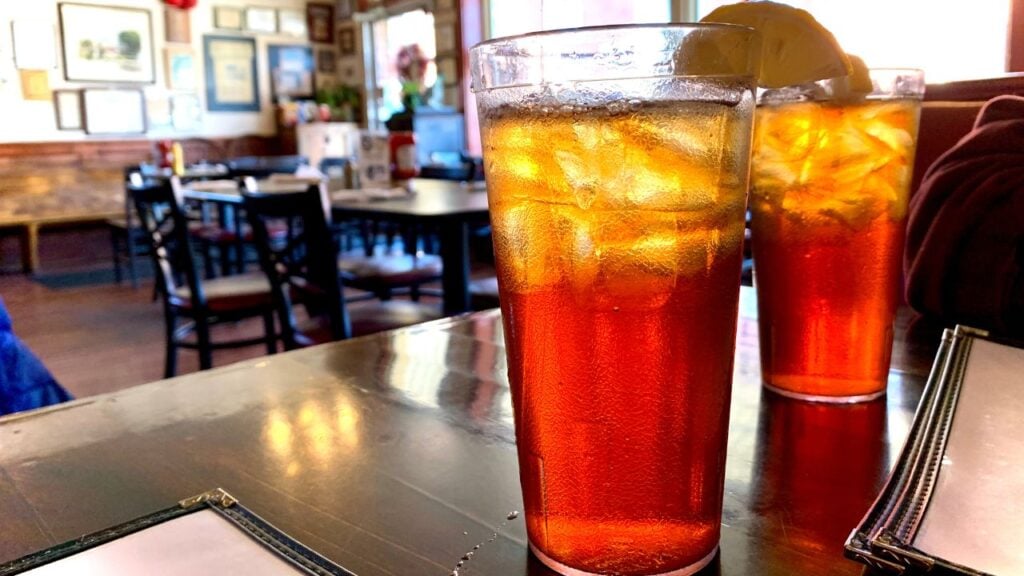
A cooler shows up to an Alabama cookout stocked with a national-brand jug of tea, no ice, and a fistful of sugar packets on the side.
Nobody says a word, and they just reach past it for the gallon somebody already brewed, sitting cold on the table.
8 Sweet Tea Rules Out-of-Staters Break at Every Alabama Cookout
8 Signs Fall Is Coming to Alabama That Have Nothing to Do With the Weather

Alabamians don't wait on a cold front to call it fall. They wait on a whistle.
Football conferences, wildlife agencies, and county fair boards each pick a date months in advance, and not one of them consults a meteorologist.
8 Signs Fall Is Coming to Alabama That Have Nothing to Do With the Weather
