
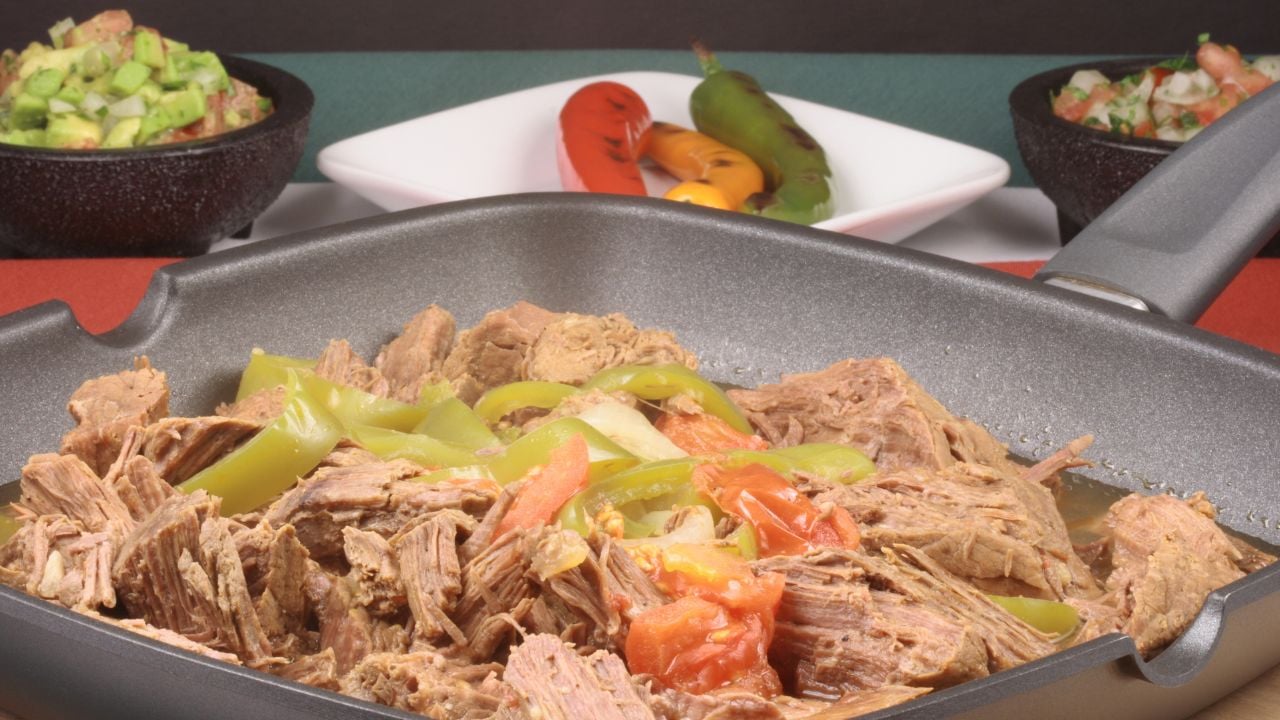
7 Texas Ranch Dishes That Only Exist Because Nothing Got Thrown Out

If you were cooking for a Texas ranch crew, you couldn’t always choose your ingredients.
You could choose what to do with them, though.
Ranch cooks turned that challenge into dishes people still eat, even when they no longer have to.
These are the Texas ranch dishes that exist because nothing got thrown out.
1. Son-of-a-Gun Stew
Son-of-a-gun stew started at a ranch chuck wagon, not a dinner table.
Trail cooks on cattle drives killed a young calf along the trail to feed the crew, and the outfit had no ice chest and no truck trailing the herd.
Heart, liver, sweetbreads, brains, and tongue spoil within a day or two without refrigeration.
So the cook cubed them up, dropped them in a pot with whatever onion and pepper the chuck box carried, and fed the crew before any of it turned.
Waste was never an option.
Cooks wrapped the better cuts for later or dried them into jerky.
The parts that wouldn’t keep went straight into the pot that same afternoon.
2. Calf Fries
Calf fries start at branding time, a separate ritual from the trail cook’s stew pot.
Turning a bull calf into a steer meant castrating it, and that left a pile of testicles on the ground by lunchtime.
Cowboys peeled, sliced, and fried them instead of leaving them for the buzzards.
That’s cheap protein.
According to etymology researcher Barry Popik, an immigrant named Theo Yordanoff turned the habit into a business in 1920s Fort Worth.
Yordanoff bought up what stockyards and butchers were happy to give away for free.
Ranchers still call them calf fries today, and the name only makes sense once someone explains where branding day leaves the leftovers.
Calf Fries vs. Mountain Oysters
Calf fries and mountain oysters come from the same cut, fried the same way, under two different regional names.
Ranch cooks farther north and west, in the Rocky Mountain states and the northern Plains, use the terms mountain oysters or prairie oysters for it.
“Calf fries” is the name that stuck on Texas ranches, tied to the branding-pen tradition that produces them every spring.
3. Fajitas
Fajitas started as a cut of beef no rancher wanted to sell.
Anglo ranch owners across South and West Texas kept the loin and the rib for market.
They handed off the rest, including the hide, the head, and a thin, tough trim called skirt steak, to Mexican vaqueros as part of their pay.
The Austin Chronicle’s history of the dish documents that trade.
Skirt steak fights back like a boot sole unless someone knows what to do with it.
Vaqueros marinated it, grilled it hard and fast over an open fire, and sliced it thin against the grain.
Ranch hands were doing that in the ranch lands of South and West Texas as early as the 1930s.
The dish didn’t reach a menu until 1969, when an Austin meat market manager named Sonny Falcón sold fajita tacos at a rural festival in Kyle.
Free became famous.
4. Barbacoa de Cabeza
Barbacoa de cabeza turns the one part of a cow almost nobody else wanted into the centerpiece of a ranch meal.
Anglo ranch owners in nineteenth-century South Texas kept the prime cuts for market.
They handed off the unwanted heads, brains and all, to their Mexican ranch hands and vaqueros, Texas Monthly reports.
Those vaqueros cleaned each head, wrapped it in maguey leaves or burlap, and buried it in a pit over mesquite coals overnight.
Somebody’s trash became supper.
By morning, the head the ranch owner threw away came out of that pit as the most tender meat on the place.
South Texas has been pit-cooking cow heads ever since.
5. Machacado
Machacado solved a problem that had nothing to do with flavor.
A ranch family who butchered a steer had far more beef on hand than they could eat before it spoiled, and the nearest icehouse might sit a day’s ride away.
Drying the meat into carne seca, then pounding it into shreds, let that beef last for months instead of days, per the Handbook of Texas.
Reconstituted with eggs and a few chiles the next morning, that same dried beef becomes machacado con huevo, still a standard South Texas breakfast today.
A whole steer stretched out over a whole season instead of going bad in a week.
Nothing spoiled twice.
6. Tripitas
Tripitas turned the one part of a butchered steer that even skirt steak beat for value into a supper dish.
Entrails were another throwaway item Anglo ranch owners in South and West Texas handed off to their Mexican vaqueros, the same custom that produced fajitas from the skirt.
Nobody was paying cash for a cow’s intestines.
Vaqueros cleaned the tripe, cut it into strips, and fried it in a cooker made from an old plow disk set on three legs of pipe over open coals.
The Handbook of Texas records that improvised setup.
A retired piece of farm equipment did the cooking for a retired piece of the cow.
South Texas ranch families still fry tripitas that way today.
Not one part wasted.
7. Headcheese
Headcheese comes from the same Texas Hill Country tradition that treated a butchered hog as too valuable to throw any of it out.
German families who settled around Fredericksburg and Boerne in the 1840s slaughtered hogs in the cool months and turned every part into something a family could eat.
Families slow-cooked the skin, cheek meat, and heart together and set them in that broth to make headcheese.
Blood went into blood sausage.
Liver went into liverwurst, made from a mix that runs more than half liver by weight.
Families rendered the fat into lard for cooking through the rest of the year.
Butchers across the rural South summed up that philosophy the same way: Use everything but the squeal.
Psst! How much do you know about the ranches and cattle trails behind Texas cooking? Take our quiz and see how many you can get right.
Quiz
Texas Ranch History IQ
Answer these questions on Texas cattle drives, chuckwagons, and the ranches behind them. We bet you can’t get them all right. Prove us wrong?
Which South Texas ranch, founded in 1852, grew larger than the entire state of Rhode Island?
Texas Cattle by the Numbers
Ranching in the state runs on a scale that turns a waste-not habit into more of a math problem than a preference.
California ran a distant second among cattle states as of Jan. 1, 2026, with 5.05 million head against Texas's 12.1 million, according to the U.S. Department of Agriculture's National Agricultural Statistics Service.
That's more than double.
Ranchers brand every one of those calves every spring, and each branding produces the same pile of parts a crew either cooks or buries.
Multiply one calf's leftovers by 12.1 million, and a habit that reads as thrifty on one ranch starts to look like the only sane option across the whole state.
Fredericksburg's German butcher shops and South Texas's barbacoa pits grew out of the same math, just with hogs and cow heads standing in for calves.
A rancher branding fifty calves in a single morning walks away with fifty sets of calf fries and enough odds and ends for a full pot of stew before lunch.
That same math repeats every spring on ranches from the Panhandle down to the Rio Grande.
8 Small-Town Texas Traditions That Baffle Everyone Who Moves In
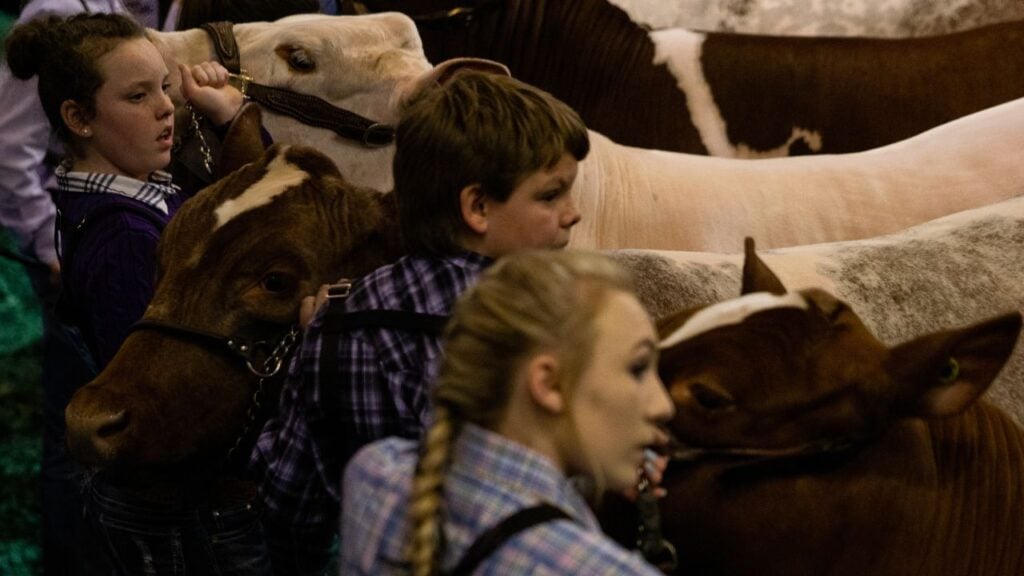
Ranch food isn't the only thing a small Texas town takes for granted and never bothers to explain to whoever just moved in.
A volunteer fire department, a Friday night that empties the whole town, and a handshake deal all run on the same unspoken rules everyone already knows.
8 Small-Town Texas Traditions That Baffle Everyone Who Moves In
9 Words That Mean Something Completely Different in Texas
Ranch dishes carry a vocabulary many newcomers never learned, and many other ordinary Texas words shift meaning the same way once someone crosses into the state.
A transplant usually finds out mid-sentence, in front of people who assumed everybody already knew.
