
9 Things Out-of-Staters Get Wrong About Montana

Montana had nearly two cattle for every resident, according to a recent Montana Free Press analysis of the state’s cattle population.
Out-of-staters hear a number like that and think they’ve already got the state figured out.
They don’t.
These are the things out-of-staters get wrong about Montana.
Note: This is general information, not legal or tax advice. Montana’s tax rates, speed limits, and access laws are subject to change.
1. Missing Sales Tax
Out-of-staters usually walk into a Montana store expecting a sales tax to land on the receipt, the way it does everywhere else they’ve shopped.
Montana skips it.
It’s one of only five states with no general sales tax on the books, a group that also includes Alaska, Delaware, New Hampshire, and Oregon.
The receipt still surprises them.
Shoppers feel it hardest on big purchases, like a truck or a snowmobile, where a sales tax bill in many other states would run into the thousands.
The break doesn’t stretch everywhere in the state, though.
Montana’s Resort Tax Exception
Montana’s “no sales tax” promise bends in a handful of tourist towns.
Places like Whitefish, Big Sky, Red Lodge, and West Yellowstone charge a local resort tax of up to 4% on lodging, restaurant meals, alcohol, and ski-related purchases.
Grocery staples and other everyday goods stay untouched even there, since the tax targets tourist spending, not local shopping trips.
2. Income Tax Surprise
Out-of-staters who just found out Montana skips the sales tax often assume the state skips income tax too.
Montana taxes income anyway.
The state runs a two-bracket income tax in 2026, with a 4.7% rate on lower earnings and a top rate of 5.65% on income above roughly $47,500 for a single filer.
State lawmakers set that structure with House Bill 337.
It isn’t free.
Montana taxes wages the way any other income-tax state does, just at Montana’s rates.
The break just moves the tax somewhere else.
3. Yellowstone’s True Address
A lot of out-of-staters treat Yellowstone National Park like a Montana park, and that’s backward.
About 96% of the park’s roughly 2.2 million acres sits inside Wyoming, with just 3% crossing into Montana and 1% into Idaho.
Wyoming holds most of it.
The gateway towns still count, though.
Gardiner and West Yellowstone sit right at the park’s edge, both in Montana.
Bozeman’s airport still funnels many visitors in from the north, even though most of the famous geysers sit across the state line.
4. Prairie Two-Thirds
Montana looks like solid Rocky Mountains in the postcards, and that image only covers the western third of the state.
The eastern two-thirds is Great Plains: Rolling grassland, wheat fields, and badlands with barely a hill in sight.
Flat wins out.
A drone shot near Miles City or Glendive could pass for Kansas, not Glacier.
Miles City, Glendive, and Sidney anchor that stretch, working cattle and wheat country instead of ski towns.
Elevation drops sharply across that eastern stretch, a long way down from the peaks tourists picture.
5. Stream Access Law
Montana’s stream access law lets the public wade, fish, and float on rivers that run through private ranchland, and out-of-staters usually assume the opposite.
The rule covers surface waters capable of recreational use.
The public can use the space up to the ordinary high-water mark, no matter who owns the land on either bank.
The land still isn’t public.
A stranger can’t cross posted pasture to reach the water, and climbing out to skirt a fence still counts as trespassing.
Montana’s courts settled this fight in the 1980s, and the Legislature has kept the rule on the books ever since.
Psst! How much do you know about Montana beyond the ranches and rivers? Flip these cards and see how many you call right.
6. Posted Speed Limit
The state posts a hard, numeric speed limit today, even though the “no speed limit” story still floats around.
Rural interstates carry an 80 mph limit outside cities, while stretches through Missoula and Billings drop to 65 mph.
Troopers still write tickets.
The old “reasonable and prudent” rule from the mid-1990s let drivers set their daytime pace.
Montana’s Supreme Court struck it down in 1998, ruling it too vague to enforce.
Lawmakers wrote a numbered limit into law the next year, and Montana has posted one ever since.
7. Fourth-Largest State
Montana ranks as the fourth-largest state in the country by land area, and out-of-staters keep underestimating how long it takes to cross it.
The state covers more than 145,000 square miles, room enough to misjudge a quick drive badly.
Neighbors can live hours apart.
Interstate 90 alone runs more than 550 miles inside Montana, and driving it end to end without stopping still eats up the better part of a day.
Montana holds about 1.14 million people across all that acreage, one of the lowest population densities in the country.
8. Urban Majority
Montana looks empty on a map to out-of-staters, but many residents live in towns and small cities, not out on some remote ranch.
Seven of the state’s 56 counties, among them Yellowstone, Gallatin, and Missoula, hold 65% of Montana’s entire population, about 740,000 people.
The state’s cattle count tells the opposite story.
Montana still runs close to two cattle for every resident statewide, and in Petroleum County that ratio rises past 60 to 1.
Billings carries the crowd.
Billings alone holds more than 120,000 residents, and Missoula, Great Falls, and Bozeman fill out the rest of the state’s five biggest cities.
9. Grizzly Range
Grizzly bears roam only part of the state, not all of it the way the tourism photos suggest.
Occupied grizzly range concentrates in two ecosystems: The Northern Continental Divide in the northwest, anchored around Glacier National Park, and the Greater Yellowstone Ecosystem stretching into the state’s southern edge.
Eastern Montana stays grizzly-free.
Wildlife managers count more than 1,000 bears in each ecosystem, and the northwestern population’s occupied range grew by about 12% over just two years, per federal tracking data.
A hiker near the Bitterroot or Blackfoot valleys carries bear spray for good reason.
A wheat farmer near Sidney, hundreds of miles east, almost never needs it.
8 Ways Out-of-Staters Break Buc-ee’s Etiquette Before They Reach the Brisket
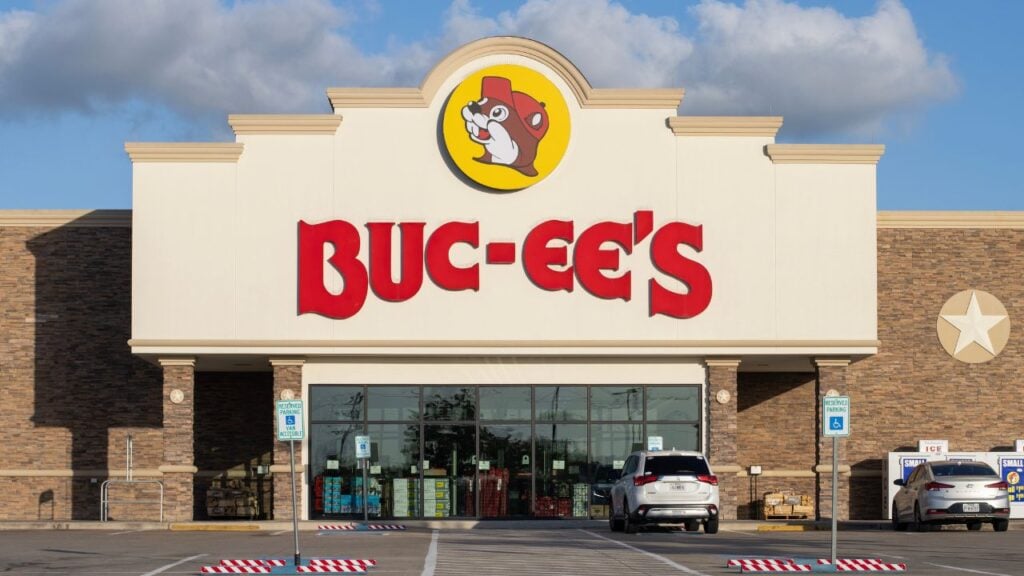
A loudspeaker announcement about fresh, hot brisket sends half the store turning toward the counter at once inside a Buc-ee’s.
Regulars already know the unwritten rules, and out-of-staters usually learn them the hard way, one dirty look at a time.
8 Ways Out-of-Staters Break Buc-ee’s Etiquette Before They Reach the Brisket
