

15 Words Floridians Say That Stop Northerners Mid-Sentence

Florida has a vocabulary, and nobody warns newcomers before they land.
These are the words Floridians say that stop Northerners mid-sentence.
1. Cracker
“Cracker” is a word many families with generations of roots in the state call themselves, and they mean it as a badge.
One theory in the state archives ties the word to early cattle drivers, whose whips cracked as they herded cattle.
The state even gave official status to a cattle breed and a horse breed that carry the Cracker name.
It’s a compliment.
At a diner counter, a visitor from the North hears the word once and braces for a fight anyway.
2. Gopher
The word “gopher” means a tortoise, the state’s only native land tortoise species.
Up north, the same word means a burrowing rodent that tears up a lawn.
The gopher tortoise carries state-threatened status and shelters more than 350 species inside its burrows.
It’s not a rodent.
Homeowners who spot a gopher tortoise in the yard can’t fill in the burrow or move the tortoise without a state permit.
When a Northern transplant calls animal control about “gophers” tearing up the lawn, they get a lecture on protected wildlife instead.
The Legal Weight Behind “Gopher”
Florida’s gopher tortoise lives in every one of the state’s 67 counties, and it has carried formal state protection since 1979.
The state upgraded that status to threatened in 2007, and anyone clearing land where a burrow sits now needs a state relocation permit before disturbing it.
3. Season
“Season” means the winter stretch when snowbirds arrive, not whichever months happen to feel warm or cold that year.
In a 2006 study, University of Florida demographers estimated that 818,000 snowbirds spent at least a month in the state at the peak of the 2005 winter season.
Ask a local in Naples if a restaurant is packed “during season,” and they’ll name the months without checking a calendar.
Only one stretch counts.
In July, a local mentions the roads finally clearing up now that season’s over.
A Northern visitor stops mid-conversation because July doesn’t sound like any season on a calendar they know.
4. Hammock
A “hammock” is a stand of hardwood trees, not a place to string up a nap.
It has nothing to do with rope or canvas slung between two trunks.
A hardwood hammock rises a few inches above the surrounding wetlands, just enough to stay dry when the water around it rises.
Old maps and park signs use the word this way across the state, from the Everglades to San Felasco Hammock Preserve near Gainesville.
No rope is required.
Ask a ranger for the closest hammock, and a camper pictures a nap, not a nature hike.
5. Snook
A “snook” is a saltwater gamefish anglers chase for its fight, not a nickname, a typo, or slang for anything else.
The state’s wildlife commission manages snook through regional closed seasons and length limits, including a winter closure that runs from December through February on the Gulf Coast.
The rules change by region.
On a Tampa Bay dock, a Northern angler overhears someone bragging about a snook and checks the cooler expecting a snack.
Florida shuts down snook harvest for months at a stretch, which is serious regulation for a word that sounds made up.
6. Cooter
A “cooter” is a turtle, plain and simple.
The state is home to several cooter species, including the river cooter and the Suwannee cooter, both tracked by state wildlife biologists.
The Suwannee cooter, the largest cooter in the state, is covered by the state’s Imperiled Species Management Plan.
It’s just a turtle.
Inside a nature center gift shop, a Northern visitor hears the word out loud and does a double take.
7. Lovebugs
“Lovebugs” are flies, not a pet name for a couple.
University of Florida entomologists note that Plecia nearctica swarms for a few weeks every April and May and again in August and September.
Mating pairs fly locked together and coat windshields, grilles, and bumpers across the state.
They travel in pairs.
A Northern visitor catches a local complaining about lovebugs ruining a fresh paint job and pictures a couple, not a fly stuck to the glass by the hundreds.
8. Sawgrass
“Sawgrass” names a plant, not a golf course or a type of lawn grass.
The Everglades’ famous “River of Grass” nickname describes water moving slowly through sawgrass marshes.
Sawgrass is a sedge, and its blades carry tiny saw-like teeth sharp enough to cut skin.
It draws blood, not compliments.
Mention wading through sawgrass to a golf fan, and the picture is the famous course with the island green, not a marsh plant that can cut skin.
9. Chickee
A “chickee” is an open-sided, thatched-roof hut with Seminole and Miccosukee origins, and Florida wrote a narrow exemption around it into law.
State building code waives the standard permit requirement for a chickee, but only for one group of builders.
The exemption under Statute 553.73 belongs to the Miccosukee Tribe of Indians of Florida and the Seminole Tribe of Florida alone.
No homeowner exemption exists.
A transplant researching a backyard tiki bar finds the word in the building code exemptions and assumes any thatched hut qualifies.
A county official explains the exemption belongs to tribal construction only, and the transplant’s build still needs a standard permit.
It’s a legal term with a narrow reach, not a typo for “chicken.”
10. Homestead
“Homestead” in Florida is a legal shield, not a pioneer-era farm.
Article X of the Florida Constitution keeps a primary residence off the table when nearly all creditors come collecting, no matter how much the home is worth.
Only a few debts can pierce it: Tax liens, mortgages, and money owed to build or repair the home.
The house stays put.
Overhear a neighbor mention filing for homestead, and a Northern transplant pictures staking a claim on undeveloped land.
Filing for homestead means applying to the county property appraiser for a property tax exemption on that same house.
11. Scalloping
“Scalloping” in Florida’s Big Bend is something people do, not a plating style.
The state opens a recreational bay scallop season each summer on Gulf Coast grass flats from the Big Bend south to Hernando County.
Snorkelers wade or dive there with a net and a bucket.
Once July arrives, the daily limit in every open zone runs two gallons in the shell per person.
No plating is involved.
A Northern visitor catches locals planning a scalloping trip to Crystal River or Steinhatchee and pictures a fancy dinner, not a snorkel and a mesh bag.
12. Scrub
“Scrub” names one dry, sand-covered habitat, not brush in general.
Scrub grows low, stunted oaks on ancient sand ridges and shelters the Florida scrub-jay, a bird found nowhere else on Earth.
The state’s wildlife commission says the scrub-jay population has declined 90% in the past century as that habitat disappeared.
It’s not just weeds.
When a hiker calls a stretch of low, tangled plants “the scrub,” a birder nearby perks up, listening for one bird in particular.
13. Coquina
“Coquina” names a building stone quarried near St. Augustine, made from the shells of tiny clams.
Spanish engineers quarried the shell-packed limestone from Anastasia Island to build the Castillo de San Marcos.
The porous rock absorbed cannonballs instead of shattering under them.
It simply held.
The fort never fell to that cannon fire.
A visitor touring the fort hears a guide say the walls are coquina and assumes it’s some kind of Spanish rice dish, not the rock holding the building up.
14. No-See-Ums
“No-see-ums” are the bugs locals swat at that a visitor can’t even find.
These biting midges run about a millimeter long, small enough to slip through a standard window screen, according to University of Florida entomologists.
The screen doesn’t stop them.
The bite lands first, and only then does a Northern camper start searching the air for a mosquito that was never there.
Psst! How much do you know about Florida’s history? Take our quiz and see how many you can get right.
Quiz
Florida History IQ
Answer these questions on Florida’s history and geography. We bet you can’t get them all right. Prove us wrong?
Why did territorial officials pick Tallahassee as Florida’s capital in 1824?
15. Citizens
"Citizens" in a homeowner's mouth is a company name, not a description of residents.
The Florida Legislature created Citizens Property Insurance Corporation in 2002 as the state's insurer of last resort for homeowners private companies wouldn't cover.
It's capitalized on purpose.
A Northern transplant signing closing paperwork overhears the title agent mention being with Citizens.
The transplant assumes it's a generic phrase, not the name of the company underwriting the policy.
4 Things Publix Did in the '90s That Floridians Still Miss
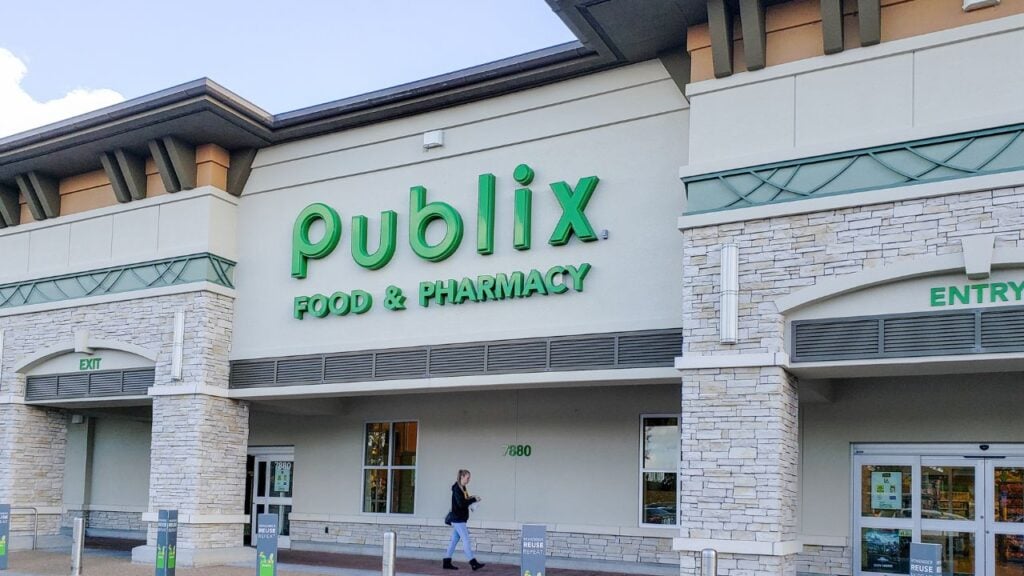
Publix once let shoppers bank and buy groceries under the same roof, with a teller window built right into the store.
That window closed years ago, and it's far from the only thing Publix let slip away since the 90s.
4 Things Publix Did in the '90s That Floridians Still Miss
7 Driving Rules Floridians Follow That Are Nowhere in the Handbook

Florida's roads carry more than 18 million registered vehicles, and no single handbook could ever cover every habit local drivers pick up behind the wheel.
These are the unofficial rules drivers follow anyway, passed down without a single class or manual involved.
7 Driving Rules Floridians Follow That Are Nowhere in the Handbook
