
9 Idaho Habits That Give Away Which Valley Someone Grew Up In

Nothing makes you notice a hometown habit faster than meeting someone who doesn’t share it.
In Idaho, that person might have grown up just a few valleys away. Suddenly, something you’ve done your whole life needs an explanation you’ve never had to give.
These are the Idaho habits that give away which valley someone grew up in.
1. BASE Jumpers as Scenery
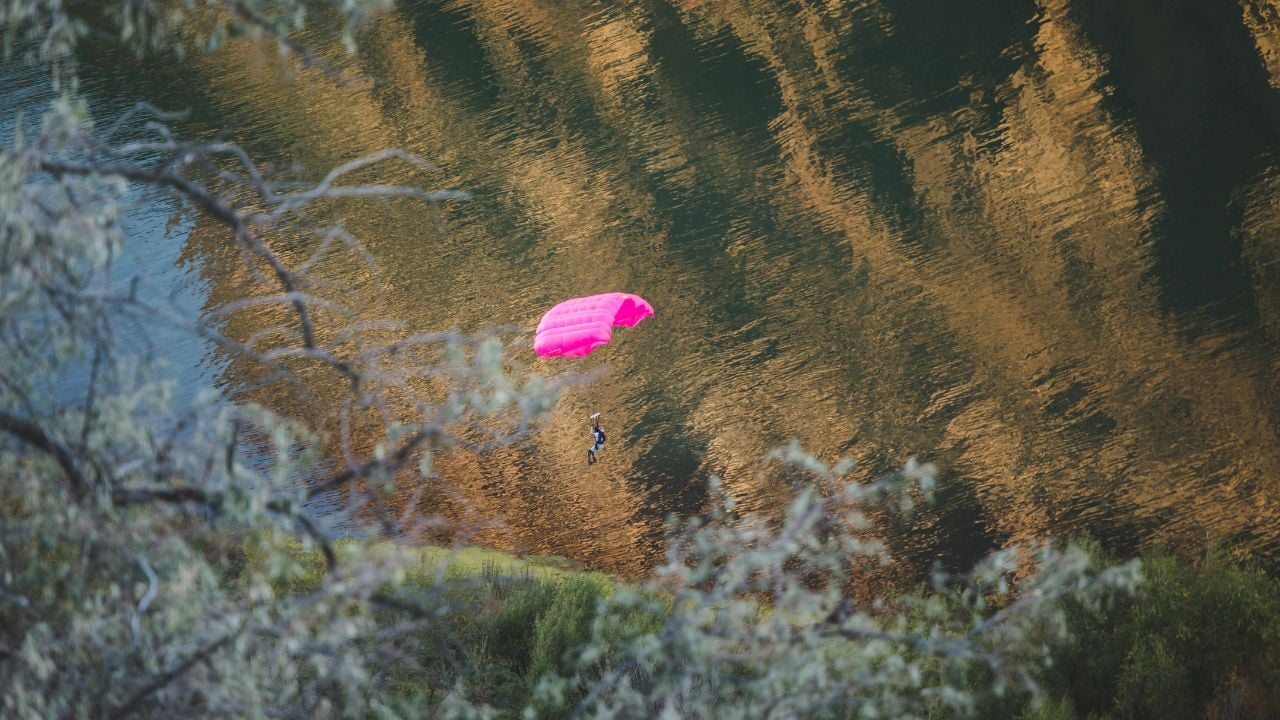
Twin Falls sits on the rim of Idaho’s Snake River Canyon, where a parachute opening below the Perrine Bridge barely earns a second look from anyone who lives there.
BASE stands for Building, Antenna, Span, Earth, the four things a jumper can legally leap from.
The 1,500-foot bridge is one of the few fixed structures in the country where jumpers can leap without a permit, any day of the year.
Out-of-towners slam on their brakes to film it.
Magic Valley kids grow up treating the sight the way kids elsewhere treat a passing train.
It’s just Tuesday.
Which weekend brings the biggest jump crowds?
A Magic Valley local answers without checking a calendar, and the canyon rim fills up the same way every single year.
2. Gondola Over Old Mines
Kellogg spent a century as a silver-mining town, and the Silver Valley now hangs part of its identity from cables strung over the same mountain.
Silver Mountain Resort’s gondola climbs 3.1 miles from downtown Kellogg to the ski hill, the longest single-stage gondola in the country.
The ride takes about twenty minutes, gliding over ridgelines that used to hide mineshafts.
Nobody times it.
Other mountain towns make visitors wait around for a chairlift that never seems to show up.
A Silver Valley native finds that out the first time they ski somewhere else.
3. Commute Over the Pass
Teton Valley runs on Idaho time and a Wyoming paycheck.
Thousands of Driggs and Victor residents drive over Teton Pass into Jackson Hole, Wyoming, every morning, a trip that normally takes under 45 minutes.
When the pass shuts down for weather, the detour over Pine Creek Pass adds 85 miles and stretches the trip to about an hour and forty minutes.
Cheaper housing on the Idaho side drives the whole arrangement.
The math is simple.
Jackson’s transit agency runs a dedicated bus route just for this commute, ferrying hotel staff, nurses, and construction crews across the state line every weekday.
Everyone else checks a weather app; a Teton Valley kid checks the pass report first.
4. Two Clocks, One State
Coeur d’Alene sits inside Idaho’s stretch of the Rathdrum Prairie, a flat valley that spills across the state line into Washington.
The valley falls on the Pacific side of the federal time-zone line that splits Idaho, an hour behind Boise and the rest of the state.
Rathdrum Prairie residents look to Spokane, Washington, for flights and big-box shopping, not Boise.
Coeur d’Alene has no commercial airline service, so valley residents drive 45 minutes to Spokane International Airport instead of flying out of the capital.
Ask a Rathdrum Prairie native what time it is in Boise, and they’ll answer before finishing the question.
Idaho’s Pacific Time Counties
Idaho’s Pacific Time zone covers ten counties: Benewah, Bonner, Boundary, Clearwater, Idaho, Kootenai, Latah, Lewis, Nez Perce, and Shoshone.
The clearest marker of the line sits in Riggins, where a bridge over the Salmon River carries drivers from Mountain time into Pacific time with no change in the road.
Every other Idaho county, including Boise’s, runs on Mountain Time.
5. Two Weeks off for Potatoes
Blackfoot and the Upper Snake River Valley still pause school for the potato harvest in a few districts, long after many others gave up the tradition.
Snake River School District near Blackfoot lists a Potato Harvest break on its official calendar every fall.
The break sends kids into the fields and cellars for about two weeks while farmers race the weather.
Some parents disagree.
The district adds the missed days back into August and June to hit the 180 days Idaho law requires.
A kid from that corner of the valley grows up thinking a fall break built around a root vegetable is normal.
Everyone else just calls it October.
6. Reading a Lentil Field
Moscow anchors Idaho’s Palouse, a farming valley so tied to that name that the town almost kept it.
Moscow’s first post office, opened in 1872, was called Paradise Valley before the town took the name Moscow a few years later.
The Palouse is one of the nation’s primary growing regions for dry peas, lentils, and chickpeas, rotated year to year across the same ground as wheat and barley.
A local can glance at a passing field and name the crop.
No sign is required.
Lentils sit low and dense, and peas climb a little taller with a paler green.
Wheat turns its familiar gold once it ripens, a different tell than either legume.
Spot the difference at highway speed without slowing down, and the valley that used to be called Paradise gave itself away.
7. Free Rides, No Parking Spot
Ketchum, Sun Valley, and Hailey run a transit system few towns their size can afford.
Mountain Rides operates electric buses connecting the Wood River Valley’s towns seven days a week, all year, with no fare.
It’s free, every day.
Wood River Valley locals plan errands around the bus schedule instead of hunting for parking on Ketchum’s narrow streets.
Someone who grew up riding it treats a paid city bus somewhere else as a strange novelty.
8. Bench and Bogus
Boise, Idaho’s largest city, calls the raised neighborhoods above downtown “the Bench,” a name that comes straight from the valley’s geography.
Treasure Valley locals treat a ski run at Bogus Basin, a nonprofit ski area about 16 miles from downtown, as a normal after-work stop.
It’s routine, not special.
A Boise kid grows up saying “the Bench” and “Bogus” the way other kids say “downtown” and “the park,” without ever explaining either one.
Psst! How much do you know about Idaho beyond its valleys? Take our quiz and see how many you can get right.
Quiz
Gem State Trivia Test
Answer these questions on Idaho geography and history. We bet you can’t get them all right. Prove us wrong?
Idaho’s state gem, the star garnet, can be legally dug at only one public site on Earth. Where is it?
9. Banana Belt Reflex
Lewiston, in the Lewis-Clark Valley, occupies Idaho's lowest point, where the Snake River flows at about 710 feet above sea level, near its meeting point with the Clearwater River.
Winters there stay mild enough that locals call the Lewis-Clark Valley the "banana belt," while snow piles up an hour away in the mountains.
Lewiston also carries a title no other Idaho city can claim.
The Port of Lewiston is Idaho's only seaport, sending grain barges 465 miles downriver to the Pacific by way of the Snake and Columbia rivers.
Idaho is a landlocked state with a working seaport.
A Lewiston kid grows up bragging about mild Januaries and grain barges in the same breath, two things nobody else in Idaho can claim at once.
9 Things Idahoans Say That Confuse Everyone Who Visits

Idahoans use words that trip up almost anyone from out of state.
Newcomers routinely mangle the capital's name, guessing wrong on the first try.
9 Things Idahoans Say That Confuse Everyone Who Visits
9 Rude Costco Behaviors That Annoy Idahoans to the Core
Costco has become a regular destination for shoppers hunting bulk deals.
But a few checkout and sampling habits still manage to annoy the regulars every trip.
