
9 Vintage Kitchen Items Wisconsinites Should Inspect Before Buying

Would you trust a hand-me-down casserole dish from a Wisconsin estate sale with tonight’s dinner, sight unseen?
The Wisconsin Department of Health Services wouldn’t.
Its guidance lists vintage cookware and dishware right alongside old paint as something to test for lead before it comes into the house.
These are the vintage kitchen items Wisconsinites should inspect before buying, and the same categories keep turning up at secondhand shops in every other state, too.
Note: This is general information, not medical or safety advice. Lead, radiation, and appliance-safety guidance can change, so confirm specifics with the Consumer Product Safety Commission or your state health department.
1. Cast Iron Skillets
A cast iron skillet is one of the easiest vintage buys to get wrong, since the brand name is worth more than the pan underneath it.
Griswold and Wagner carry enough collector demand that a whole reference site now tracks their known counterfeits and fakes.
Flip the pan over first.
An authentic Griswold or Wagner should feel machine-polished and glassy on the cooking surface, not bumpy or pebbly like many reproductions.
A muddy, misspelled, or oddly shallow maker’s mark is one of the clearest signs it was never cast at the factory that name belongs to.
Compare the lettering against a known-authentic example before trusting a name alone.
Run a finger around the rim too, checking for a hairline crack near the handle or a warp that keeps the pan from sitting flat.
Either flaw turns a bargain skillet into scrap iron.
2. Stovetop Pressure Cookers
A vintage stovetop pressure cooker can look nearly identical across seventy years of production, which hides how much its safety hardware has changed.
University Extension canning guidance recommends testing a dial gauge against a calibrated gauge every year, since a gauge that reads wrong can undercook food without ever looking broken.
A cracked gasket seals nothing.
Check the rubber gasket for cracking or stiffness, and look at the underside of the lid for pitting or a warp that would keep it from sealing evenly.
Any older canner that’s spent a decade in a basement needs a new gasket and a gauge check before it goes anywhere near a stove.
That holds whether it seems to work or not.
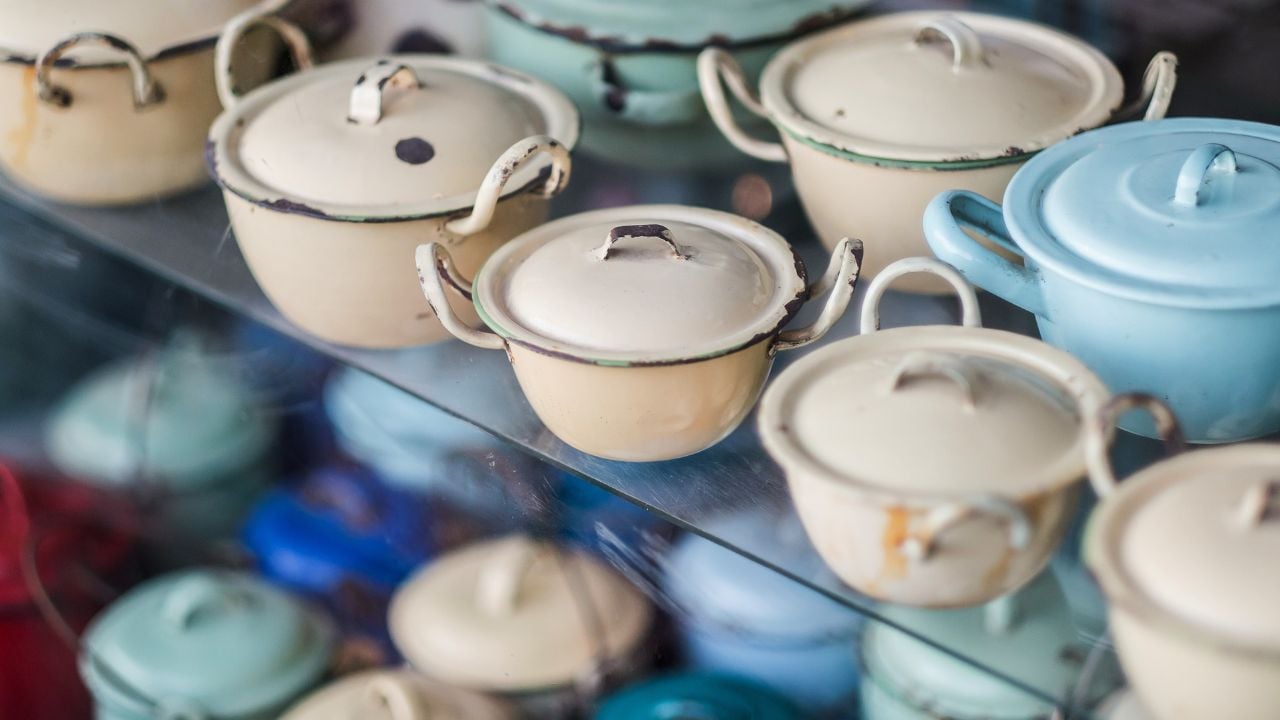
3. Enamelware Pots and Kettles
Vintage enamelware pots and coffee kettles turn up at nearly every rummage sale, usually in the brightest colors on the table.
The Wisconsin Department of Health Services puts vintage cookware and dishware on the same test-first list as old paint, the same guidance this article opened on.
Chips are never cosmetic.
Once the enamel cracks and shows bare metal underneath, that edge is exactly where an older pigment is likely to flake loose into whatever’s cooking.
Testing a Vintage Find for Lead
Wisconsin recognizes two home lead test kits for checking vintage housewares, Luxfer’s LeadCheck and D-Lead.
A swab that changes color only samples the surface, so it can miss lead that’s bound deep inside a fired glaze or sealed under a layer of clear finish.
4. Electric Percolators and Toasters
A vintage percolator or toaster earns its spot on the counter through nostalgia, not through any modern safety certification.
Many small appliances built before the 1970s used asbestos as a heat shield packed around their elements, a common practice in toasters, irons, and countertop appliances of that era.
That’s not a reason to panic.
Intact and unbroken, that lining stays sealed inside the housing and poses little everyday risk, but a cracked shell or a missing base panel is a different story.
The more common hazard is simpler: A cloth-wrapped cord that’s gone brittle with age can crack.
A cracked cord can cause a shock or fire, according to federal safety regulators.
Bend the cord before buying.
5. Stand Mixers
A vintage stand mixer, a Sunbeam Mixmaster or an early KitchenAid, runs on the same aging wiring as any other appliance from its era.
Plug the mixer in and run it through every speed before buying, listening for a grinding motor or a burning smell that points to worn brushes inside the housing.
No ground wire on a two-prong plug is the other giveaway of a mixer built before grounded outlets became standard in many American kitchens.
It should never spark.
A local appliance repair shop can usually add a grounded plug and check the wiring for a modest fee.
That’s often worth it for a good bowl and a strong motor.
Psst! How much do you know about vintage kitchenware myths? Flip these cards and see how many you can call correctly.
6. Uranium-Glazed Dinnerware
Fiestaware is the name every vintage dinnerware hunter knows, and its original red-orange glaze also has a radioactive backstory.
Oak Ridge Associated Universities’ radiation museum still measures old Fiesta red as radioactive, the result of uranium oxide mixed straight into the glaze when the color launched in 1936.
The government confiscated the company’s uranium stock during World War II, and the color didn’t return until 1959, this time made with depleted uranium instead of the natural form.
On a shelf, it’s harmless.
The bigger exposure risk comes from daily use, not display.
Acidic foods like coffee or tomato sauce can leach some of that uranium out of the glaze over time, the museum’s research shows.
Fiestaware wasn’t alone either.
Harlequin, Poppytrail, and Vistosa all used the same red-orange recipe, so the color itself is the thing worth checking, not just the name stamped on the bottom.
7. Gilded and Hand-Painted China
Hand-painted vintage china and anything with a gold or silver rim carries a different kind of risk than a plain white plate.
The Food and Drug Administration (FDA) has regulated lead in ceramic dishware since 1980 and tightened those limits again in 1992.
Anything hand-decorated well before then commonly used lead-based paint because it fired cleanly and held bright color.
Gold trim complicates things further.
Consumer Reports has recommended testing any gold-rimmed or hand-painted antique with an at-home lead kit before it goes near food, especially anything bought before the 1990s.
Skip the dishwasher and the microwave regardless of what a test shows, since both heat and hot water can loosen trim or push more lead free from a damaged glaze.
8. Clear Glass Bakeware
Vintage Pyrex mixing bowls and casserole dishes carry a reputation for surviving a hot oven straight into a cold sink, and that reputation isn’t as reliable as it sounds.
A Corning spokesperson has confirmed the company made Pyrex from soda-lime glass at some plants well before it sold the brand in 1998, right alongside the tougher borosilicate formula.
Even World Kitchen, the company that bought the brand, can’t pin down exactly when the full switch happened.
Age alone proves nothing.
Run a finger along the rim and hold the piece up to a window, checking for a chip, a hairline crack, or a cloudy stress mark.
Do all of that before the dish goes anywhere near an oven.
A damaged piece is the one likely to shatter when it meets a big temperature swing, a hot oven to a cold counter or a splash of cool water.
9. Hollow-Handle Flatware
Vintage silverplate and sterling flatware with a hollow handle, the knives especially, can hide a decades-old repair waiting to fail.
Silversmiths built those handles from two soldered halves packed with a hardened cement or pitch to hold the blade in place, a construction still repaired by hand today.
Check for a loose blade.
A blade that shifts or turns inside the handle means the fill has cracked or shrunk with age. That knife is worth less than the price tag suggests.
A stainless replacement blade inside an older handle usually means a mid-century repair, and collectors don’t treat that as a flaw if the pattern still matches.
8 Habits That Give Wisconsinites Away the Second They Leave the State
A single grocery run in another state can be all it takes to spot a Wisconsin transplant.
Coworkers and new neighbors pick up on the same handful of habits almost immediately, long before anyone mentions where they grew up.
8 Habits That Give Wisconsinites Away the Second They Leave the State
9 Wisconsin Supper Club Rules Outsiders Break Without Knowing
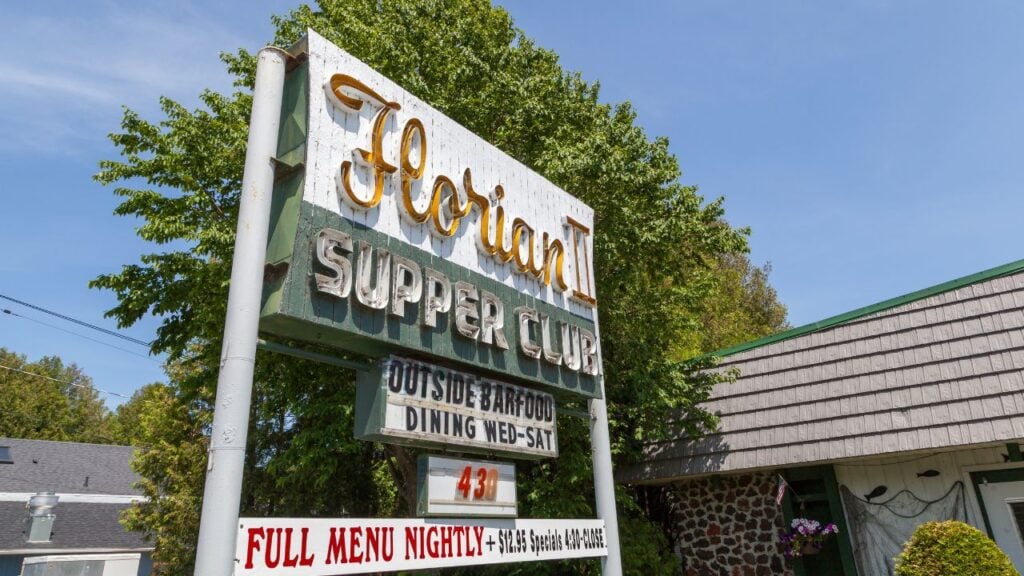
A first-time visitor at a Wisconsin supper club orders an Old Fashioned expecting bourbon, and the bartender pours brandy without asking.
The bartender’s next question, sweet, sour, or press, has left more than one confident newcomer answering with dead silence.
9 Wisconsin Supper Club Rules Outsiders Break Without Knowing
