
9 Maryland Habits That Place Someone Within an Hour of Home

Do you know anyone who’s never left the state they grew up in?
In Allegany County, out past the ridges of Western Maryland, more than seven in ten residents are Maryland natives who stayed, according to the Census Bureau’s latest estimates.
These are the Maryland habits that place someone within an hour of home.
1. Power Company Boundary
Maryland runs on five separate electric utilities, and only one of them is allowed to answer when the power goes out at your home.
The Maryland Public Service Commission assigns each company an exclusive territory, laid out county by county on the Maryland Office of People’s Counsel’s utility list.
Baltimore Gas and Electric (BGE) holds Baltimore City, Baltimore County, and Anne Arundel County, along with most of Howard, Carroll, and Harford.
Pepco takes over in most of Montgomery and Prince George’s counties.
Delmarva Power runs the entire Eastern Shore.
Potomac Edison covers the four westernmost counties.
The Southern Maryland Electric Cooperative answers in Calvert, Charles, and St. Mary’s.
None of the five territories overlap.
That names your county.
2. Hard Crab Feast
Maryland made the blue crab its official state crustacean in 1989, and the honor mostly formalized what watermen’s hometowns along the Chesapeake had known for generations.
A hard crab feast covers a picnic table in newspaper, dumps out a bushel steamed in Old Bay, and hands everyone a wooden mallet.
Nobody explains the rules.
You crack the claws, pull the back fin apart, and pick meat out from under the shell for as long as the conversation lasts.
Towns like Solomons, Leonardtown, and Prince Frederick built this into their summer calendars.
Picking crab meat isn’t something you learn from a video.
Somebody hands you the mallet.
3. Your MARC Train Line
Commuter trains split riders into three separate lines before anyone even boards.
The Maryland Transit Administration runs the system as three Maryland Area Regional Commuter (MARC) lines: Penn, Camden, and Brunswick.
The Penn Line runs from Perryville to Washington through Baltimore’s Penn Station.
Electrification sets it apart from the other two, and so does weekend service.
The Camden Line connects Baltimore’s Camden Station to Washington through Howard and Prince George’s counties.
The Brunswick Line heads the other direction, reaching Frederick and Brunswick from Washington through Montgomery County.
A rider who calls a line by name, not just “the train,” boards at the same station many weekday mornings.
It’s the same platform daily.
4. Nice Bridge Crossing
Maryland’s Nice Bridge carries U.S. Route 301 across the Potomac River between Charles County and Dahlgren, Virginia.
Its official name is the Governor Harry W. Nice Memorial/Senator Thomas “Mac” Middleton Bridge.
The Maryland Transportation Authority opened the current four-lane span on October 12, 2022, replacing an 82-year-old bridge on the same crossing.
Someone in Newburg, La Plata, or Waldorf crosses it for a job, a doctor’s appointment, or a grocery run in King George County, Virginia.
Drivers from Baltimore or the Eastern Shore rarely have a reason to use it at all.
A Marylander who knows the Nice Bridge backup pattern before a holiday weekend lives on one stretch of Route 301.
Nobody else needs to know.
How Maryland’s Nice Bridge Collects Its Toll
Maryland’s Nice Bridge collects its toll heading south into Virginia.
Drivers heading north back into Maryland cross for free.
A commuter plan through E-ZPass Maryland covers 25 crossings for $52.50.
Those trips expire after 45 days, whether a driver has used them all or not.
Cyclists get a narrower window: Dawn to dusk, weekends and state holidays only.
The Maryland Transportation Authority opened that bike access in June 2023.
5. Two Beltways
Maryland is the only state that has to clarify which Beltway it means.
The state maintains two of them, the Baltimore Beltway and the Capital Beltway.
Maryland’s State Highway Administration puts the Baltimore Beltway, Interstate 695, at just over 51 miles through Baltimore City, Baltimore County, and Anne Arundel County.
Maryland’s share of the Capital Beltway, Interstate 495, runs just over 42 miles through Montgomery and Prince George’s counties.
Someone from the Baltimore side hears “the Beltway” and pictures 695.
A D.C.-suburb driver pictures 495 instead.
Neither driver is wrong.
They just live somewhere different.
Psst! How deep do your Maryland roots run? Run through this check and see where you land.
6. County Fair
Maryland counties each run a fair, and residents rarely leave their home county for a rival county’s version.
The Great Frederick Fair has run since 1882, built around 4-H exhibits and livestock judging for Frederick County growers.
The Calvert County Fair started in 1886 as a place for local farmers to show cattle and tobacco.
Charles County and St. Mary’s County each hold a fair too, the same late-summer ritual repeated county by county.
Marylanders talk about the fair as though there’s only one, and which fair they mean always matches the county they live in.
The county always comes first.
7. County Executive or Commissioners
Maryland counties split into two basic forms of government, and which one governs depends on where you call home.
Charter home-rule counties typically elect a County Executive to run the government and a County Council to write the laws.
That’s the setup Maryland’s county association tracks alongside the state’s other local-government options.
Counties without a charter are governed instead by an elected Board of County Commissioners, which holds executive power directly.
Frederick County made that switch, moving from commissioners to a County Executive on December 1, 2014.
Ask someone whether their county has an executive, and the answer sorts them into one half of the state or the other.
Nobody looks it up.
8. City-Poly Football Rivalry
Maryland’s City-Poly football rivalry pits Baltimore City College against Baltimore Polytechnic Institute.
The two Baltimore City public schools have played an annual football game dating to the 19th century, according to The Baltimore Banner.
The teams played each other on Thanksgiving Day at Memorial Stadium until 1992.
Both schools joined the Maryland Public Secondary Schools Athletic Association that year.
The game moved into the regular season after that.
One City College alum has flown back from as far as South Korea to watch it, The Baltimore Banner reported.
It never left the city.
9. “Downy Ocean”
Ask a Baltimore-area native where they’re headed for the weekend, and “downy ocean” means one place: Ocean City.
That’s not a typo.
The phrase folds “down the” and “ocean” into a single word, a signature move of the Baltimore accent that also turns “Baltimore” into “Bawlmer.”
Nobody teaches it in a classroom.
Family says it first, and it sticks because the whole neighborhood keeps saying it the same way.
Everyone nearby says it.
The Native Count, by County
Maryland’s native-born share splits sharply from one county to the next.
A county-by-county breakdown of Census Bureau estimates puts Allegany County, out in the state’s panhandle, at 72.2% Maryland natives, the highest share anywhere in the state.
Montgomery County, in the Washington, D.C. suburbs, sits at the opposite end.
Just 26% of its residents were born in Maryland.
9 Maryland Foods Nobody Makes Right in Other Parts of the U.S.
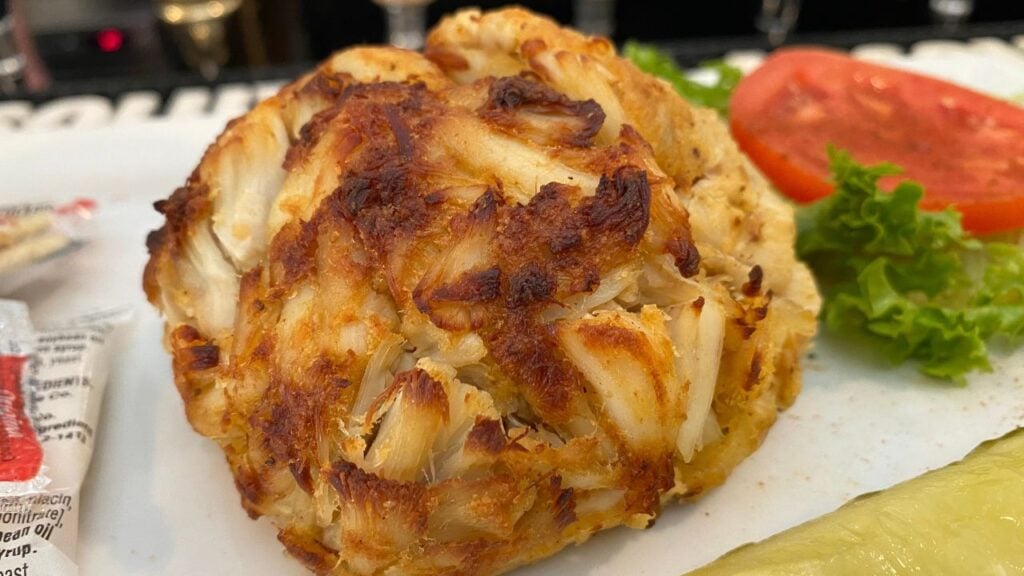
Order “Maryland-style” crab anything outside the Chesapeake region, and a native can usually tell within a bite.
The filler, the seasoning ratio, even the cake are almost never right once a kitchen leaves the state.
9 Maryland Foods Nobody Makes Right in Other Parts of the U.S.
21 Starbucks Orders Maryland Baristas Secretly Side-Eye

Baristas are trained to say yes to almost any modification, no matter how strange the drink gets.
That doesn’t stop them from silently judging some of the orders that come across the counter.
