
7 Lake Access Rules That Cost Minnesota Property Owners Their Frontage

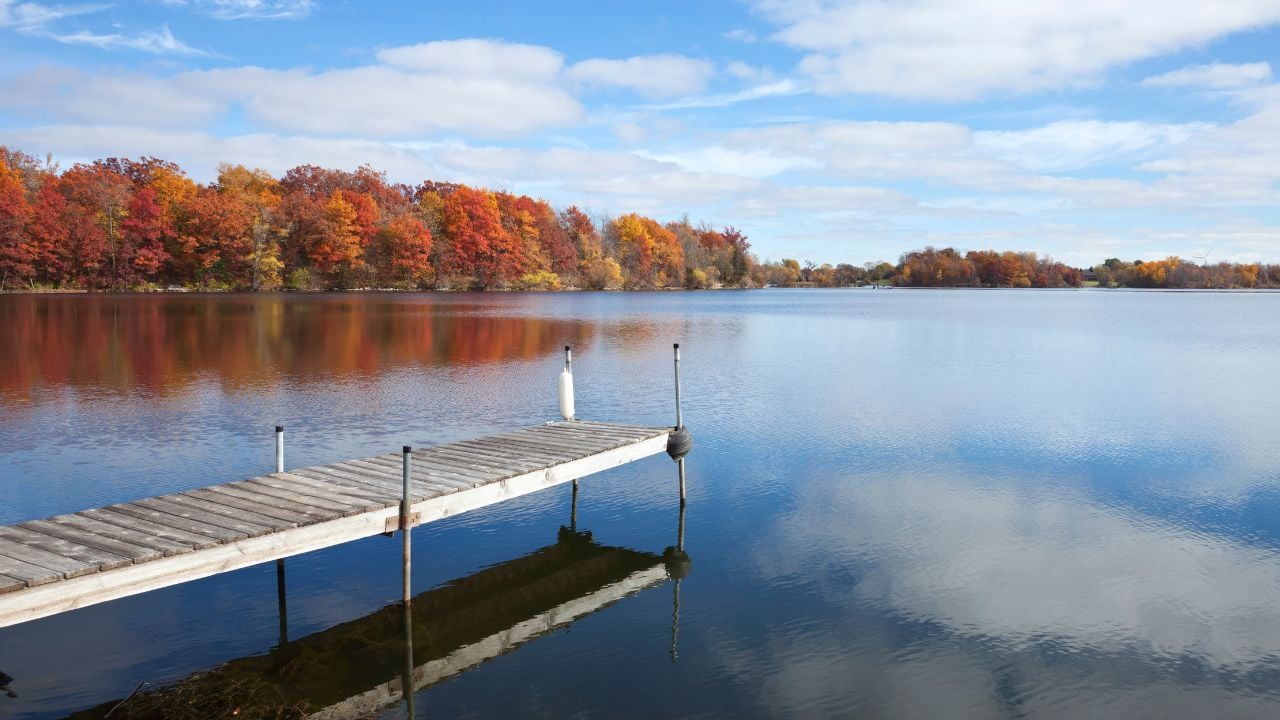
One dock on Minnesota’s Lake Minnetonka stretched from 90 feet to 158 feet, reaching across the water in front of a private shoreline.
Minnesota’s Court of Appeals still wouldn’t order it shortened.
The shoreline owner was stuck with it.
These are the lake access rules that cost Minnesota property owners their frontage.
Note: This is general information, not legal advice. Water access rules, permits, and court rulings can change, so confirm the current requirements with the Minnesota Department of Natural Resources.
1. Where Your Property Line Ends
Minnesota draws a shoreline owner’s property line at what regulators call the ordinary high water level, not at the water’s edge on any given afternoon.
That’s the boundary the Department of Natural Resources (DNR) uses for permits, and it usually sits where the plants switch from lake grasses to yard grass.
Below that line, ownership gets stranger.
On a navigable lake, the state owns the lake bed all the way up to the natural ordinary low water level.
That’s a lower line than the waterline many shoreline owners picture.
A shoreline owner’s title reaches that state-owned bed.
Then it stops.
Buy a Minnesota lot with 100 feet of shoreline, and a meaningful strip of what looks like frontage answers to the state, not to the deed.
2. Water Rights Held in Common
Minnesota’s Supreme Court decided in 1960 that no shoreline owner gets a private stretch of a lake’s surface, not even the water off their dock.
In Johnson v. Seifert, one owner tried to fence off part of a small lake and pump water out for irrigation.
Every owner touching a lake gets to use its entire surface, the court ruled, not just the stretch tied to their footage.
That rule decided a newer fight too, over the Lake Minnetonka dock from the start of this list.
A shoreline couple sued after Minnetonka Beach’s public dock grew to 158 feet in front of their home, blocking their use of the water.
The Court of Appeals didn’t give it back.
Riparian rights are held in common, the judges ruled, and conflicting owners have to work it out between themselves.
Reasonable is whatever the next lawsuit decides.
A shoreline owner can lose practical use of the water off their frontage to a neighbor’s boat or a public dock.
Courts have upheld that twice.
3. Permit Size Trigger
Minnesota lets a shoreline owner skip a DNR permit for a private dock, but only within firm limits.
The dock can’t run wider than 8 feet, has to let water flow freely underneath it, and can’t reach any farther than needed to hit navigable depth.
Go bigger.
The rules change.
A dock platform over 120 square feet, or 170 including the walkway, needs an individual permit instead of the DNR’s automatic general one.
Add a bigger platform, a wider walkway, or a permanent roof without checking those numbers first.
The DNR can order it cut back down to size, right on their frontage.
4. Side-Line Squeeze
The DNR requires a Minnesota dock to stay inside a property boundary nobody can see.
Take a homeowner’s side property lines and project them straight out into the water.
That projected strip decides how much water a homeowner can use for a dock, not the shoreline footage on the deed.
A pie-shaped lot on a curving bay can carry wide shoreline and still narrow to almost no usable water at the end of it.
Drift a dock or boat lift past that projected line, and it isn’t a paperwork problem anymore.
Now it’s a feud.
It’s the neighbor dispute the DNR’s guidance exists to head off.
Lake feuds often start over a boat lift parked a few feet into somebody else’s projected line, not over the shoreline.
5. Condemnation Clause
Minnesota gives its Department of Natural Resources a power many shoreline owners never see coming.
State law lets the DNR commissioner acquire land for a public water-access site by gift, lease, or purchase first.
When an owner won’t sell, condemnation stays on the table, with the Executive Council’s approval.
A shoreline owner who refuses to negotiate can still end up losing the strip the state wants.
No sale required.
A signed deed never guarantees the last word on who keeps that stretch of shore.
Minnesota’s Metro Loophole
Minnesota’s condemnation power for a lake landing reaches even land a city or county already owns.
In the seven-county Twin Cities metro, local governments have to cooperate with the DNR’s access-site plans for lakefront land under their control.
Refuse, and the DNR commissioner can use that same condemnation authority against the local government instead.
6. Crossing the Frozen Bay
State law treats the water covering a Minnesota lake differently than the land underneath it, and that difference matters once winter sets in.
Minnesota’s DNR settles who can be on that water in the same water-law guidance that puts the state in charge of the lake bed.
A person only needs one lawful way onto the lake: A public access, a public road right-of-way touching the water, or a landowner’s permission.
Once they’re on, that same rule lets them use the water’s surface regardless of who owns the bed beneath it.
The frozen bay in front of a cabin isn’t private.
The beach still is.
An ice angler can drill a hole a few feet off somebody’s dock all winter without breaking the law.
Psst! How much do you know about Minnesota’s shoreline rules? Flip these cards and see how many you get right.
7. 10-Foot Setback
Minnesota’s shoreland rules allow one extra structure, like a gazebo or a small boathouse, inside the setback strip along the water.
That structure can’t sit closer than 10 feet from the ordinary high water level, can’t top 250 square feet, and can’t stand taller than 10 feet.
Go past any one of those numbers, and the structure isn’t grandfathered in just because it’s already built.
Not automatically.
A homeowner who upgrades a small boathouse into a bigger boathouse, or adds a screened porch onto it, can trigger a problem.
The state can order that addition torn back down to the numbers it allows on that stretch of frontage.
