
6 Everyday Costs That Jump the Moment Idahoans Cross Into Washington

Buy a pack of cigarettes in Coeur d’Alene and you’ll pay 57 cents in state tax on it, according to the Idaho State Tax Commission.
Cross into Spokane, and you’ll pay $3.03 in tax on that same pack instead.
And that’s just one purchase.
These are the everyday costs that jump the moment Idahoans cross into Washington.
Note: This is general information, not financial or tax advice. Tax rates and fees are subject to change.
1. Sales Tax at Checkout
Push a cart through nearly any store in Idaho, and everything you buy rings up at a flat 6% sales tax, Coeur d’Alene included.
Only a short list of Idaho resort towns, places like Ketchum and Sandpoint, add a local option tax on top of that.
Coeur d’Alene isn’t one of them.
Washington stacks a city rate on top of its state rate, and Spokane’s combined total lands at 9.1%.
Three cents on every dollar.
Fill a cart with $100 worth of odds and ends in Spokane instead of Coeur d’Alene.
You’ll hand over roughly $3 more in tax before you even reach the parking lot.
That’s before anything else on this list touches your receipt.
2. Your Wireless Bill
Idaho carries the lowest combined wireless tax rate of any state in the country, according to the Tax Foundation’s 2025 wireless tax report.
Washington sits near the opposite end of that same list, with the second-highest wireless tax rate in the nation.
State and local taxes alone add 3.46% to a phone bill in Idaho.
They add 21.62% in Washington, before your carrier’s price for the plan itself even enters the math.
Carry the same $80 plan across the state line, and the tax on it jumps from about $2.77 to roughly $17.30.
A very different bill.
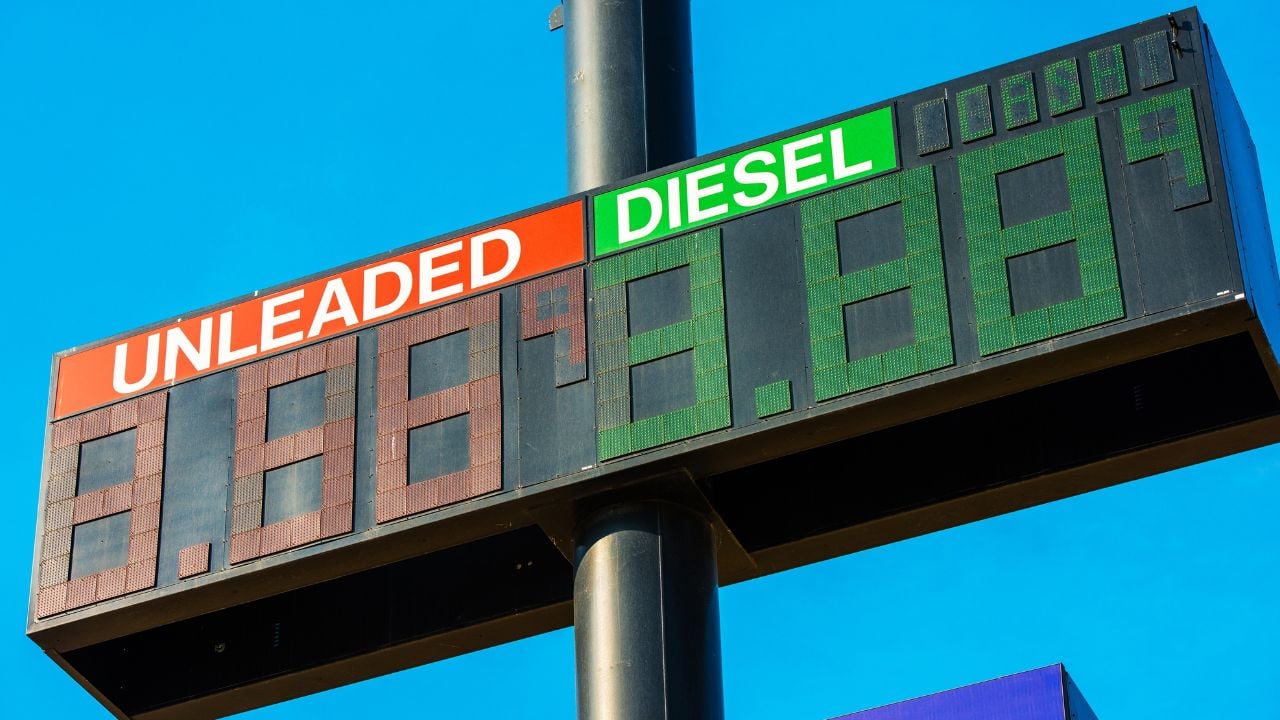
3. Gas Pump Prices
Idaho’s state gas tax adds 33 cents to the cost of a gallon, one of the lower rates in the country.
Washington’s runs about 60 cents a gallon, according to the Tax Foundation.
Almost double.
Fill a 15-gallon tank on each side of the line, and the tax gap alone runs past $4.
That’s why drivers around Post Falls and Liberty Lake plan their fill-ups around which state they’re standing in when the needle gets low.
4. A Pack of Cigarettes
The Idaho State Tax Commission traces the state’s 57-cent cigarette tax back to 2003, when lawmakers doubled what had been a 28-cent rate the decade before.
It hasn’t moved since.
Washington charges $30.25 a carton, which works out to $3.03 a pack.
That’s more than five times what a smoker pays on the Idaho side for the identical pack.
A Washington bill to push that rate even higher passed the state Senate 26-22 in February 2026.
The bill stalled in a House committee, then got sent back to Senate Rules when lawmakers adjourned in March.
The next regular session doesn’t start until January 2027, so the gap holds for now.
5. A Bottle of Whiskey
Idaho runs liquor as a state monopoly for anything over 16% alcohol by volume.
Every bottle above that line sells only through a state-operated store, at a price the state sets.
Washington voters ended that same kind of system for themselves in November 2011, when they approved Initiative 1183.
Private stores didn’t start selling spirits until the following year, and once they did, the pricing changed shape.
Private retailers now set the shelf price, then add a spirits sales tax of 20.5%, plus a separate liter tax of $3.77.
Both taxes land on top of the sticker price you see on the shelf.
A $25 bottle in an Idaho state store and a $25 bottle on a Spokane shelf stop being the same $25 the moment the register finishes ringing it up.
6. A Fishing License
Want to wet a line on the Idaho side of the border, or cross to the Washington side?
Idaho’s standard resident adult annual fishing license runs $30.50, and Idaho Fish and Game adds a mandatory $5 access and depredation fee to every annual license.
That puts the total at $35.50 before you ever wet a hook.
Not the sticker price either.
Washington’s resident freshwater license runs $39.95, and it bundles in a vehicle access pass for the state’s wildlife lands.
That’s $4.45 more for a rod in the water.
Want salmon and razor clams added in, too?
Washington’s combination license runs $74.37, just over twice what Idaho charges for its standard license.
Psst! Want every one of these costs lined up side by side? Tap a column heading to sort, or search the table for the cost that surprised you most.
Legal Weed
Idaho bans marijuana outright, recreational and medical alike, with no legal purchase of any kind anywhere in the state.
Washington voters legalized recreational marijuana in 2012 under Initiative 502, and licensed retail stores didn’t open for another two years.
A purchase that doesn’t legally exist on the Idaho side of the line carries a tax bill the moment it exists on the other.
Washington’s cannabis excise tax runs 37%, stacked on top of the regular sales tax, per the Washington Department of Revenue.
Run a $50 purchase through both taxes in Spokane, and the tax bill alone comes to roughly $23.
Not pocket change.
Buying a Car
Idaho taxes the cost of a vehicle at the same flat 6% as everything else in the state.
Buy that same car in Washington, and the state adds an extra motor vehicle tax of 0.5% on top of the regular combined sales tax, a rate that took effect January 1, 2026.
In Spokane, that’s 9.1% plus the extra 0.5%, for 9.6% total.
On a $30,000 car, that gap between the two states runs past $1,000 before financing even enters the picture.
A four-figure gap.
Buying a Home
Idaho charges no state real estate transfer tax when a home changes hands.
Washington’s real estate excise tax rises on a graduated scale, from 1.1% on a typical home up to 3% on the priciest sales.
Counties can tack on a local share above that state rate.
On a $400,000 house, that’s several thousand dollars a home in Coeur d’Alene never touches.
Thousands, at closing.
Who Pays Washington’s Real Estate Tax
Washington’s real estate excise tax sounds like a buyer’s bill, but it isn’t one.
State law makes the seller responsible for it, and the county can place a lien on the property if it goes unpaid.
You won’t see a separate line for it on a buyer’s closing statement.
Sellers weigh it when they set their asking price, though, so it still shapes what a Washington home ends up costing you either way.
The Cost That Falls
Idaho isn’t the cheaper state on every cost.
Idaho taxes personal income at a flat 5.3%, and Washington charges none at all.
Zero income tax.
Not on wages, not on a pension, not on a retirement account withdrawal.
Washington makes up for it with the higher sales, gas, and consumption taxes stacked all through this list, so the trade isn’t free money in either direction.
Run a $60,000 Spokane paycheck through Idaho’s 5.3% rate instead, and the state keeps about $3,180 of it.
Washington keeps none.
