
8 Things That Still Mark a South Carolina Mill Town Long After the Mill Closed

South Carolina built more than 70 textile mills between 1895 and 1903 alone, and nearly every one of them came with a company-built village wrapped around it.
Many of those mills went dark decades ago, closed out by cheaper overseas labor through the 1970s, ’80s, and ’90s.
The villages didn’t always disappear with them.
These are the things that still mark a South Carolina mill town long after the mill closed.
1. the Streets Still Follow the Company’s Grid
A mill village was never laid out by a town planner.
The company that built it drew the grid, and that grid is often still exactly what a driver sees today.
The historical marker at the old Poe Mill site in Greenville records that the company laid its village out in blocks 450 feet long by 200 feet wide.
Those streets ran 50 feet wide, lit by electric current piped straight from the mill.
In Columbia’s Granby Mill Village, the houses followed a saltbox design borrowed straight from New England mill towns, arranged on streets that still carry the same footprint today.
Pelzer’s mill village streets are still named Lebby, Reed, Courtney, Smythe, and Anderson, after the company officials who ran the place, not after any local landmark.
Nobody renamed them.
2. the Original Houses Never Stopped Being Homes
The company that built a mill village usually built the houses first.
Poe Mill’s village went up with 238 of them: 45 two-story houses and 152 one-story cottages, plus separate homes for supervisors.
Ownership of that village changed hands company to company for decades, from Ely & Walker in 1947 to Burlington Industries in 1954.
Residents didn’t own the houses they lived in until long after that.
Pelzer’s mill houses weren’t sold off to the people living in them until 1954.
Once that happened, many villages kept going as ordinary residential neighborhoods, just under new ownership.
Greenville’s Woodside Mill village still has 343 surviving mill houses, and the Greenville County Redevelopment Authority financed renovations on ninety more at the old Mills Mill village in 1985 alone.
People still call them home.
Psst! Every mill town left a few fingerprints behind. See how many your town still shows.
3. the Village Earned a Historic District
A mill village usually sits apart from a town’s original downtown, and preservation records treat it that way.
The Woodside Cotton Mill Village Historic District went on the National Register of Historic Places in 1987, covering 162.4 acres and 278 contributing buildings.
Granby Mill Village followed in 1993, listed separately on 60 acres with 97 contributing buildings.
Pelzer’s mill complex and village didn’t get that same recognition until 2017, more than sixty years after the company sold off the houses.
The listing protects the grid, the setbacks, and the house styles as a unit, separate from whatever else the town has built up around it since.
The paperwork made it official.
4. Homes in the Old Village Still Cost Less
A mill house was built small, close to its neighbors, and cheap by design.
That original construction still shows up on the price tag generations later.
Houses inside an old mill village routinely sell for a fraction of what a similarly sized house costs just a few streets outside its historic footprint.
That gap is exactly why county redevelopment authorities have spent decades trying to catch these neighborhoods up.
The gap rarely closes.
5. the Company Church Kept Its Congregation
A mill company usually built the first church in its village, too, and staffed it as part of the deal that kept workers close to home.
Granby’s Whaley Street Methodist Church, a Gothic Revival building put up alongside the mill village, still stands as one of the district’s named landmarks.
Poe Mill’s village supported both a Baptist and a Methodist congregation, and Woodside’s historic district still has two churches among its contributing buildings.
None of them answer to a company anymore.
The building stayed.
Many kept meeting anyway, just as an independent congregation instead of a company one.
When a County Had to Step In
Mill companies stopped covering repairs the moment they sold off the houses, and decades of deferred maintenance piled up fast.
The Greenville County Redevelopment Authority financed renovations on ninety Mills Mill village houses in 1985.
At Poe Mill, the same authority spent close to three million dollars between 1990 and 1993 upgrading drainage and bringing three-quarters of the village’s homes up to code.
6. Fire or Time Took the Mill, but Not Everything
The mill building itself is usually the first thing to go, whether from neglect, demolition, or fire.
Poe Mill closed in 1977, then lost its main building to a fire in 2003.
Its two original smokestacks are still standing on the site today, the only pieces of the structure that survived.
Smokestacks don’t burn.
Easley Mill ran until 1990, then left behind a scattering of structures that never came down.
An ice house, a water tower, a smokestack, and a one-story office building are all still standing, along with a monument to the mill’s founder, John Mattison Geer.
Granby’s mill village kept its gatehouse and a two-story mill office building from around 1902, long after the mill they once guarded shut down.
7. the Empty Mill Eventually Became Apartments
An empty mill building is too big to tear down cheaply and too solid to ignore forever.
Mills Mill sat closed for over two decades before a 2004 conversion turned it into loft-style condominiums, keeping its round-arch windows and heart-of-pine beams intact.
Woodside Mill’s massive building, once billed as the largest cotton mill under one roof in the country, didn’t get a residential conversion until 2021.
Contour Company paid a million dollars for the 11-acre Poe Mill site that same year.
Plans call for 428 residential units, plus an extension of the Swamp Rabbit Trail running through the property.
Apartments beat a vacant lot.
8. a Marker Went up to Explain What’s Gone
By the time anyone marks a mill’s history, many of the people who worked there are already gone.
Poe Mill’s historical marker didn’t go up until 2019, forty-two years after the mill closed and sixteen after the fire that took its main building.
It stands at 255 A Street in Greenville, put there by the F.W. Poe Textile Heritage Society, a group formed to keep the mill’s story from disappearing along with the building.
History waited decades.
Drive past enough mill villages and the pattern holds.
The company is long gone, but its houses, its streets, and now its markers are still doing the work of remembering it.
6 Arguments South Carolina and Georgia Will Never Settle
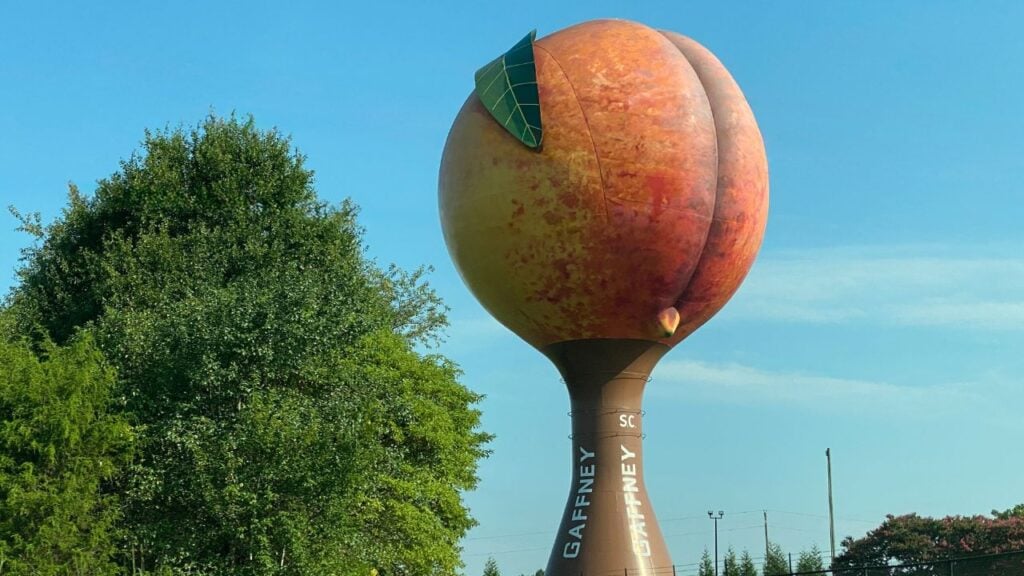
Think South Carolina and Georgia settled their shared border a century ago? The Supreme Court has had to step in more than once, over the exact same stretch of river.
6 Arguments South Carolina and Georgia Will Never Settle
6 School Bus Laws That Cost South Carolina Drivers a Fine and Points

Six points is the single steepest hit South Carolina hands out on a driver’s license, whether the fine attached to it is $500 or $25,000.
6 School Bus Laws That Cost South Carolina Drivers a Fine and Points
