
7 Foundation Problems That Blindside Georgia Buyers

Long stretches of weathering leave Georgia’s Piedmont clay loaded with iron oxide, according to the New Georgia Encyclopedia, which explains the deep red dirt under so many Georgia yards.
That red clay sits under nearly every Piedmont lot from the Georgia foothills to Atlanta’s suburbs, and a house can rest on it for decades before anything goes wrong.
A home tour won’t show that.
These are the foundation problems that blindside Georgia buyers.
Note: This is general information, not legal or home-inspection advice. Georgia’s disclosure and construction-defect rules are subject to change.
1. Clay That Settles Unevenly
Georgia’s Piedmont clay gets its deep red color from decades of weathering that leaves behind iron oxide.
That same clay is fine-grained and slow to drain.
It holds onto water long after a storm moves through, and it lets go of that water just as slowly once the weather turns dry.
One side of a foundation can sit in saturated ground while the other side, shaded or graded differently, dries out days sooner.
The wet side stays firm.
The dry side settles as the ground underneath it compacts.
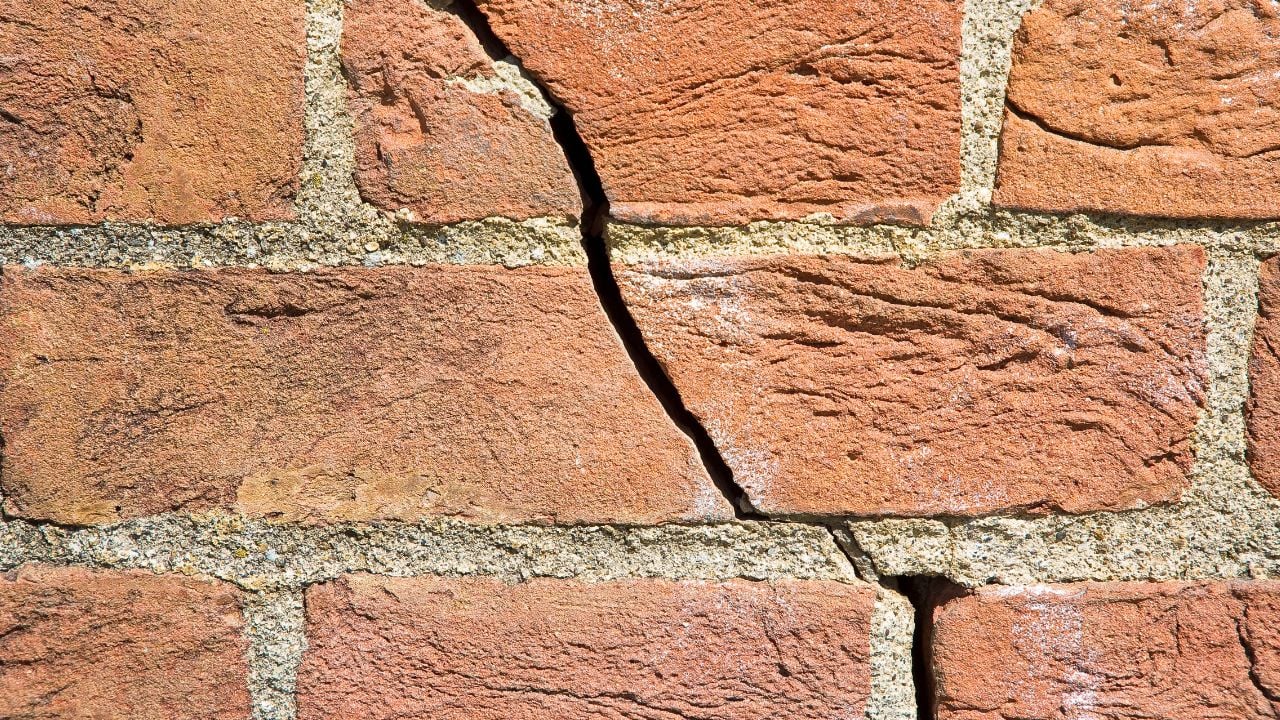
A slab poured across both zones can crack right along the line where wet soil meets dry.
Footings shift enough to open gaps around doors and windows.
A house that looked flawless during a dry showing can develop cracks by the next rainy season, and the movement rarely announces itself before closing.
2. Grading That Points the Wrong Way
A residential lot is supposed to slope away from the house in every direction, carrying rain off instead of toward the foundation.
The dense clay doesn’t take water in quickly.
A hard rain runs off the surface instead of sinking in.
That’s fine when the grade tips away from the house.
It’s a problem when a crew regrades a lot fast during a subdivision build-out and tilts it the wrong way, sending runoff straight at the foundation instead of the street.
Fresh sod and mulch smooth out that same tilt, and a buyer would need a level, not a walk-through, to spot a slope pointed the wrong way.
Water sitting against a footing after every storm softens the soil underneath it.
Eventually, that footing settles unevenly.
3. Trees Too Close to the House
Large trees planted close to a house pull moisture out of the clay underneath its foundation.
A big oak or sweetgum drinks steadily through its roots.
On a dry summer day, it can pull more water from the soil under one side of a slab than the rest of the yard ever loses.
The soil under the tree’s side dries out and settles while the soil in the shade stays damp and firm.
The slab doesn’t move evenly.
One edge dips while the other holds.
The crack that results tends to run at an angle instead of straight across a wall.
Arborists generally recommend keeping large shade trees well clear of a foundation.
Landscaping planted right after closing doesn’t always follow that.
A sapling by the porch looks harmless at a showing, and nothing about its size that day hints at how far its roots will reach in ten years.
4. Poorly Compacted Fill Dirt
Many fast-growing Piedmont suburbs get built by regrading a hillside and filling in the low spots before a crew pours a single foundation slab.
Crews have to compact that fill dirt in layers to carry a house’s weight evenly.
Skip a step, or rush it ahead of a rain, and the fill never compacts the way it should.
The ground under one corner of a brand-new slab can keep settling for years after the crew moves to the next lot.
Georgia law gives buyers a way to fight back.
State law gives a buyer four years to file a construction-defect claim for negligent building, counting from when the work is done.
A breach-of-contract claim runs six years from when a buyer discovers the problem instead.
A seller who just watched a crew backfill and pour that slab often knows more about it than a buyer touring the finished house ever will.
What a Georgia Seller Has to Tell You
Georgia follows caveat emptor, or buyer beware, so state law doesn’t require a seller to fill out any disclosure form at all.
Many Georgia sellers still complete the state Realtors’ standard disclosure form, which asks point-blank about foundation or support issues, additions made, and code or zoning violations.
That form is optional, though.
A seller only has to volunteer something when they hold knowledge a buyer couldn’t otherwise discover, a rule Georgia courts have applied for decades.
5. Erosion on Sloped Lots
Georgia’s Piedmont rolls through hills and shallow valleys instead of lying flat.
Builders carve many new subdivisions straight into that slope.
Stripping the trees and topsoil for construction leaves the clay subsoil exposed, and bare Piedmont clay erodes easily once a hard rain hits it.
A retaining wall or a drainage swale is supposed to catch that runoff before it reaches the house.
Skip that step, and the soil support under one edge of a foundation can wash out while the rest of the yard looks fine.
Nothing cracks right away.
The damage shows up gradually, a slow settling on one side that a buyer can easily miss during a single dry-weather walkthrough.
6. Additions on a Different Footing
A lot of homes have grown well past their original foundation footprint with a sunroom, a converted garage, or a screened porch turned into more living space.
Whoever built that addition rarely tied it into the same footing as the rest of the house.
Many additions rest on a shallow slab or a handful of piers instead of the deeper footing the original structure carries.
They move separately.
One side settles faster than the other, and a crack opens exactly where the old wall meets the new one, right at the seam.
That seam crack looks like nothing more than ordinary settling to a buyer with no way of knowing the addition sits on a different footing.
Psst! How worried should you be about your Georgia home’s foundation? Run through this checklist and see where you stand.
7. Crawl Spaces That Stay Wet
The whole state falls under the same humid climate classification in the residential building code, from the north Georgia mountains down to the coast.
The building code requires builders to seal any unvented crawl space with a heavy plastic vapor barrier that runs up the foundation wall, in Georgia and in every other state.
Georgia’s humid climate just raises the cost of skipping it: Humid ground air rots wood and rusts fasteners without a barrier in place.
Many older homes never got that barrier, or got one that’s torn, sagging, or missing in spots.
Warm, moist air rises off bare dirt and condenses on the cool floor joists and the foundation sill above it.
That’s slow damage.
It softens the wood a house’s floor rests on and corrodes the metal framing connectors holding it together, long before anything shows up as a visible crack.
Nothing about a single afternoon walk-through reveals that condensation cycle running under the floor joists.
The damage only shows up after years of it, when a floor starts to feel soft underfoot or a support post finally gives.
By then, the fix means replacing framing, not a weekend spent running a fan in the crawl space.
9 Things a Restaurant Health Score Doesn’t Tell Georgians

Georgia gives a restaurant just 72 hours to fix its most serious health violations, and the letter grade posted at the register never shows that clock running.
These are the things a Georgia restaurant’s posted health score doesn’t tell a diner.
9 Things a Restaurant Health Score Doesn’t Tell Georgians
7 Publix Rain Check Mistakes That Cost Georgians the Sale Price

Georgia’s 219 Publix stores all run on the same rain check policy, and it expires 30 days after the rain check is issued.
These are the rain check mistakes that end up costing Georgia shoppers the sale price they were counting on.
7 Publix Rain Check Mistakes That Cost Georgians the Sale Price
