
7 Timber Contract Terms That Cost Alabama Landowners Thousands

Many Alabama landowners sell timber only once or twice in their life.
The buyer, or the logger working on the buyer’s behalf, negotiates sales like this for a living.
That imbalance shows up in the contract.
These are the timber contract terms that can cost Alabama landowners thousands.
Note: This is general information, not legal advice. Timber sale contract terms and Alabama’s forestry statutes are subject to change, so confirm the details with the Alabama Forestry Commission or a forestry attorney before signing anything.
1. Pay-As-Cut Pricing
Landowners choosing between a lump-sum sale and a pay-as-cut sale are picking two very different risks, not just two payment schedules.
A lump-sum sale pays one fixed price upfront for the whole tract, agreed before a single tree falls.
Pay-as-cut flips that: The buyer only pays for what gets cut and scaled, tallied on settlement sheets as trucks roll to the mill.
That sounds fair until a wildfire, a tornado, or a thief moves through the tract before the harvest finishes.
Then the landowner collects on whatever already got cut, and nothing more.
The Alabama Cooperative Extension System says a pay-as-cut sale can bring in more money when a consulting forester sorts the wood by value class first.
That same Extension research backs it up with a plainer number: Landowners who hire a forester average more net income on their timber sales than those who don’t.
A disaster before harvest wipes that math out fast: The same guidance warns the landowner won’t collect a cent for whatever was still standing.
Ouch.
The Alabama Forestry Commission’s guidance names the fix: A written statement of who bears the loss if timber is destroyed or stolen before harvest ends.
That line belongs in the pricing clause itself, not left to chance.
The Math Behind Pay-As-Cut Risk
A pay-as-cut timber sale in Alabama pays only for wood a mill scales, not for what’s still standing in the woods.
Picture a 40-acre stand carrying about $60,000 in standing pine, and a tornado flattens half of it before the logger arrives.
A lump-sum contract already locked in that $60,000, so every dollar stays with the landowner.
A pay-as-cut contract only pays for the pine that reaches the mill, and roughly $30,000 in standing value can disappear along with the trees.
2. Scale Tickets and Deductions
In Alabama’s sample timber sale contract, the buyer has to furnish the seller weekly settlement records, along with mill scale tickets for every load.
That’s straight from the Alabama Forestry Commission’s contract guidance.
Skip that clause, and a pay-as-cut landowner has no way to check the math.
There’s no proof at all.
The mill could grade a load of sawtimber as cheaper pulpwood, and the landowner has no way to prove otherwise.
A few loads could vanish from the settlement sheet, with nothing to catch it.
The commission’s guidance also tells landowners to spell out how a buyer calculates log and tree defect or cull deductions before signing.
That’s the line a buyer can lean on to shave dollars off nearly every load.
A landowner who never asked the question has no way to argue the answer.
3. Merchantable Timber Definitions
High-grading becomes a risk when the state’s sample contract fixes an exact stump height but stays silent on the diameter that decides which trees are worth cutting.
The Alabama Forestry Commission’s sample language sets one hard number: “All designated timber shall be cut to a stump height of no more than 12 inches from ground level.”
Stump height isn’t the same as a merchantable diameter, and the sample contract never sets a minimum diameter at all.
The commission’s separate guidance on selling timber admits the gap directly, telling landowners to spell out the maximum stump height and top diameter themselves if either measurement matters to them.
That’s the gap loggers use.
Mississippi State University Extension calls the resulting practice high-grading, or taking the best trees and leaving the rest.
A logger pulls out the highest-value trees and leaves a stand stripped of its best genetics.
The trees left behind are the smaller, weaker trees nobody wanted, and they’re what the next 20 years of growth has to work with.
A contract that pins down an exact minimum diameter, by species, closes that door before the saws start.
4. Contract Length and Extensions
The Alabama Forestry Commission’s sample contract says most Alabama timber sale contracts run 12 or 18 months.
The commission’s separate guidance gives a wider window, though: 12 to 24 months is normal, long enough to get a tract cut in an ordinary year.
The Alabama Forestry Commission’s guidance is direct about what happens next.
Without a written extension, “all title to said timber shall revert to the seller,” ending the buyer’s right to keep cutting.
That sounds like protection, and it can be, but only when the contract also nails down what an extension costs and how long it can run.
Leave those blanks empty, and a buyer can ask for an extension anyway, free of charge, holding the property while the market moves.
The buyer risks nothing.
A landowner who locked in a per-ton rate two years back has no way to renegotiate it once the ink dries.
5. Performance Bonds and Escrow
A performance bond under the commission’s contract guidance usually runs $500 to $1,000, and it’s the fund a landowner draws from if a buyer defaults or disappears mid-job.
That escrow account exists to cover unpaid balances, damage, or a logger who packs up and leaves a tract half cut.
There’s no backup plan.
Without a bond, a landowner has no fund to draw from and no leverage beyond a lawsuit if the buyer walks off before the close-out inspection.
The guidance also tells landowners to spell out whether the bond earns interest and whether it’s refundable, two lines a boilerplate contract often skips.
Skip them, and that $500 to $1,000 can disappear right along with the buyer.
6. Damage and Insurance
Alabama’s sample contract requires a hold-harmless clause, making the buyer responsible for any damage a logging crew causes to people or property on the tract.
The commission’s contract guidance recommends the buyer carry a $1 million umbrella insurance policy and hand over proof of coverage before the first tree falls.
Coverage isn’t automatic.
That guidance also tells landowners to set a per-tree penalty for any tree cut or damaged outside the marked sale area.
Skip that line, and a felled fence, a crushed culvert, or downed hardwood nobody bought has no price tag attached to it at all.
A landowner who never asked for proof of insurance is the one holding the bill.
A skidder flattening a fence or a tree landing on a neighbor’s barn becomes their problem instead of the buyer’s insurer’s.
7. Boundary Lines and Trespass
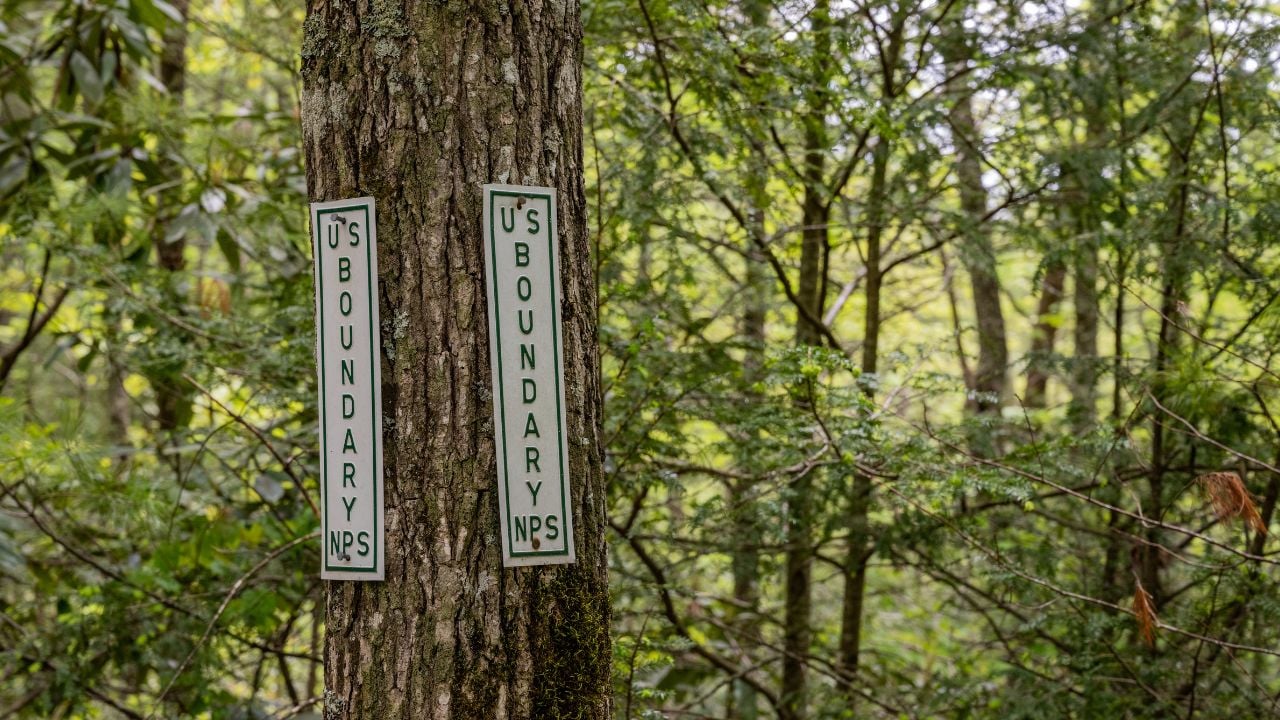
Alabama landowners selling timber need the sale area’s boundary written into the contract with a proper legal description, not a handshake over which fence row marks the line.
The Alabama Forestry Commission’s sample contract calls for a legal description of the harvest area, the acres, and a map marking streams, roads, or fields.
That has to happen before the first saw starts.
Separate commission guidance on selling timber adds a second layer: The contract should also state who pays to mark the boundary and how the crew flags the corners and lines.
State law backs that up hard.
Alabama Code 9-13-62 makes anyone who cuts timber “not owned by that person” liable for “double the fair market value” of what they took.
Intent doesn’t matter here.
That protection only works when the tract lines are clear enough to prove which trees belonged to whom.
An unmarked, undocumented boundary turns a straightforward timber sale into a property dispute that costs both neighbors money to sort out.
Psst! See how Alabama’s main timber sale contract clauses stack up against each other, side by side.
Checking BMP Compliance
Alabama’s Best Management Practices for Forestry (BMPs) aren’t optional extras buried in a contract.
The Alabama Forestry Commission checked 253 harvest sites in its most recent statewide survey and found 98.3% overall compliance.
Stream crossings and forest roads scored a little lower than the rest.
That’s still a strong record.
But the gap still shows up somewhere every year.
In fiscal year 2023, the commission investigated 31 complaints tied to logging operations, and 18 were serious enough to require education and remediation before the case closed.
A timber sale contract that never mentions Alabama’s BMPs leaves the remediation bill with whoever’s name is on the deed.
Naming Alabama’s BMP manual directly in the contract, and spelling out who pays if a crossing fails, keeps that bill from turning into a surprise.
8 Estate Sale Mistakes That Cost Alabama Families Thousands

Alabama’s probate courts can undo an estate sale that already happened, and that’s not a scare tactic.
One rule decides who’s allowed to say yes to a sale. Many families never hear about it until a judge does.
8 Estate Sale Mistakes That Cost Alabama Families Thousands
7 Cottage Food Mistakes That Shut Down a Side Business in Alabama

One form stands between a legal Alabama cottage food business and a business the county has never heard of.
Alabama’s Cottage Food Review Form goes to the county health department, not the state, and many producers skip it before their first sale.
7 Cottage Food Mistakes That Shut Down a Side Business in Alabama
