
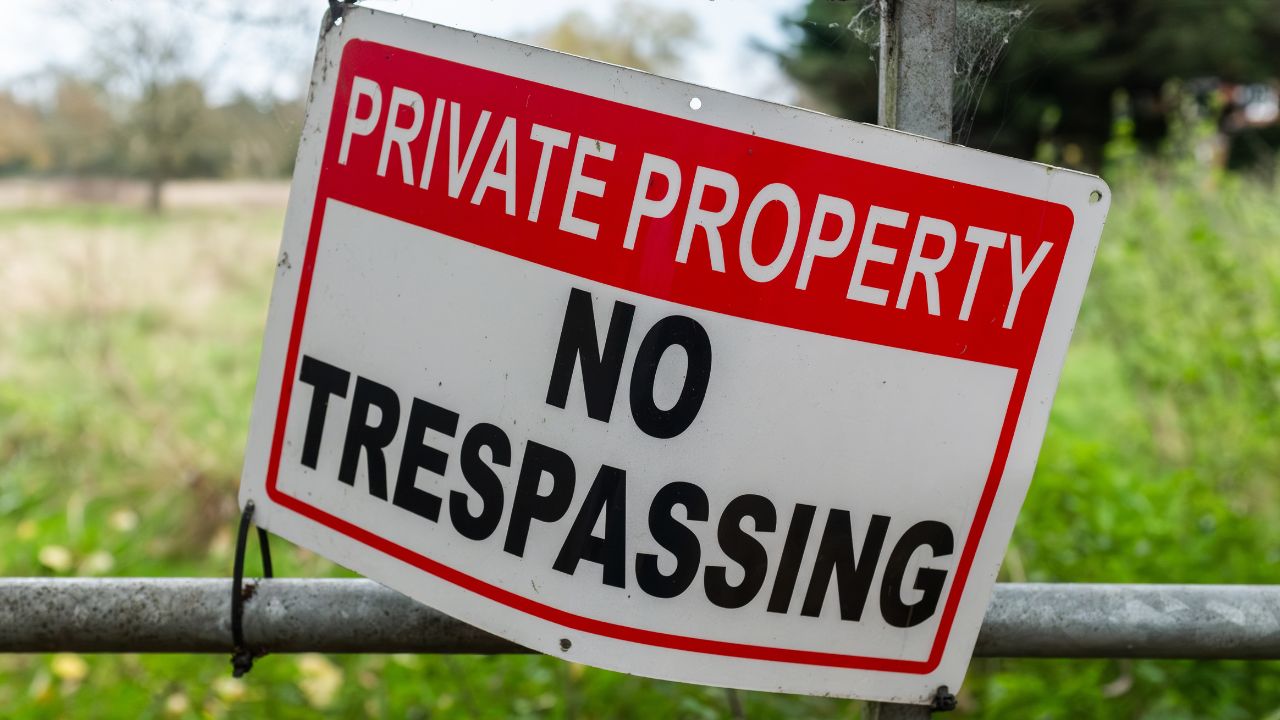
9 Things North Carolinians Can’t Legally Do to a Trespasser

North Carolina has about 15.5 million acres of privately owned forest land, according to the state’s Forest Service.
That’s a lot of tree lines, fence rows, and hunting leases where a landowner can run into someone who has no business being there.
Reaching for a gun rarely helps.
These are the things North Carolinians can’t legally do to a trespasser.
Note: This is general information, not legal advice. North Carolina’s laws on use of force, detention, and trespassing are subject to change.
1. Pointing a Gun as a Warning
State law doesn’t give a property owner a pass for pointing a gun at a trespasser just to scare them off.
State law makes it a crime to point any gun or pistol at another person, loaded or not, “either in fun or otherwise.”
That’s the actual wording of the statute, and it makes the offense a Class A1 misdemeanor.
No exception exists for a person standing on someone else’s land.
A warning shot still counts.
A property owner who raises a shotgun at someone crossing the fence line is committing the crime here, not the trespasser.
2. Deadly Force Over Property
A fence post gets no protection under North Carolina’s self-defense law, at least not the kind that justifies pulling a trigger.
State law justifies deadly force only when someone reasonably believes it’s necessary to prevent imminent death or great bodily harm to a person.
Property damage, on its own, never clears that bar.
A fence isn’t a person, and neither is a mailbox or a shed.
Someone who shoots a trespasser for standing on the land, or for tearing up the mailbox, becomes the one facing charges.
That’s true even with “No Trespassing” signs posted along the property line.
3. Damage to Their Vehicle
A trespasser’s truck keeps its legal protection in North Carolina, even parked on someone else’s land.
State law treats it as willful and wanton injury to personal property, and a parked vehicle counts the same as any other belonging.
That truck still belongs to the trespasser, not the landowner.
Flatten a tire or key the door, and the charge starts as a Class 2 misdemeanor.
More than $200 in damage bumps that same charge up to a Class 1 misdemeanor.
The property owner, not the trespasser, ends up with the record.
4. Claiming Castle Doctrine Protection Outdoors
The Castle Doctrine’s presumption of reasonable fear attaches to exactly three places: A home, a motor vehicle, or a workplace.
G.S. 14-51.2 extends “home” to include the curtilage around a house.
The line stops there.
Open land past the yard isn’t curtilage, no matter how many acres a landowner holds or how far a trespasser wandered onto it.
Treating a person spotted near the tree line the same as someone who forced their way through a door is the presumption misused, not applied.
A landowner who reaches for that presumption out on open acreage is claiming a legal shield the statute doesn’t extend there.
The shield covers the house, the truck, and the shop out back, not the woods around it.
5. Someone Already Leaving
The presumption behind North Carolina’s use-of-force law disappears the moment a trespasser turns to leave.
G.S. 14-51.2 spells out the cutoff: The presumption doesn’t apply once an intruder has stopped trying to force their way in and has already left.
Once they’re out, the shield is gone.
A property owner who keeps pointing a gun, keeps chasing, or keeps using force after that point has stepped outside what the presumption covers.
Walking back to a car isn’t the threat the law was written to answer.
6. Keeping What a Trespasser Leaves Behind
Trail cameras, tools, and gear a trespasser leaves behind on private land still belong to them under North Carolina law.
Taking and keeping someone else’s property is larceny once three things are true: Someone took it, carried it away, and meant to keep it for good.
G.S. 14-72 sets the penalty scale: Misdemeanor under $1,000 in value, felony above it.
The trespasser’s presence on the land doesn’t move a landowner to the other side of that line.
Finding a stranger’s trail camera strapped to a tree doesn’t make it abandoned property.
A landowner who unstraps it, takes it home, and keeps it has committed a crime.
That crime is the same one waiting for the camera’s owner if they walked off with something from the landowner’s porch instead.
7. Detaining Someone Without Cause
State law doesn’t let a property owner grab and hold just anyone caught trespassing across the property line.
State law only allows a private citizen’s detention when there’s probable cause the person committed a crime.
That charge has to be a felony, a breach of the peace, a crime that injures another person, or a theft or property-destruction crime.
The offense also has to happen in the detainer’s presence, and trespassing by itself doesn’t meet any part of that list.
Someone who wanders across an unmarked field and turns around when asked hasn’t handed a property owner any legal grounds to physically hold them.
Grabbing their arm anyway exposes the property owner to a false imprisonment claim.
Psst! How much do you know about North Carolina’s property and trespass laws? Take our quiz and see how many you can get right.
Quiz
North Carolina Land IQ
These are the property and trespass rules many North Carolinians have never had to look up. Find out how many you already know.
Which paint color carries the same legal weight as a posted “No Trespassing” sign when marked on trees or posts in North Carolina?
8. Clock on a Citizen's Hold
A lawful detention runs on a strict clock under North Carolina law.
G.S. 15A-404 requires the person doing the detaining to carry it out "in a reasonable manner" and to notify a law enforcement officer right away.
The statute allows no interrogation and no delay.
It also requires surrendering the detained person to that officer once they arrive, unless the person is released sooner.
The clock doesn't stop.
A property owner who keeps someone sitting on the porch for an hour while deciding what to do has already stepped outside what the law allows.
What Sets the Outer Limit on a Citizen's Hold
North Carolina caps a citizen's detention under G.S. 15A-404 at whichever comes first.
The cutoff is either the moment it's clear no crime happened, or the moment a law enforcement officer takes the person into custody.
A property owner who keeps someone detained after realizing the trespass was a mix-up has already run past that limit.
A lost hiker with a story that checks out is exactly that kind of mix-up.
Holding someone beyond either cutoff exposes the property owner to a false imprisonment claim, a civil case separate from any charge against the trespasser.
9. Deadly Force to Stop an Escape
Running away doesn't relax North Carolina's deadly force rules for a trespasser.
The same imminence rule that governs deadly force in general says it's justified only to prevent death or great bodily harm to a person.
Someone fleeing across a field is no longer an imminent threat by definition.
Running isn't attacking.
A trespasser who grabs a deer stand or a chainsaw and runs for the tree line is still just running.
Using deadly force to stop them crosses the same line as shooting someone for standing on the grass.
The property is worth recovering through a police report and a theft charge, not a bullet fired at someone's back.
That kind of shooting can turn the trespasser's theft charge into a homicide or felony assault charge against the landowner instead.
4 Driveway and Easement Fights North Carolinians Lose in Court

North Carolina's recording law, the Connor Act, has stood for more than a century.
It decides who wins when two neighbors both claim rights to the same stretch of land.
These are the easement and driveway fights that keep costing North Carolina homeowners in court.
4 Driveway and Easement Fights North Carolinians Lose in Court
8 North Carolina Property Line Disputes That End With One Neighbor Paying for the Survey
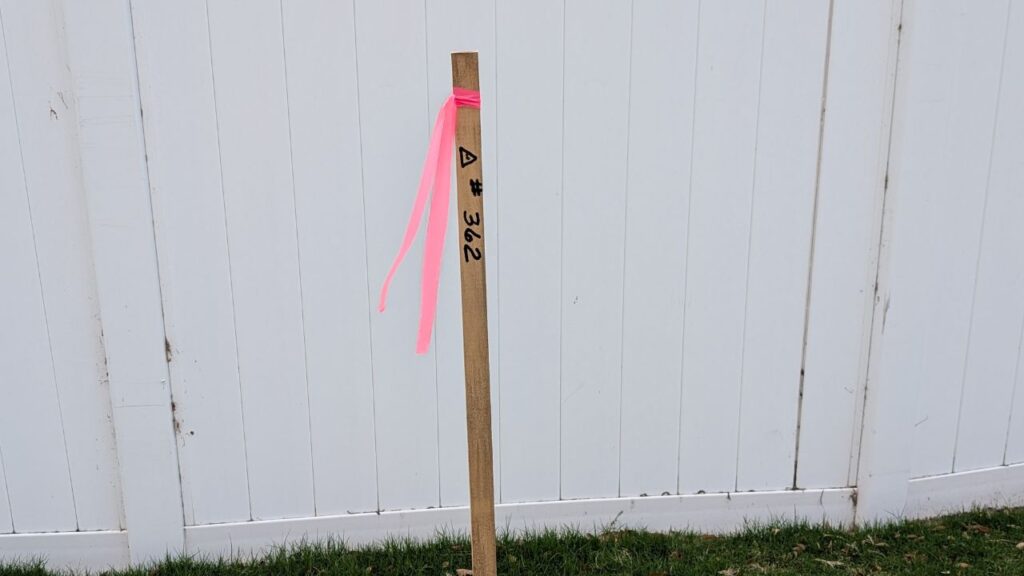
A basic North Carolina boundary survey can run $500 to $1,800, and acreage, rough terrain, or a disputed line can push that price past $6,000.
These are the property line disputes that end with one neighbor footing that bill alone.
8 North Carolina Property Line Disputes That End With One Neighbor Paying for the Survey
