
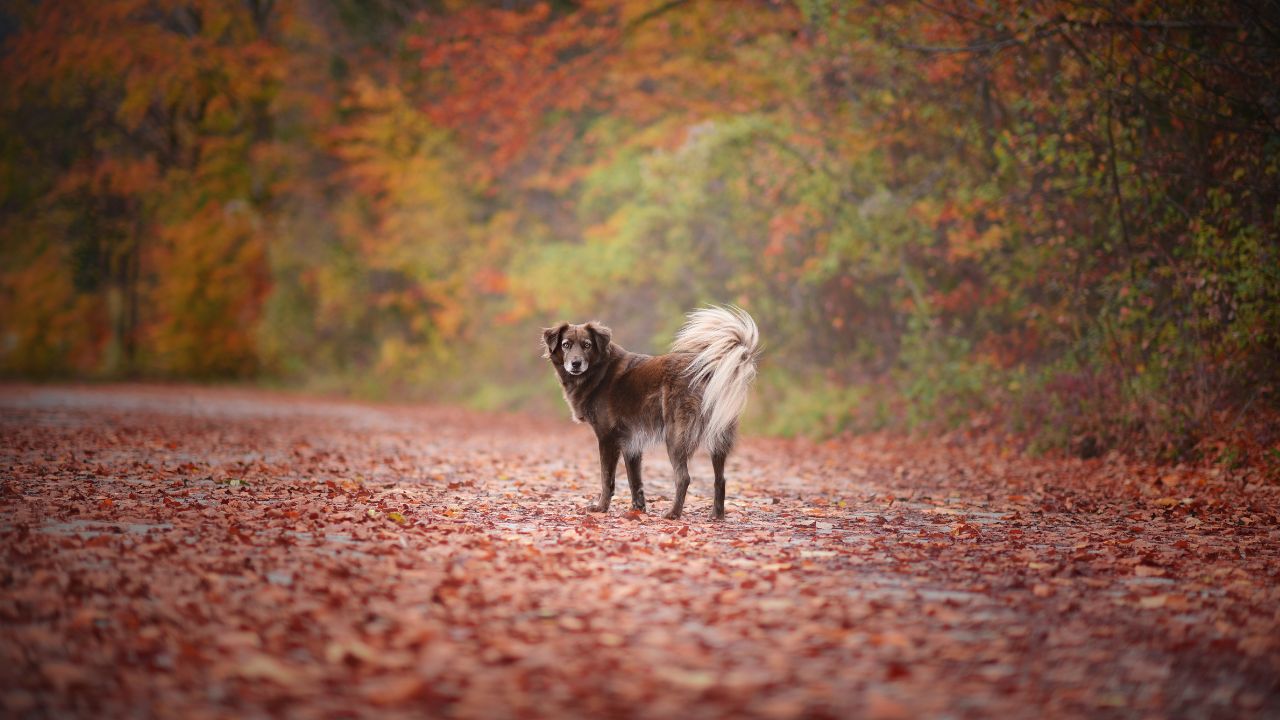
9 Fall Hazards Vermont Dog Owners Underestimate Every October

A leashed dog can lunge hard at a shape moving through the trees.
That shape doesn’t always run.
Vermont’s moose breeding season is from mid-September through mid-October, right when bulls stop backing off from anything in their path.
These are the fall hazards Vermont dog owners underestimate every October.
1. Bow Hunters in the Woods
Few dog owners realize how many bow hunters share the woods with them once October starts.
The state’s regular archery deer season runs from Oct. 1 through Dec. 15, a stretch that overlaps with the months many owners still walk their dogs off-leash.
Vermont is also one of just a handful of states that doesn’t require a hunter to wear blaze orange.
That’s the gap.
The Green Mountain Club tells hikers to leave dogs home during hunting season if they can.
If they can’t, the club says to dress a dog in a blaze-orange vest or bandana so hunters see it coming.
A dog crashing through brush at dusk moves a lot like the thing a hunter in a tree stand is waiting for.
Bright fabric and a bell on the collar cost a lot less than a trip to the emergency vet.
2. Moose in Rut
Bull moose turn dangerous for about a month every fall, and dog walkers are rarely braced for it.
That stretch runs mid-September through mid-October, according to Vermont Fish & Wildlife’s wildlife page, and it’s exactly the window this article falls in.
During the rut, bull moose spend their days thrashing brush and squaring off against other bulls.
Wildlife agencies elsewhere warn that moose treat dogs as natural enemies, sometimes going out of their way to kick at a dog even on a leash.
A moose won’t run from a dog the way a deer will.
Not this moose.
A dog that charges a moose along a tree line in October is picking a fight it can’t win.
That fight comes back toward whoever was holding a leash attached to nothing.
3. Bears on a Feeding Binge
By October, a bear is trying to eat its way through the next five months in advance.
Vermont Fish & Wildlife says a bear headed into winter seeks out the richest food it can find.
It can eat up to 24 hours a day, packing on fat before it dens for the winter.
Every calorie counts.
That binge runs right through the state’s early bear season, which the state’s hunting guide lists as running into mid-November.
A bear working over a beech stand or a compost pile isn’t looking for a fight.
It’s also not going to move fast for a barking dog.
A dog that gets too close to a feeding bear or her cubs can turn an evening walk into trouble in about two seconds.
Keep dogs on a lead near orchards, berry patches, and unsecured trash cans through the rest of the month.
4. Traps for Furbearers
Late October changes what’s hiding in Vermont’s brush, when the state’s regulated trapping season opens.
State rule bars anyone from setting a trap until the fourth Saturday of October, which lands on Oct. 24 this year.
Fox and muskrat traps stay legal into 2027; coyote and mink traps close at the end of December, per the department’s season dates.
They’re set in the exact places a dog likes to nose around.
Off-trail brush, streambank edges, and the muddy margins of ponds are common spots, which is exactly where Vermont Fish & Wildlife’s trapping page says pets occasionally wander in.
The department calls it rare.
Rare still isn’t never, and every dog owner benefits from recognizing a trap on sight.
What to Do If Your Vermont Dog Finds a Trap
A Vermont dog owner whose pet turns up in a trap needs to know which of two kinds it is before doing anything else.
A foothold trap is built to hold an animal without lasting injury, so a calm approach and steady hand on the trap’s spring usually frees a dog within a minute.
A body-gripping trap is a different problem, since it’s designed to be lethal.
The department’s trapping page doesn’t spell out a release technique beyond acting very quickly, and it points owners to video tutorials for exactly how it’s done.
5. Late-Season Ticks
Fall sweater weather doesn’t give a dog a break from ticks.
The Vermont Department of Health says tick activity increases again in October and November, as adult blacklegged ticks look for one more host before winter sets in.
They’ll keep looking, too.
The department notes these ticks stay active any time the temperature climbs above freezing.
A mild afternoon in late October can be just as risky for a dog as a July hike.
Many owners have already put the tick comb away by now.
The fall spike says to bring it back out.
6. Leaf-Peeper Traffic
Vermont’s fall foliage pulls about 2.5 million visitors and $500 million in spending into the state every year, according to the state’s tourism office.
Many of those visitors are driving with their eyes on the trees instead of the road.
It’s not subtle.
Pomfret closed a stretch of one scenic road to nonresidents through mid-October in 2023 after tourists caused accidents, needed towing out of ditches, and parked in fields and driveways.
The danger for a dog walker isn’t the traffic volume many people already expect every fall, it’s how often those cars stop without warning.
A dog walk down a scenic road during a peak foliage weekend is a different errand than the same walk in June.
Walk facing traffic, stay off the shoulder where cars pull over for photos, and pick a quieter route when the color is at its best.
7. Fresh Antifreeze
The first hard freeze can arrive weeks before Halloween.
Garages and driveways start seeing topped-off radiators and fresh antifreeze the moment overnight temperatures threaten a hard freeze.
The National Weather Service’s Burlington station, sitting in one of the state’s milder valleys, has logged its first fall freeze as early as mid-September in past years.
Colder hill towns get there sooner still.
That’s bad timing for a curious dog.
The American Society for the Prevention of Cruelty to Animals (ASPCA) says it takes only a small amount of ethylene glycol antifreeze to be potentially fatal.
The chemical has a sweet taste, and dogs love it.
A few drops can kill.
A driveway puddle is enough exposure.
Wipe up any spill immediately, and store the jug somewhere a dog can’t reach it, the same way you’d handle it in your garage.
8. First Fires of the Season
Many households flip the wood stove back on every October, after it’s sat cold since spring.
The state’s Department of Forests, Parks and Recreation says 38% of Vermont homes heat in full or in part with wood.
On the narrower measure of a household’s main heat source, Vermont still leads every other state.
Close to 14% of Vermont homes name wood as their primary fuel, per 2025 Census-based data from Arbor Analytics.
A stove that’s been cold and forgotten since April is suddenly a hot surface, an open flame, and an ash bucket a dog has never had to avoid.
Dogs haven’t adjusted yet.
Stove glass burns more paws than owners expect.
Have the chimney swept before the first fire, keep a screen or gate around the stove, and give a dog a few days to relearn where the hot spot lives.
Psst! How ready is your dog for a Vermont October? Run through this checklist and see where you stand.
9. Windfall Apples
More apples hit the ground in orchards each fall than anyone picks up.
The state’s u-pick season runs from early September through mid-October, and the apples nobody grabs sit in the grass afterward, rotting.
Rot is the problem.
Wild yeast on the skin ferments a rotting apple into ethanol as it breaks down.
A 2001 case in the journal Veterinary and Human Toxicology, by Kammerer and two co-authors, describes a dog that had been eating a pile of them.
The dog came down with vomiting, ataxia, tremors, and dehydration, and died 48 hours later.
Dogs go looking for it, too.
The sweet, boozy smell draws a dog’s nose straight to a pile of drops under a backyard tree or along the fence line of a working orchard.
A quick sweep of the yard after a windy October day is worth the five minutes it takes.
