
5 Reasons a Kansan Won’t Buy a Bierock Out of State

Spotting something that reminds you of home on a menu should be good news.
But if you’re a Kansan craving a bierock, you might hesitate.
These are the reasons a Kansan won’t buy a bierock out of state.
1. The Rectangle Problem
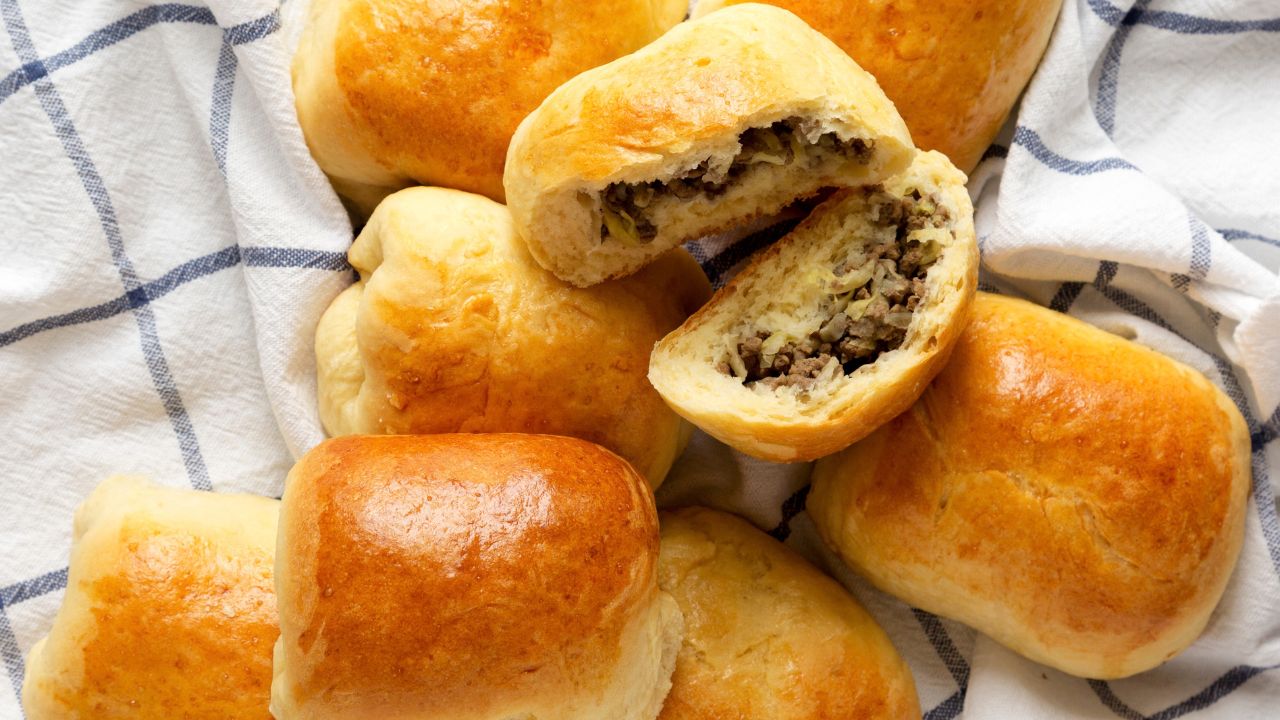
A Kansas bierock is round, a hand-sized dough pocket sealed shut and baked until the outside goes golden.
Cross into Nebraska looking for the same thing, and the shape changes on you.
The trademarked Runza is built rectangular, closer to a folded pocket sandwich than a roll.
The shapes don’t match.
It sounds minor until you’ve grown up eating the round kind at a kitchen counter.
The rectangle version reads like a food built to fit a drive-thru window instead of a family kitchen.
2. Not Technically a Bierock
Kansans who grew up calling this food a bierock run into a problem the moment they look for that word on an out-of-state menu.
Runza’s founders wanted the same legal protection any restaurant chain wants for its signature item, and they couldn’t get it under that name.
Before they ever opened a storefront, they were already selling homemade bierocks to factory workers, back in the 1940s.
Federal trademark rules block a company from owning a word that already belongs to an entire style of cooking.
It’s the same reason nobody can trademark “burger” or “taco.”
So they built a new name instead.
The word rarely travels.
Order a bierock outside Kansas and there’s a good chance the menu in front of you has never once printed that word.
Where the Name Runza Comes From
Runza, the name that stands in for bierock everywhere outside Kansas, has history behind it.
Food writers who’ve traced it point to “krautrunz,” an old German word for this same style of pastry.
Others trace it to “runsa,” German for belly, a nod to the way the dough pouches around its filling.
3. The Five-State Sandwich
A Kansas bierock has nowhere to go once a shopper leaves the Plains.
Runza, the closest thing to a commercial version, runs restaurants in only five states: Nebraska, Kansas, Iowa, Colorado and South Dakota.
Nebraska carries 85 of those locations by itself, according to Flatwater Free Press.
Colorado, Iowa, Kansas and South Dakota split just six locations combined.
The rest get none.
A Kansan who moves to Texas or Arizona won’t find a bierock or a Runza on any menu, under any name.
The sandwich simply isn’t for sale there.
4. A Franchise, Not a Family Recipe
Kansas bierocks still mostly come from somebody’s kitchen, not a corporate test lab.
Becky’s Bierocks in St. Francis started as a menu item at a local restaurant in 1991.
The business still hand-forms every bierock before it ships frozen to grocery stores and schools around the state.
Small-town diners across Kansas serve them too, according to Kansas Farm Food Connection.
In Lawrence, a 2010 Lawrence Journal-World profile found one home baker turning out roughly 120 bierocks two or three times a year.
He mixed red cabbage in with the green, and red onion in with the yellow.
He skipped the usual step of wilting the cabbage first, so the filling kept its crunch.
That’s a level of tinkering a franchise menu doesn’t allow.
The out-of-state version comes from somewhere else.
That’s the big gap.
Runza started as a single Nebraska storefront in 1949, and the company didn’t begin selling franchises until 1979, three decades in.
Today it runs more than 90 locations across five states, which makes it a chain built for consistency, not a recipe passed hand to hand.
5. Sized for One Hand
A Kansas bierock was built to fit one hand.
Volga German cooks sized them to fit a palm, with no plate required, a shape suited to farm and factory work alike.
The shape came from necessity.
The Lawrence Journal-World describes a properly made bierock as small enough to slip two in a pocket.
The out-of-state version gave up on that job.
That part got lost.
It’s built and marketed as a full sandwich meal, meant to be ordered at a counter and eaten with both hands.
That’s closer to a burger than to the field food it started as.
Psst! How much do you know about the Mennonite families who brought Kansas its bierock? Take our quiz and see how many you can get right.
Quiz
Kansas Bierock IQ
Answer these questions on Kansas bierocks and the Mennonite families who brought them here. We bet you can’t get them all right. Prove us wrong?
Which of these Kansas counties wasn’t one of the first places Mennonite families from Russia settled in 1874?
Beyond the Bierock
The bierock wasn't the only dish Mennonite families carried into Kansas kitchens, and it didn't travel alone.
Zwieback rode along too, a small yeast roll baked as two stacked pieces, one pinched onto the other before the oven.
Verenike showed up on the same tables, pockets of dough filled with cottage cheese and served under a ham gravy.
It has nothing in common with a bierock's beef and cabbage filling.
New Year's cookies, raisin fritters that Goessel museum volunteers once fried by the hundreds for a single fall threshing-days event, made a third stop on that same table.
Cherry moos rounded out the meal as a warm, tart fruit soup, often poured right alongside the bierock instead of saved for dessert.
None of those dishes made the jump out of state the way the bierock did.
They stayed put.
A Kansan can still order zwieback or verenike from the same small bakeries that bake the bierock, and neither has ever needed a trademark to keep its name.
The Kansas Mennonite Relief Sale in Hutchinson serves between 15,000 and 20,000 verenike a year, ham gravy included.
10 Kansas Phrases That Leave Out-of-Staters Completely Lost

Ask why Manhattan, Kansas isn't anywhere near New York, and a local will just laugh instead of explaining it again.
Kansans have many words for their state that nobody outside it quite understands, the same way they have a bierock nobody outside it gets quite right.
