
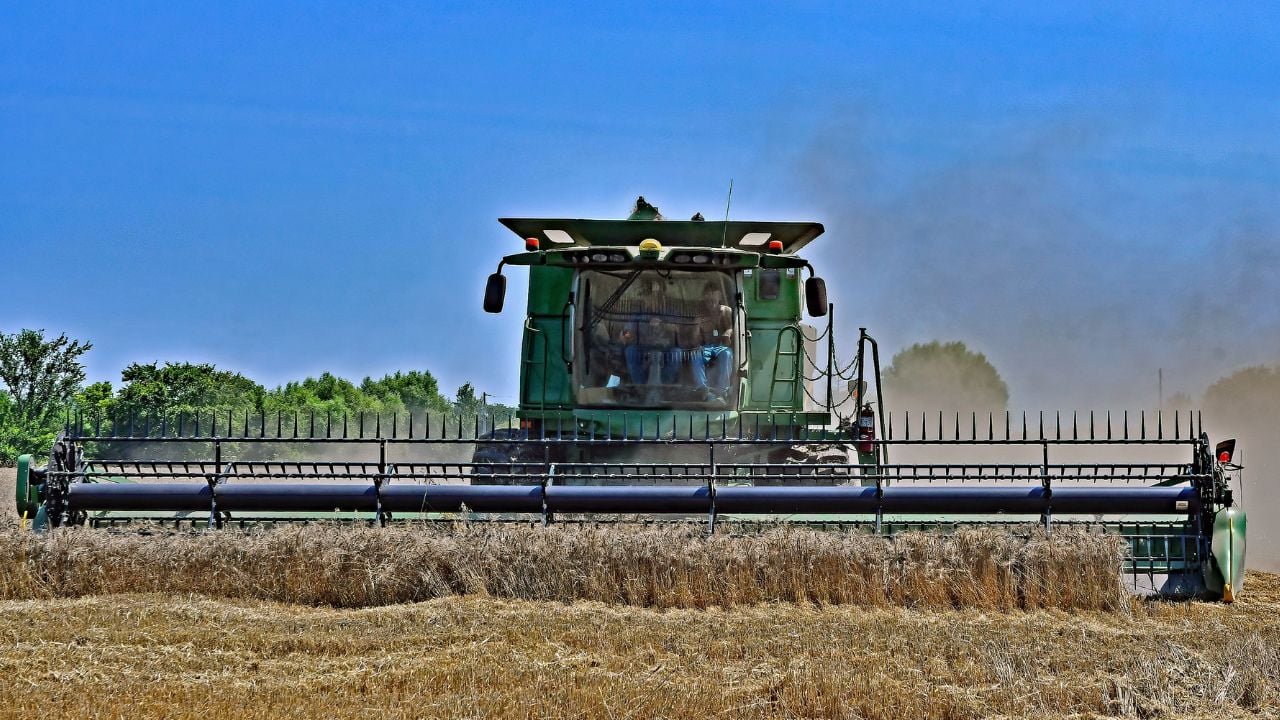
5 Things Kansans Do Every Year Once Wheat Harvest Starts

Kansas grew more winter wheat than any other state in 2024, more than 307 million bushels, according to the U.S. Department of Agriculture’s National Agricultural Statistics Service.
That top spot isn’t a one-time thing.
These are the things Kansans do every year once wheat harvest starts.
1. Custom Cutter Crews
Wheat farmers spend the first days of June checking in with people they may never have met face to face.
Many find their crew through U.S. Custom Harvesters Inc.’s online directory, which matches growers with harvest crews traveling the wheat belt each summer.
Farmers pay for that work by the acre.
The average bill in 2024 ran $29.17 an acre to have a crew combine the wheat, according to a Kansas State University survey of custom farm rates.
That rate rises about 28 cents for every bushel once the yield passes 27 bushels an acre.
A farmer’s final bill depends on how the crop turns out.
Farmers still have to time it right, since a crew booked out of Oklahoma or Texas can reach a Kansas field within days of the wheat turning ripe.
2. Kansas Wheat’s Harvest Report
Kansas Wheat, the trade group representing the state’s growers, starts counting the moment combines roll into the first ripe fields.
Day 1 goes out within the first week of cutting.
From there, the numbered reports keep arriving three evenings a week, Monday, Tuesday and Thursday, until harvest wraps for the season.
Nobody skips a year.
Farmers call in from the field with yields, test weights and protein numbers.
Kansas Wheat folds those calls together with federal crop data to show how far along the state’s harvest is that week.
Reporters, elevator managers and farmers all watch the same numbered dispatch every summer, tracking the count as it spreads north across the state.
3. Grain Elevator Rush
Once wheat harvest starts, trucks line up outside grain elevators nearly every daylight hour.
Workers weigh each load on the scale, then pull a sample to check its moisture and protein before the wheat ever drops into a bin.
Kansas Farm Food Connection, a farmer-led group, describes that same process at the state’s grain elevators.
Elevator managers spend the weeks beforehand getting ready for that rush.
They move out whatever’s left of last year’s crop, since a bin still holding old wheat can’t take a new truckload.
So managers line up rail cars and buyers before the first new load ever reaches the scale.
In dry years, the squeeze on storage space gets tightest in the state’s southwest, where bins can still be fullest right as the first new loads start arriving.
Space runs out fast.
The elevator keeps running that way, truck after truck, until crews finish cutting the fields nearby.
How the Harvest Moves North
Kansas wheat harvest starts in the south-central part of the state, in counties like Sumner and Harper, in early to mid-June.
From there it moves north and west, county by county, and doesn’t finish until mid-July.
That’s why a farmer in Barton County can still be waiting on dry weather while a crew two counties south already finished cutting.
4. Highway Patrol’s Yearly Warning
The Kansas Highway Patrol sends out the same reminder every summer once combines start moving between fields: Farm equipment doesn’t drive like a car.
Most farm equipment travels just 15-25 mph.
A driver coming up fast can close that gap faster than they expect.
Patience matters here.
Troopers ask drivers to hold off passing near intersections, bridges and railroad crossings, since a wide implement can take up both lanes without warning.
Kansas Highway Patrol repeats the same reminder every June and July because the equipment keeps returning right on schedule.
Psst! How much do you know about the people and rules behind Kansas wheat harvest? Take our quiz and see how many you can get right.
Quiz
Kansas Harvest IQ
Answer these questions on the people and rules behind Kansas wheat harvest. We bet you can’t get them all right. Prove us wrong?
Kansas grows more wheat than any other state, but what’s the state’s actual official nickname?
5. Wellington's Wheat Festival
Wellington, in Sumner County, calls itself the Wheat Capital of the World.
The town backs that up every summer with a festival timed to the harvest.
The Kansas Wheat Festival has run for more than 120 years.
Organizers keep it going whether that year's crop turned out strong or rough.
Locals gather for the celebration while combines are still working nearby fields, treating the harvest's progress as something worth celebrating instead of something to wait out.
The Nation's Top Wheat Grower
Kansas doesn't lead the country in winter wheat only in a good year.
Winter wheat is the type farmers plant almost everywhere in the state, the same hard red variety that mills turn into bread flour.
Kansas's winter wheat crop topped 307 million bushels in 2024, more than any other state grew, according to the U.S. Department of Agriculture's National Agricultural Statistics Service.
No other state comes close.
A late freeze or a dry spring can shrink that lead in a rough year, but Kansas rarely drops out of the top spot.
The count tends to land back in the same place: More winter wheat comes in than any other state grows, one truckload at a time.
10 Kansas Phrases That Leave Out-of-Staters Completely Lost

A visitor pulls off the highway in Manhattan, Kansas and asks why a landlocked town borrowed a name from New York City.
Locals have heard the question so many times they've stopped explaining it, along with a dozen other phrases nobody outside the state says the same way.
