
7 HVAC Problems Nevada Homeowners Only Find in October

Reno’s October afternoons average a high near 70 degrees, according to 30-year climate normals from the National Oceanic and Atmospheric Administration (NOAA).
The same month’s nights average a low near 40.
That’s a 30-degree swing in one day.
These are the HVAC (heating, ventilation and air conditioning), problems Nevada homeowners only find once that swing forces the switch to heat in October.
1. Waking a Summer-Idle Furnace
A homeowner’s furnace can sit idle for six months or more while the air conditioner carries the whole summer alone.
A furnace that hasn’t run since spring often has a failed igniter or a dead pilot light the first time it’s asked to fire.
Las Vegas-based Elite Heating & AC Repair sees it happen almost every fall.
Nothing failed in July.
Reno’s nights still average near 50 degrees in September, but that average drops to near 40 once October arrives, based on 30-year NOAA climate normals.
That’s when many furnaces fire for the first time all year.
Nobody tests the igniter before that.
By then, a family is already standing in a cold house waiting on a service call.
2. Smelling Burning Dust on Startup
The first blast of heat out of a home furnace often carries a burning smell that wasn’t there in May.
Dust settles on the heat exchanger during six-plus dust-heavy months of cooling-only operation.
It’s now burning off, Elite Heating & AC Repair says in its fall checklist for Las Vegas homes.
That’s the same October switch that flips many thermostats from cooling to heat for the first time all year.
It clears fast.
A smell that lingers past the first heating cycle, or comes back on the second one, is the signal to call a technician.
Opening a window and waiting it out isn’t the fix.
3. Finding a Cracked Heat Exchanger
A cracked heat exchanger is why Elite Heating & AC Repair builds a full inspection into every fall service call, per its checklist for Las Vegas homes.
A quick filter swap alone doesn’t cut it.
The metal chamber that separates a furnace’s flame from the air blowing through your ducts can develop hairline cracks after a full year of heating and cooling cycles.
Summer never tests it.
October is the first chance all year for a technician, or a homeowner who finally turns the heat on, to catch a crack.
Winter puts hours on the system fast.
A yellow or flickering flame where the pilot used to burn blue, or soot around the burner compartment, is one of the signs a technician checks first.
What a Cracked Heat Exchanger Does
A cracked heat exchanger doesn’t stop a Nevada furnace from running.
It lets combustion gases, including carbon monoxide, leak into the air the blower pushes through the house instead of venting outside.
That’s why it rarely announces itself the way a furnace that won’t start does.
A carbon monoxide detector with working batteries is the cheapest way to catch what happens between one fall inspection and the next.
4. Running a Filter Past Its Limit
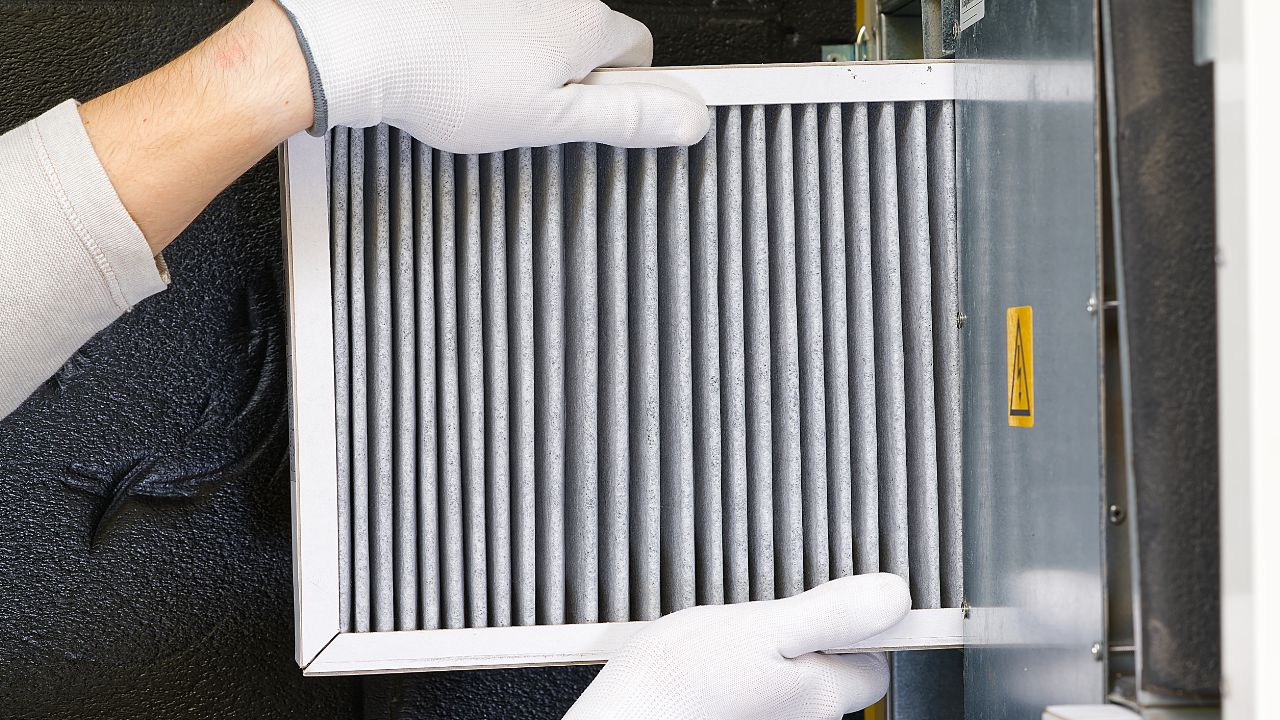
The air filter in an air conditioner usually runs six or seven straight months without a break once summer starts.
By October, nightly lows finally turn cold enough to force the switch to heat.
That filter is more than ready to be retired by then, Elite Heating & AC Repair notes in its fall checklist.
Six months is a lot.
A clogged filter restricts airflow no matter which mode the system runs.
The fall switchover is the moment that wear finally shows up as weak airflow at the vents instead of a dusty smell.
5. Clearing Monsoon Grit From the Condenser
The outdoor condenser on a home’s air conditioner spends July and August, the state’s monsoon season, collecting whatever the wind throws at it.
Grit builds fast.
That monsoon season typically winds down by September, the National Weather Service says.
Nobody notices the grit it leaves behind until October, when homeowners are already outside handling the rest of the fall HVAC switchover.
Leaves and fine desert dust are still packed against the coil fins and the base of the unit when that October cleanout finally happens, Elite Heating & AC Repair notes.
Dust that coats the evaporator and condenser coils can drop a system’s efficiency and force it to run longer than it should, Bumble Breeze Plumbing, Heating & Air warns.
Grit-coated coils can’t pull air through cleanly.
A fall cleanout, clearing the base and rinsing the fins, is what gets air moving through the system again before the season’s first cold night.
Psst! How many of these fall HVAC tasks has your Nevada home checked off? Run through the list and see how ready you are.
6. Draining an Evaporative Cooler Too Late
An evaporative cooler, the swamp cooler many older Las Vegas and Reno homes still run through summer, needs a proper shutdown before winter.
A cover thrown over the top isn’t enough.
Standing water left inside the unit can corrode the pump and pads over winter, per evaporative-cooler shutdown guidance from Colorado HVAC company Climate Control.
Water left behind gets expensive.
October, before the first cold snap, is the window for draining it, checking the pads, and covering the whole unit for the season.
7. Riding Reno’s 30-Degree Swing
Reno’s big day-to-night swings aren’t unique to any one October.
The National Oceanic and Atmospheric Administration ties that pattern to Reno’s location in the high desert of the Great Basin.
That terrain gives the city unusually large temperature ranges on both a daily and a yearly scale, according to the same NOAA record.
Reno’s October afternoons average a high near 70 degrees.
The same month’s nights average a low near 40, a 30-degree swing built into 30 years of NOAA climate normals for the city.
October in Las Vegas doesn’t look like October in Reno.
Its afternoons still average close to 81.2 degrees, the National Weather Service’s Las Vegas climate normals show.
That gap means a thermostat schedule built for one city can be exactly wrong for the other.
Reno’s frost risk starts building around October 10, and the average date for the season’s first hard frost lands around October 27.
That’s a short runway.
A thermostat that isn’t set for both extremes can short-cycle, switching between cooling and heating more than it should in the same day.
What a Fall Tune-Up Covers
A fall HVAC tune-up checks more than the furnace alone.
Technicians look at supply vents too.
Furniture rearranged for a summer patio or a holiday table can end up blocking one without anyone noticing.
A room can stay cold for weeks before anyone traces it back to the vent, Elite Heating & AC Repair notes in its fall checklist.
Nobody notices right away.
Filters added inside individual vents, the kind some homeowners install for extra dust control, add static pressure to the system.
That pressure needs cleaning far more often than many homeowners expect, per the same fall checklist.
That static-pressure check is often the difference between a furnace that heats every room evenly and one that doesn’t.
The room farthest from the thermostat is usually the one that goes cold first.
