
6 Dishes South Dakota Doesn’t Save Just for Funerals and Weddings

A South Dakota funeral or wedding isn’t the only reason to fill a church basement table.
Any ordinary Sunday works too.
German-Russian and Norwegian families settled South Dakota’s small towns generations ago, cooking the same dishes their descendants still make.
These are the dishes South Dakota doesn’t save just for funerals and weddings.
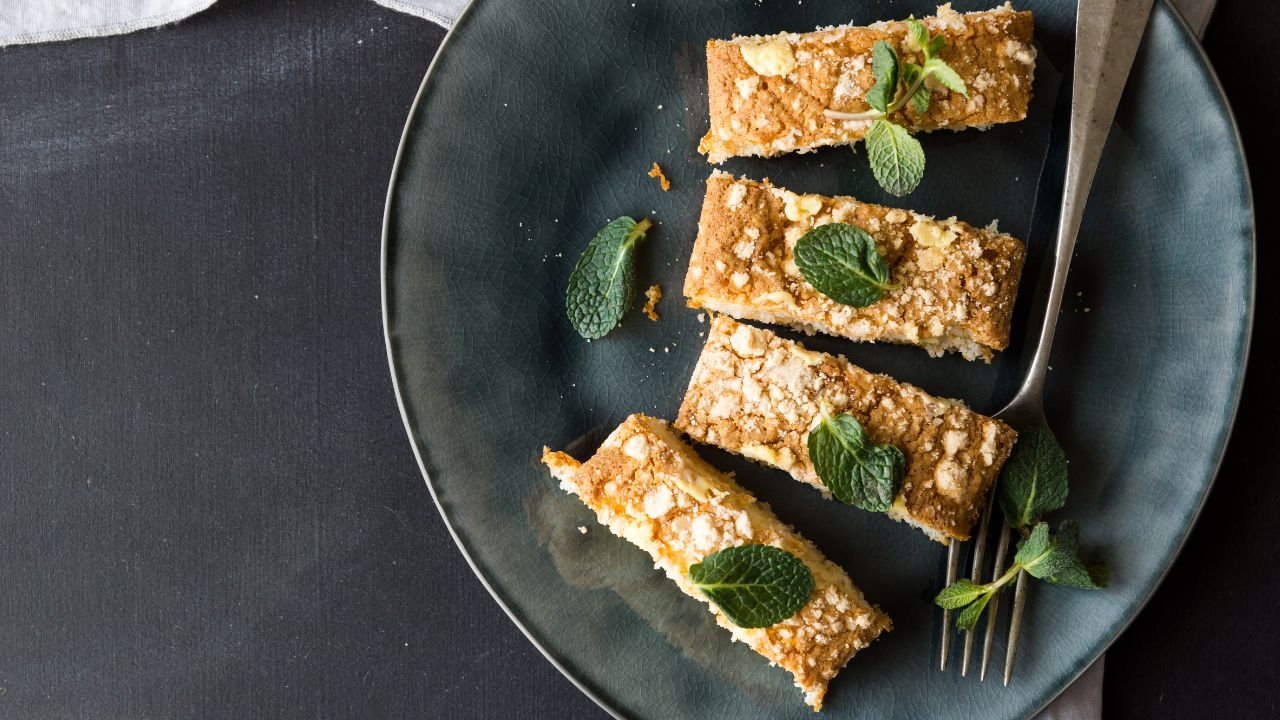
1. Kuchen
South Dakota’s Legislature made kuchen the state’s official dessert on July 1, 2000, and Eureka is the reason it happened.
The push started with a trivia question about Massachusetts’s state dessert.
An Eureka Community Development Company officer read it and realized the state had no official dessert at all.
That had to change.
The 1999 bill died in the House.
Seventeen other towns wrote in the next year to help push it through, the same towns German immigrants settled across McPherson County in the 1880s.
Eureka’s kuchen page calls it a staple at almost any gathering, weddings and funerals included.
Who Are South Dakota’s Germans From Russia?
German-Russian towns like Eureka trace back to families who were never Russian.
Catherine the Great invited German farmers to settle Russia’s frontier in 1763, promising them free land and freedom from military service.
Russia revoked those protections in 1871, and many of those families resettled in South Dakota by the 1880s instead.
That history is why a McPherson County kitchen can still feel more German than Russian.
2. Fleischkuechle
Fleischkuechle is the dish that launched Freeman’s Schmeckfest in 1959, when the Freeman Junior College Auxiliary threw a festival for the school’s tenth anniversary.
The name means hamburger folded into dough and fried, and the first crowd ate through the supply faster than the kitchen could refill it.
They ran out anyway.
Freeman’s Mennonite congregations still turn out fleischkuechle by the hundreds every spring at Schmeckfest.
The same dish shows up whenever a fellowship hall feeds a crowd, a wedding dinner or a funeral lunch included.
3. Cheese Buttons
Cheese buttons are the small, hand-folded dumplings on nearly every recipe card in Eureka and Hosmer.
South Dakota’s German-Russian cooks in these towns call them Kase Knoepfla in the old language, and the filling is plain cottage cheese pressed into a thin dough pocket.
Nothing fancy about it.
A big pot of them stretches to feed a crowd.
Hosmer’s Dakota Cafe has long put cheese buttons on the table every Tuesday, a weekly meal, not a once-a-year specialty.
4. Knoephla Soup
Knoephla soup is a milky, buttery dumpling soup, made in Eureka and Hosmer from the same dough as their cheese buttons.
Cooks drop small dumplings straight into the simmering broth, and the soup thickens as they cook.
It’s built to stretch.
A single pot feeds a full fellowship hall easily.
Dakota Jo’s Cafe in Tolstoy has served it every Thursday for years, and regulars notice fast when a batch runs out.
5. Halupsi
Halupsi wraps rice and hamburger inside a cabbage leaf, and it’s the third savory dish South Dakota Magazine found still living in Eureka and Hosmer’s German-Russian recipe boxes.
A pan of them bakes low in tomato sauce until the cabbage turns tender, and the dish holds up for hours on a buffet table.
One pan feeds plenty.
Dakota Jo’s puts halupsi on that same Thursday buffet, right alongside the cheese buttons and knoephla soup.
The same Thursday spread also includes spaetzle with German sausage.
It’s a standing weekly meal, not a special-occasion dish.
6. Lefse
Lefse is the potato flatbread that kept Summit, South Dakota’s Norwegian families rolling and griddling together for close to eighty years.
Hope Lutheran Church’s supper needed 140 dozen sheets of it some years, rolled thin and folded over butter and sugar or a serving of lutefisk.
That supper ended in 2019.
Lefse didn’t disappear with it, though.
South Dakota’s Norwegian families still roll it out every Thanksgiving and Christmas, not only for a wedding reception or a funeral lunch.
Psst! How much do you know about South Dakota’s food history? Take our quiz and see how many you can get right.
Quiz
South Dakota Food IQ
Answer these questions on South Dakota’s food history and heritage towns. We bet you can’t get them all right. Prove us wrong?
South Dakota gave chislic an official title in 2018. What is it?
Keeping the Recipe Boxes Full
A group called SoDak Stamm has spent the past few years collecting South Dakota's German-Russian family recipes before they disappear.
They're working town by town to get kuchen, fleischkuechle and knoephla written down before they exist only in someone's memory.
Freeman's Schmeckfest changed hands in 2023, when the Freeman Academy Auxiliary that had run the festival since 1959 stepped back and handed it to volunteers instead.
New hands, old recipes.
Freeman Academy still gets the proceeds either way, funding the Christian school the festival has supported since its Freeman Junior College roots in 1959.
Freeman's three Mennonite communities each bring a slightly different version of the same handful of dishes to that fellowship hall.
The plate at a wedding reception or a funeral lunch can carry a different accent, depending on whose kitchen it came from.
8 Things That Confuse Everyone Who Moves to South Dakota
South Dakota charges its full state sales tax on a grocery run, and newcomers rarely see it coming.
It's one of several adjustments that catch people off guard after the move.
