
7 Things Wyoming Ranchers Do Differently Once Fall Roundup Starts

Nothing about a Wyoming cattle operation runs the same way in October as it did in June.
Torrington Livestock Market, which calls itself Wyoming’s largest, runs seven calf and bred-cow specials in October alone, and the next special lands October 12.
That sale barn calendar doesn’t exist in June.
These are the things Wyoming ranchers do differently once fall roundup starts.
1. Cattle off the Mountain
Ranchers spend summer with cattle scattered across mountain grazing allotments, and fall roundup is when that stops.
The Bridger-Teton National Forest’s grazing permits fix a hard removal date for every allotment.
The Hoback allotment came off by October 15.
The Graveyard Hill and Jack Creek allotments followed five days later.
There’s no extension.
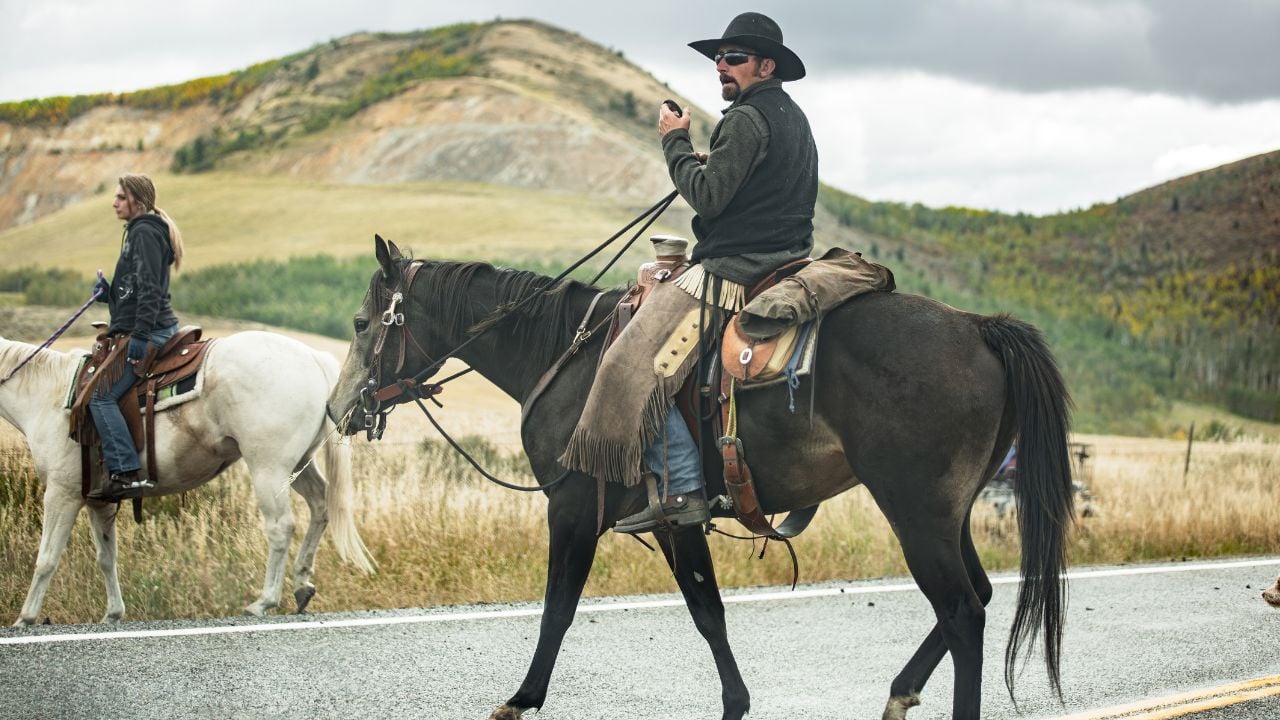
Riders on horseback sort the cattle off the mountain, since the terrain rules out anything else.
Four ranches near the Hoback Basin run cattle together on the same permit.
Every animal wears a mark tied to one outfit: Red and pink ear tags for one ranch, dark red for another, a diamond-shaped ear slash for a third.
Cutting that many brands apart in rough country takes a rider who knows every mark cold.
Roundup has followed this pattern in the Hoback Basin for about 90 years.
2. Pulling the Bulls
Wyoming ranchers turn bulls out with the cow herd for a set breeding season, often around 60 days.
Once that window closes, the bulls come out.
Fall roundup is when many outfits do it.
Pull the bulls too early, and a few late-bred cows come up open at the pregnancy check.
Waiting too long pushes the calving season out for weeks come spring.
A tight breeding season front-loads conception into the first three weeks, where a herd typically makes the bulk of its calves.
Bulls pulled now spend winter in a separate pasture, away from the cows, until the cycle starts again in late spring.
3. Pregnancy Check
Ranchers pregnancy-test their cows in the weeks right after breeding season ends, and that window lands squarely inside fall roundup.
A vet or technician checks each cow by rectal palpation, ultrasound, or a blood test.
A common range runs from about $3 to $10 a head.
Ranchers mark cows that come up open for the cull list on the spot.
Feeding a cow that won’t produce a calf costs money all winter for nothing back.
Cull cow prices tend to drop as fall goes on.
Ranchers who preg-check early and sell early earn more for the same cow.
Wait until December instead, and that same cow brings less at the sale barn.
Nobody waits until December.
4. Weaning the Calves
Ranchers pull calves off their mothers for good once fall roundup starts, after a summer of nursing on open range.
Traditional weaning separates cow and calf outright.
The calves respond with days of fence-walking and bawling.
It’s not fun for anyone.
University of Wyoming Extension recommends less stressful options instead.
Fenceline weaning keeps cow and calf on opposite sides of a sturdy fence for five to seven days, close enough to see and smell each other.
Calves on this method eat more and pace less.
A two-stage method goes further, fitting each calf with a nose flap like a QuietWean tag that blocks nursing but not grazing.
Ten to fourteen days later, ranchers pull the flap, and calves barely notice their mothers are gone.
Calves that go through a full preconditioning program can gain 30 to 50 pounds in the process, weight that pays off at the sale barn later.
Either method beats turning calves out cold.
Psst! How much do you know about Wyoming ranch life beyond roundup season? Take our quiz and see how many you can get right.
Quiz
Wyoming Ranch Trivia
Test yourself on Wyoming’s cattle, brands, and cowboy history. We bet you can’t get them all right. Prove us wrong?
Wyoming has roughly how many cattle and calves, more than double the state’s human population of about 580,000?
5. Second Round of Shots
Ranchers time a second round of vaccinations to fall roundup, months after the first shots calves got at branding.
That early immunity fades by the time a calf hits about 150 days old, which lines up with when roundup happens.
Veterinarians recommend giving the second round two to four weeks before weaning, with some programs boosting again shortly after.
A vaccine needs about three weeks to reach full strength in a calf's system.
Three weeks make the difference.
Handling the vaccine matters just as much.
Beef Quality Assurance standards call for keeping vaccine cool, mixing only what a rancher will use within an hour, and injecting it under the skin in front of the shoulder.
Skip any of that, and the shot does less than it should.
6. Brand Inspections
Ranchers face a brand inspection for the first time all year once fall roundup starts.
Fall roundup is when many of their cattle first change hands or cross a county line, and Wyoming law treats either one as a trigger for the inspection.
A calf that nursed on home range all summer has never crossed a county line before.
Once it's loaded on a truck bound for a sale barn, that changes.
Ranchers gather the herd's brand papers before that truck ever leaves the ranch, since a Wyoming Livestock Board inspector won't clear an animal without them.
The inspector checks the brand against state records and hands back a title certificate once everything matches.
There are no exceptions.
A sale barn holds any load that shows up without a current inspection until one happens.
What Wyoming Ranchers Need at the Brand Inspection
Wyoming ranchers need more than the brand itself to get through an inspection.
They also need the paperwork that matches it, since an inspector checks the mark against state records and against that paperwork side by side.
Ranchers walk away with a title certificate only after both check out.
Without that certificate in hand, a sale barn won't complete the sale or cut a rancher a check.
7. Sale Barn Trip
Ranchers send their calf crop off the ranch for good once fall roundup wraps up.
The sale barn is where that happens.
Torrington Livestock Market runs a calf or bred-cow special on seven days this October, and the closest sale lands October 12.
Weeks of weaning, vaccination, and inspection show the moment a calf steps off the trailer.
Buyers can see it immediately.
Preconditioned calves tend to sell for more than calves that skip those steps, according to Nebraska Extension.
Ring prices swing hard between a calf that shows up green and a calf that already cleared every step of roundup.
Buyers can spot the difference within seconds under the ring lights, and the bidding follows.
15 Nostalgic Wyoming Desserts That Deserve a Second Chance

Every Wyoming kitchen once had a dessert that meant something, the kind folded into chiffon pies and dusted over crinkle cookies instead of poured from a syrup bottle.
Icebox cake, ambrosia salad, and grasshopper pie all had their turn on a Wyoming table, and more than a few of them deserve to come back.
15 Nostalgic Wyoming Desserts That Deserve a Second Chance
21 Slang Words From the '60s That Sound Crazy to Wyomingites Today

Wyoming baby boomers grew up calling something "fab" or "far out" a lot more often than "cool," back when everybody understood exactly what those words meant.
Many of those words have faded out of everyday conversation in Wyoming, and hearing them again lands somewhere between funny and a little baffling.
21 Slang Words From the '60s That Sound Crazy to Wyomingites Today
