
7 Things Louisianans Do Every Fall That Out-of-Staters Never Expect

Before sunrise on Highway 182 outside New Iberia, a line of trucks stacked with cut sugarcane crawls toward the mill, and drivers already know to give it room.
Fall arrives on a different schedule in Louisiana than the rest of the United States.
These are the things Louisianans do every fall that out-of-staters never expect.
1. Rougarou Warning
Parents still warn kids about the rougarou heading into Halloween, and the story has nothing to do with a rented werewolf costume.
The name traces back to the French loup-garou, but south Louisiana’s swamp version rarely even looks like a wolf.
Old accounts describe it as dog-like, owl-like, or just a shape moving through the reeds, according to 64 Parishes, the state’s cultural encyclopedia.
Parents still use the story to keep kids in line, the same way earlier generations did.
Spot a rougarou, local legend says, and you have to keep it to yourself for a year and a day, or risk turning into the creature yourself.
That’s the trade.
Houma leans into the legend every October with Rougarou Fest, a free bayou-folklore festival that raises money for coastal wetlands work along the way.
2. Duck Camp Season
Hunting families don’t just hunt during fall duck season.
Many move into a camp for the whole stretch, and some of those camps are reachable only by boat.
Camps range from bare-bones plywood shacks to family compounds passed down for generations.
But the setup rarely changes: Bunk beds, a card table for late-night bourré, and a kitchen built to cook whatever came home in the boat that morning.
Camp is the whole point.
Hunters are up by 4:30 a.m. to reach the blind before sunrise.
The gathering happens after, once the ducks are cleaned and the cast iron comes out for a meal that can run past midnight.
Louisiana’s early teal season opened Sept. 19 this year, limited to blue-winged, green-winged, and cinnamon teal only.
The regular season follows two months later, split by zone.
West Zone hunters go first, on November 14, and East Zone hunters wait a week longer, until November 21.
Young hunters and veterans get the West Zone a week early, with their hunt opening November 7.
3. Gumbo Weather
Cooks start gumbo season off the first cold front of fall, not a calendar date.
It’s an official-enough idea that local forecasters use the phrase “gumbo weather” once the first cold snap lands over Acadiana.
Once overnight lows dip into the 50s, usually before the middle of October, families dig out the cast iron pot and start the roux.
The pot comes out.
Cooking picks up once daytime highs settle into the 70s to stay, typically by late October.
Standing over a hot stove stirring roux for the better part of an hour is miserable in August and pleasant once the humidity breaks.
Many households make a big pot at once, enough to eat on for days.
4. LSU Saturdays
Louisiana State University (LSU) turns a plain fall Saturday into hours of ritual many fans never stop to explain, and the routine starts before the team ever reaches the field.
Players don’t just jog out of the tunnel.
They run through a matched pair of H-style goalposts, the two-post design nearly every other stadium in the country replaced decades ago.
LSU is one of only three Football Bowl Subdivision (FBS) stadiums that still uses them, according to The Reveille, LSU’s student newspaper.
The school brought the old style back so players could run through the crossbar.
That crossbar still exists.
LSU salvaged the original goalpost crossbar from before 1984 and mounted it above the Tiger Den locker room door with “WIN” painted across it.
Players still run beneath it before they ever reach the field.
Fans set up on the Parade Ground for hours before kickoff, cooking a full spread on the tailgate long before the gates open.
Tiger Stadium holds 102,321 people, and LSU has played night games there since 1931.
Saturday doesn’t end when the clock does.
5. Grinding Season
Everyone shares the road with sugarcane trucks every fall, farmers or not, once grinding season gets underway.
The state now runs fewer mills than it did four decades ago.
The American Sugar Cane League says statewide production still sits near an all-time high because the mills left standing grind more efficiently.
The Louisiana Sugar Cane Cooperative alone processes around 21,000 tons of cane a day at peak season, drawing from fields across nine parishes.
Cane trucks queue up on two-lane highways from before dawn to well after dark, and locals know to hang back rather than try to pass a cane truck.
The mills fill the fall air around them with the smell of burnt sugar, a smell much of the country has never caught.
It’s not subtle.
The Math Behind a Cane Truckload
Louisiana’s grinding season runs on money as much as tradition.
The American Sugar Cane League figures a single truckload of cane carries about $4,000 in economic impact, with $2,000 of that going straight to the farmer and the mill.
Multiply that by the trucks lined up on any given highway, and a two-lane backup starts to make more sense.
6. Storm Watch
Louisianans stay on alert long after much of the country has moved on to pumpkin patches.
Hurricane season doesn’t officially end until November 30, per the National Hurricane Center.
The season technically starts back on June 1, long before anyone’s thinking about fall at all.
Atlantic storm activity historically hits its peak in the second week of September, weeks before many out-of-staters think fall has even started.
Flashlights stay charged.
Pantries stay stocked.
Families keep evacuation routes mapped out clear through the back half of the season.
A neighbor up north is picking out a pumpkin; a Louisiana household is still checking the forecast before bed.
Psst! How much do you know about Louisiana’s fall traditions? Take our quiz and see how many you can get right.
Quiz
Louisiana Fall IQ
Answer these questions on Louisiana football, food, and fall history. We bet you can’t get them all right. Prove us wrong?
LSU’s 1988 upset of a heavily favored rival is remembered by a nickname tied to a scientific reading. What’s it called?
7. All Saints' Day
Louisianans still treat November 1 as a day for the cemetery, not the mall because All Saints' Day remains one of the state's official holidays.
Families in south Louisiana clean up the family tomb, pull weeds, and set out fresh flowers.
That routine goes back to when whitewashing a tomb every fall was standard upkeep, not decoration.
Some families once wove wreaths, called immortelles, out of crepe or waxed paper instead of buying flowers.
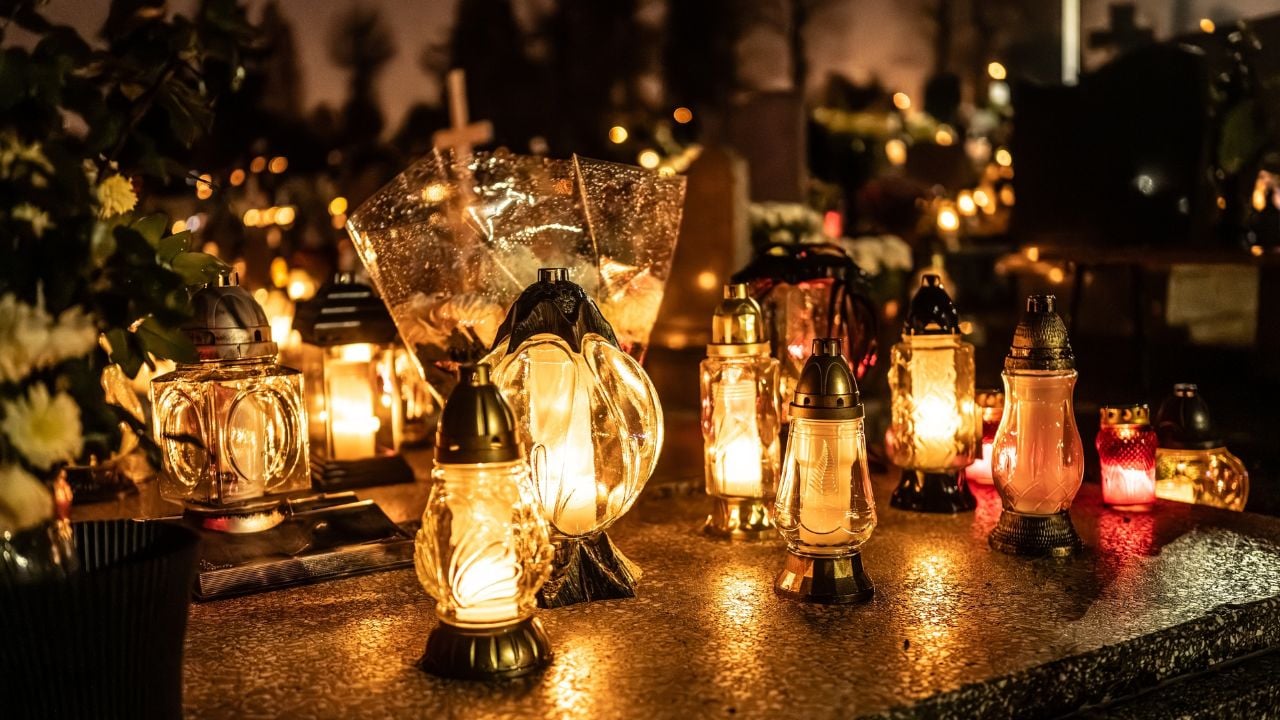
Lacombe, in St. Tammany Parish, keeps the fullest version of it going today, with families lighting candles at the grave once the sun goes down.
Not every family keeps it up the old way anymore.
Some still do.
The ritual looks the same every year: A rag, a bucket of whitewash, a fresh coat on the tomb before the flowers go up.
Families are just doing what they've always done before Thanksgiving: Clean the tomb, light a candle, go home.
8 Louisiana Sayings That Leave Out-of-Towners Completely Lost
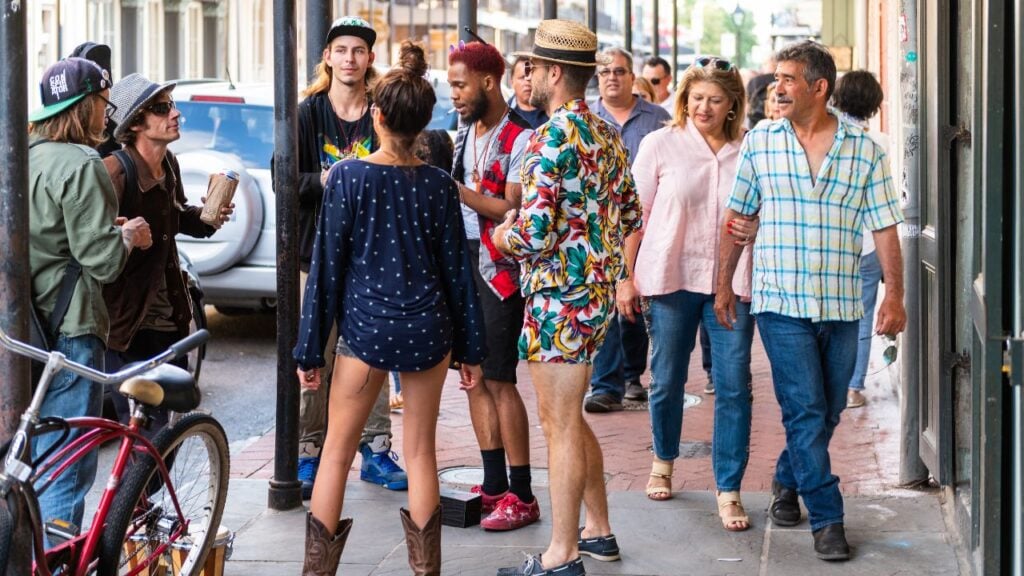
Louisiana is the only state in the country without a single county, and that's just the start of how differently Louisiana labels things.
Spend a weekend with a Louisianan, and the words that come back can sound like a whole different language.
8 Louisiana Sayings That Leave Out-of-Towners Completely Lost
9 Louisiana Towns Visitors Skip Because They Never Leave New Orleans
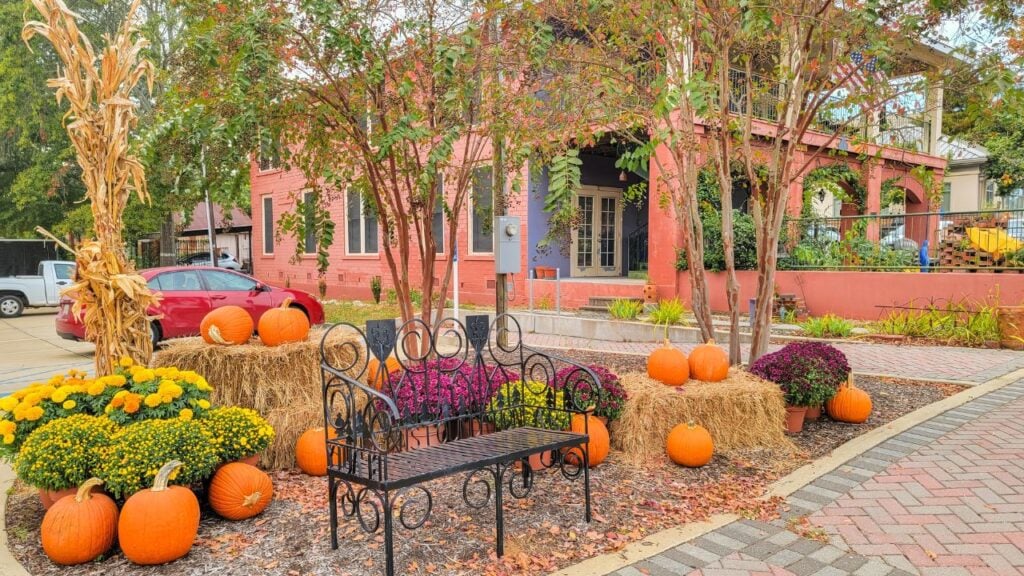
Louisiana has 64 parishes, and New Orleans sits in only one of them.
That leaves 63 more with downtowns, festivals, and diners that many visitors never see past the interstate exit sign.
9 Louisiana Towns Visitors Skip Because They Never Leave New Orleans
